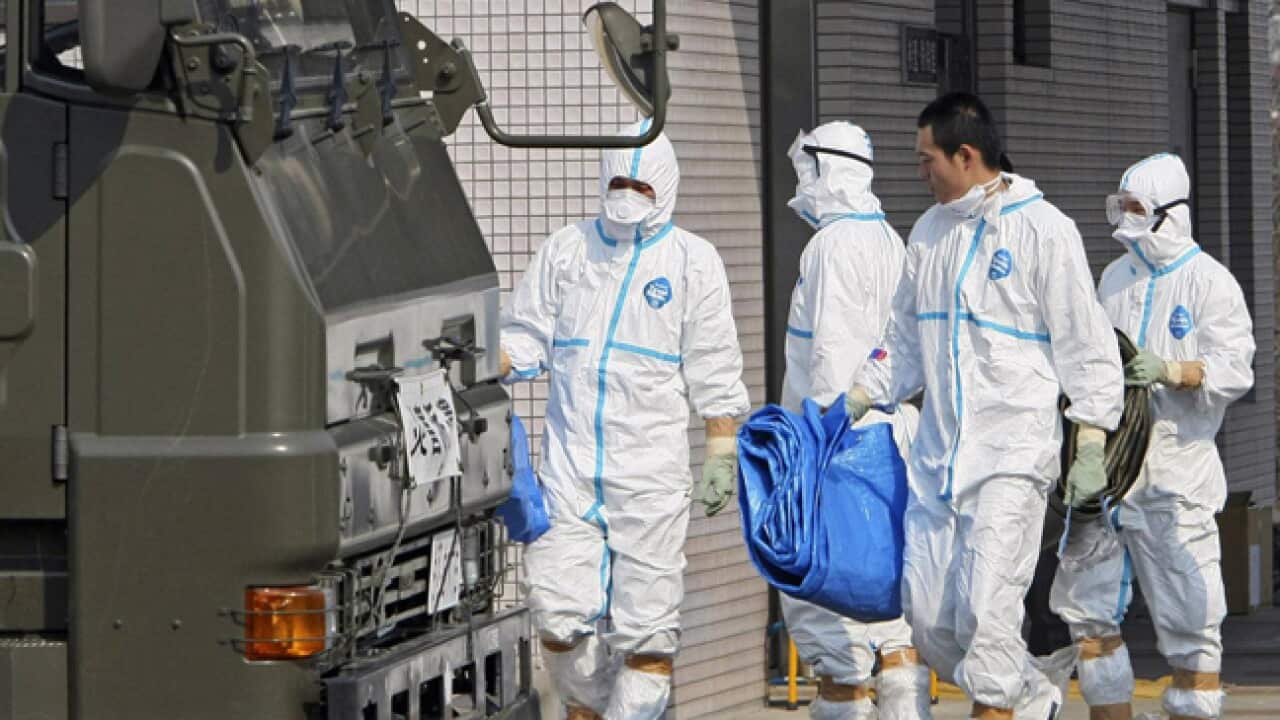
Japan has commenced dumping radioactive water in the Pacific as reports emerge that officials will request an exemption from the Kyoto Protocol.
However, academics from the United States have said the release of the radioactive water into the ocean near Japan's stricken nuclear complex shouldn't pose a widespread danger to sea animals or people.
William Burnett from Florida State University said the dilution of the water lessens any radiation effects.
News that makes sense
Your trusted source for staying up-to-date with the world around you. Get free daily news updates and analysis, straight to your inbox.
"It's a very large ocean," said Burnett.
According the Burnett, sea creatures closer than 800 metres or so to the nuclear plant might be in danger of problems like genetic mutations but there shouldn't be any serious hazard further away unless the situation escalates into something much larger than it is now.
Ken Buesseler of the Woods Hole Oceanographic Institution in Massachusetts, said readings for radioactive iodine and cesium show a thousand-fold drop from the shore to monitors about 30km offshore.
While fishing has been banned from the vicinity, Buesseler said radioactive doses in seafood may turn out to be detectable but probably won't be a significant health hazard.
He said any radiation in seafood would probably be less of a concern than what people could get from land-based sources like drinking water or eating produce.
Radioactive water has been seeping into the Pacific Ocean from the nuclear plant for at least one week.
On Monday plant operators began releasing more than 11.3 million litres of tainted water to make room at a storage site for water with higher radiation levels.
Igor Linkov, an adjunct professor of engineering and public policy at Carnegie Mellon University, also said he did not expect any major impact on ocean wildlife or people who eat seafood.
Linkov agreed that animals near the plant may be affected, however said the extent is not yet clear yet as the level of radiation had not been confirmed.
He said fish would probably be least affected by raditation compared to immobile species such as oysters, which suffer constant exposure.
Japan to request exemption from Kyoto Protocol
Meanwhile, the Nikkei newspaper has reported that Japanese officials are preparing to request an exemption from its Kyoto Protocol commitment to cut greenhouse gas emissions.
The Kyoto Protocol expires next year, however Japan will need to increase use of fossil-fuel power plants to deal with an electricity shortage at thhe Fukushima nuclear plant.
According to the Nikkei, a national delegation was discussing the issue at a UN climate meeting in Bangkok, and plans to ask for an exemption from penalties at the COP 17 climate conference in South Africa at the end of this year.
Under Kyoto, Japan must cut its average emissions in the 2008-12 period by six per cent from 1990 levels.
Japan earlier pledged to cut its greenhouse emissions even further by 25 per cent by 2020.
In the wake of the March 11 earthquake and tsunami, the country has had to count on increased use of nuclear energy, which accounts for about 30 per cent of its energy needs, to reduce its heavy dependence on oil imports from the Middle East.
If Japan's request is not accepted, penalties for falling short of the Kyoto agreement include tacking on the amount
exceeding the target plus 30 per cent to future reduction targets, the Nikkei said.







