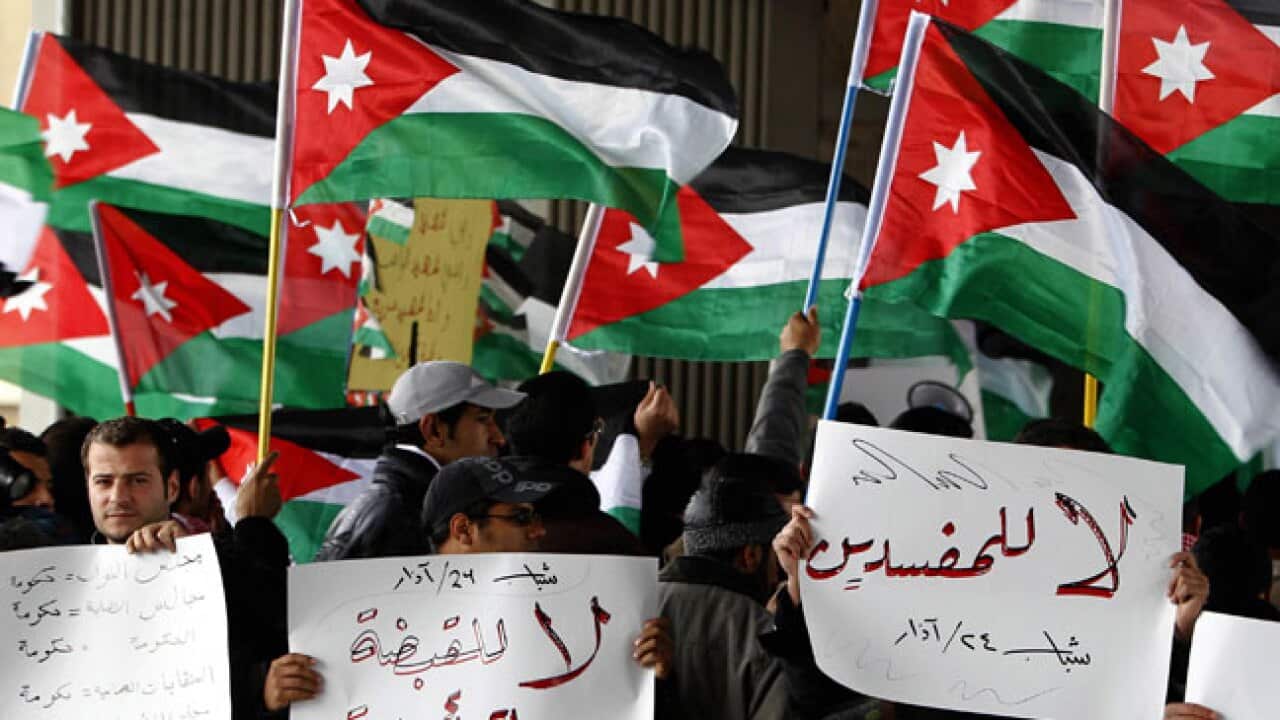
Jordan's king bowed to popular demands for elected cabinets but gave no timetable, saying that sudden change could lead to "chaos and unrest" in this country that has averted the turmoil seen in other Arab nations.
It was the first time that King Abdullah II has made such a concession to Jordanians, who have taken to the streets in six months of pro-democracy protests to demand a greater political say in this key US Arab ally.
Many Jordanians want the king to loosen his absolute grip on power, which includes appointing prime ministers and Cabinets.
In the televised speech on Sunday marking his 12th year as Jordan's ruler, Abdullah said that future cabinets will be formed according to an elected parliamentary majority.
He also promised further changes without elaborating, saying that a royal commission is now exploring "possible amendments" to the constitution appropriate for Jordan's "present and future."
News that makes sense
Your trusted source for staying up-to-date with the world around you. Get free daily news updates and analysis, straight to your inbox.
When Abdullah ascended to the throne in 1999, he floated the idea of a constitutional monarchy similar to the British system of power, but little has been said on the subject since. Jordanians have been demanding a new elected parliament that would replace one widely seen as docile.
However, a small group of activists says it wants the king to also relinquish all his power and become only a figure head of state.
But major political parties such as the powerful Muslim Brotherhood have rejected that call, describing the king a "stabilising influence."
Brotherhood spokesman Jamil Abu Bakr warned reforms were needed to "avoid the tragedies taking place in the region." In the past, Abdullah has said that he wants to see Jordan's splintered 33 political parties merge into three blocs from which Cabinets could be formed.
Abdullah said on Sunday that the changes would be implemented based on the recommendations of a national dialogue committee, that has recently proposed laws governing elections and political parties.
The committee is also reviewing economic legislation to tackle official corruption, nepotism and bureaucracy.
The Jordanian government has lifted restrictions on public assembly, allowing protesters to demonstrate freely. But it has said it needs time to enact laws on political freedoms, including those addressing election and political parties.
At the outset of protests, Abdullah sacked his prime minister in February, responding to protesters demands that he was insensitive to their economic hardships. Protests in Jordan have been relatively smaller and generally peaceful, although there was one killed in the occasional unrest.







