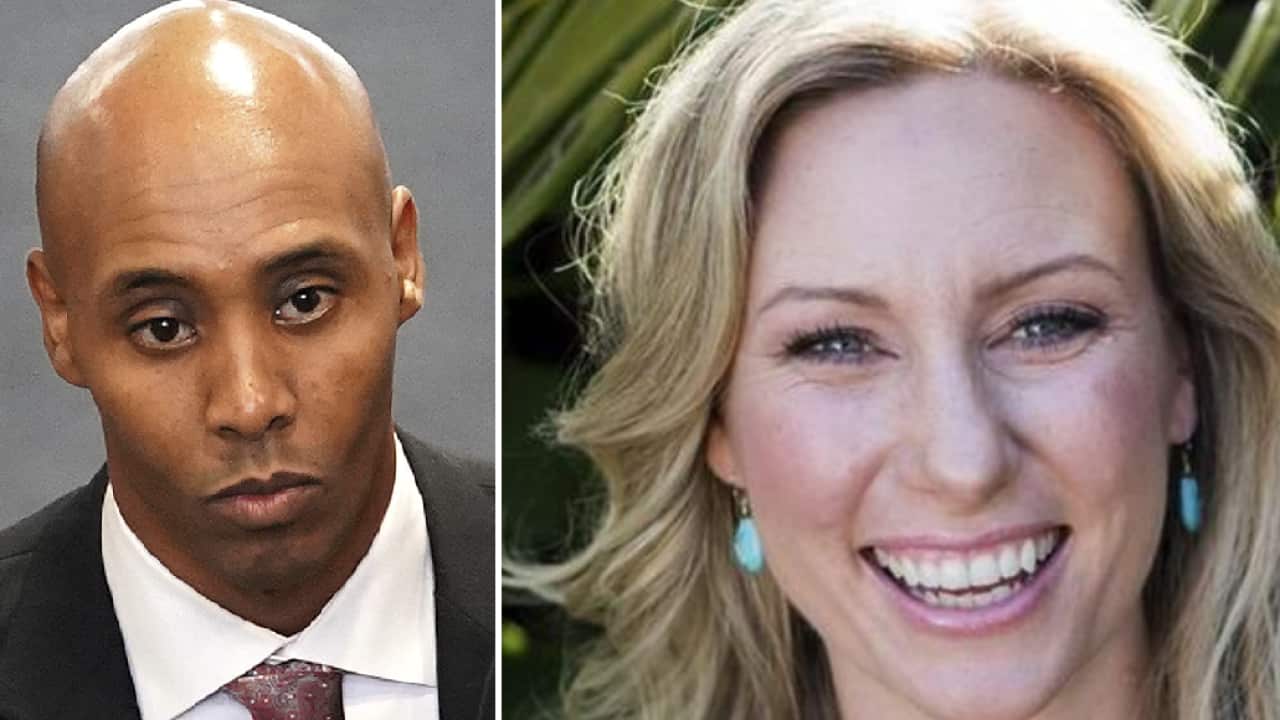
When a Minneapolis police officer shot and killed an unarmed woman who approached his squad car after calling 911, it was catastrophic. But was it murder?
That is the question that jurors are now faced with.
Prosecutors have given jurors hearing the case against Mohamed Noor multiple options: second-degree murder, third-degree murder and second-degree manslaughter.
News that makes sense
Your trusted source for staying up-to-date with the world around you. Get free daily news updates and analysis, straight to your inbox.
The jury will ultimately decide whether any of the counts fit what happened the night of 15 July in 2017, when Noor fatally shot Justine Damond Ruszczyk just minutes after the dual citizen of the US and Australia had phoned in a report of a possible sexual assault behind her home.
As Noor's trial prepares to enter its third week, defence lawyers not connected to the case see a larger and commonly used strategy to overcharge the case in a way that could make it easy for jurors to convict on the lesser manslaughter count.

"Juries like to be King Solomon," said Earl Gray, a lawyer on the team that successfully defended former Minnesota officer Jeronimo Yanez against a manslaughter charge in the 2016 shooting death of Philando Castile during a traffic stop.
"They want to split the baby and give each side half."
"Prosecution is like hunting," said another defence lawyer, Marsh Halberg, who has been sitting in on some of the key testimony.
"You throw a lot of pellets up in the air and you don't care which one brings down the bird. Obviously, you would always like to get (a conviction on) the highest charge but you want to leave at the end of the day with some conviction."
Hennepin County Attorney Mike Freeman was under intense community pressure and international scrutiny as he decided whether to charge Noor in Damond Ruszczyk's death, which had led to a police chief's resignation.
Mr Freeman let it slip in an unguarded moment captured on video in December 2017 that he didn't have enough evidence at that point to charge Noor, saying investigators "haven't done their job".

When Mr Freeman finally filed charges in March 2018, he said the evidence clearly fit the legal definitions of third-degree murder and second-degree manslaughter.
But Noor's legal team and other local defence lawyers said the third-degree murder charge was an overreach.
Prosecutors added the second-degree murder charge late last year.
The presumptive sentences vary from four years for the manslaughter charge to 12 1/2 years for third-degree murder to 25 1/2 years for second-degree murder.
Neither Mr Halberg nor Mr Gray thinks the jury is likely to convict Noor of third-degree murder, because the state statute requires jurors to find that someone acted with a "depraved mind, without regard for human life", a term so ill-defined and potentially confusing that prosecutors rarely use the charge.
In Noor's case, the prosecution's proposed jury instructions specifically avoid the term and call it instead "an act eminently dangerous to others" and "performed without regard for human life ... committed in a reckless or wanton manner with the knowledge that someone may be killed and with a heedless disregard of that happening".
The defence's proposed instructions do use the term "depraved mind".
Judge Kathryn Quaintance has yet to rule.
Mr Halberg was in court on Thursday for testimony from Noor's partner, Officer Matthew Harrity, and viewed Mr Harrity's body camera video as it was shown to the jury.
Besides the heartache of seeing her dying on camera, Mr Halberg said he was "touched by the humaneness of the two officers.
"They held her up and lowered her to the ground. Noor is doing chest compressions and they were yelling encouragement to her."
The care they showed her "really flies in the face of the depraved mind argument", he said.
Under Minnesota law, second-degree murder involves intentionally causing the death of another person, without premeditation.
Second-degree manslaughter requires a finding that the defendant acted with "culpable negligence" in taking the chance of causing death or great bodily harm.
Mr Halberg said it will be hard overcoming the defence that Noor's team has invoked that police can legally shoot if they have a reasonable fear that they're in danger.
Noor's lawyers have argued that he heard a loud noise and feared an ambush. But prosecutors say there is no evidence of any threat to justify deadly force.
But some of the circumstances - Noor was in the passenger seat and fired his gun across Mr Harrity through the driver's side window in a dark alley - may give the jury reasons to find him guilty of manslaughter, Mr Halberg said.
"That's the charge that would fit the case," Mr Gray said.







