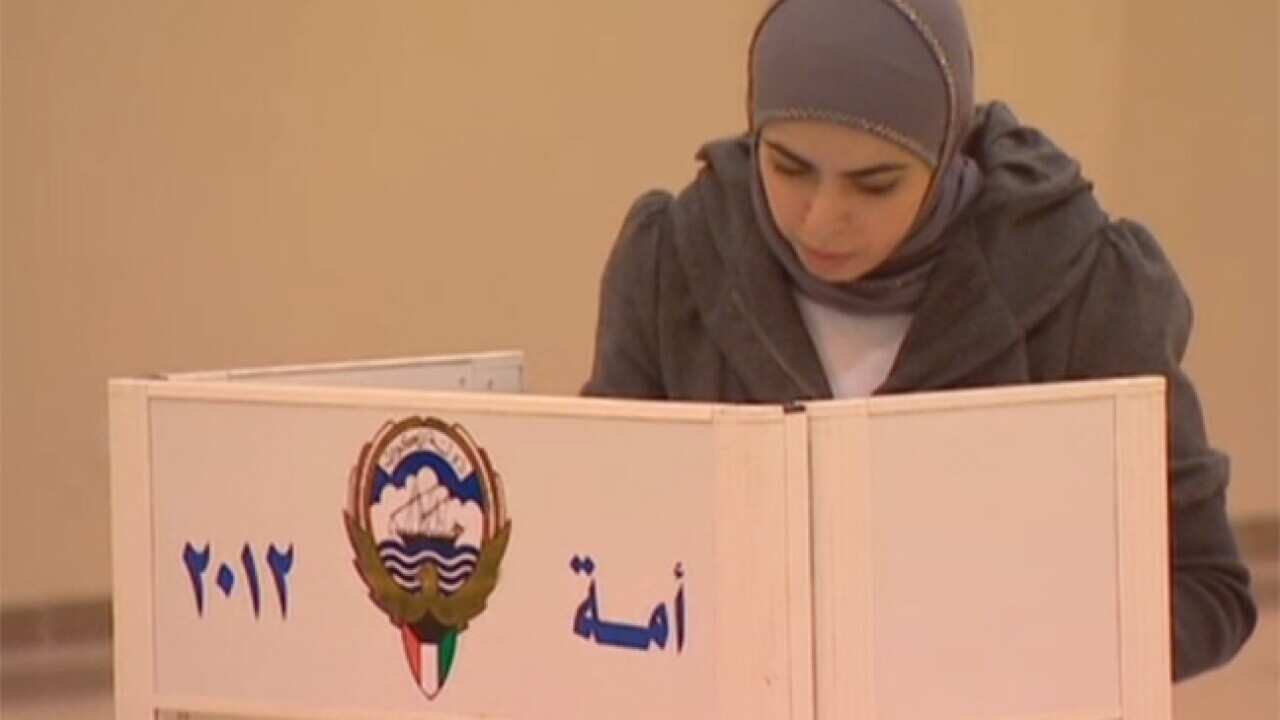
Kuwaitis have voted in a snap election for the wealthy Gulf state's fourth parliament in less than six years.
Formal political parties are illegal in Kuwait, candidates form blocs and people often vote along family or tribal lines.
Ballots closed at 1700 GMT with people still inside polling stations. The count began immediately at some centres, but results are not expected until early on Friday.
News that makes sense
Your trusted source for staying up-to-date with the world around you. Get free daily news updates and analysis, straight to your inbox.
The vote, which followed an especially tense campaign marred by violence, seeks to end political disputes that have damaged the country for years.
Female voters make up 54 percent of the electorate, and 23 women are among 286 candidates standing for the 50-seat legislative body.
The state-run KUNA news agency said turnout was about 60 percent one hour before the close, already higher than the 58 percent recorded in 2009 election.
In Sabah Al-Salem, a tribal area 20 kilometres south of Kuwait City, male voters showed up in large numbers with less than an hour to close of polling.
The voters sounded optimistic.
"I think the opposition is going to win in an impressive way and this will lead to stability and embarking on the delayed development plan," Mohammad al-Oteibi, a headmaster, told news agency AFP.
"This time I did not vote for the tribe's candidates. I picked candidates I think will serve Kuwait better," 27-year-old government employee Khaled al-Azemi said.
Pollsters and analysts expect the 400,000-strong electorate to deliver a resounding victory for the Islamist-led "opposition" which has campaigned vigorously for fundamental reforms and against corruption.
"We are very optimistic that the opposition will achieve a majority in the next parliament," former Islamist MP Waleed al-Tabtabai told AFP.
"I am hopeful that disputes will diminish because the opposition will strengthen its presence."
The snap poll was called after Emir Sheikh Sabah al-Ahmad Al-Sabah dissolved parliament in OPEC's third largest producer following unprecedented protests led by youths inspired by the Arab Spring.
The protests led to the resignation of the previous government and former prime minister Sheikh Nasser Mohammad al-Ahmad Al-Sabah who was replaced by another senior royal.
Some voters expressed concern that the election, which came after one of the most aggressive campaigns since Kuwait introduced democracy in 1962, would not help restore stability.
"The atmosphere is unhealthy and highly charged... because sectarian and tribal tensions are negatively impacting our country," former oil minister Adel al-Sabeeh told AFP.
"The opposition is likely to boost its strength but I think we are headed for more disputes."
Others expressed similar worries.
"We are very frustrated and worried about what is happening in Kuwait," said one woman, Umm Saud, after voting in Jabriya, 15 kilometres (nine miles) south of Kuwait City.
"I am not optimistic this election will resolve our problems, but I pray that I am wrong."
Fatima Akbar, a former schoolteacher, said she is "hopeful with caution" the election will help stabilise the country.
"We are worried about the conflicts in Kuwait, especially sectarian tension" between the Sunni majority and Shiite minority, she said.
Tensions between Sunnis and Shiites -- who make up 30 percent of Kuwaitis -- have intensified in recent months, mainly over regional issues such as Bahrain, Iran and Syria.
Shiite candidates lamented last year's crackdown on their co-religionists in Bahrain, while Sunni candidates warned of Shiite Iran's regional ambitions.
On Monday, tribesmen burned the election tent of a pro-government candidate after remarks deemed derogatory to a Bedouin tribe. They also stormed offices of a TV station for hosting a pro-government candidate.
About 30 international and 300 local observers have been allowed to monitor the election for the first time.
Kuwait had a population of 3.6 million as of mid-2011, but 68 percent of those are foreigners with Kuwaitis themselves numbering 1.17 million.
Kuwait says it sits on 10 percent of global crude reserves and pumps around 3.0 million barrels of oil a day. Thanks to high prices, it has amassed more than $US300 billion in assets over the past decade.
For a behind-the-scenes look at what it's like to be a female reporter in Kuwait, visit Kathy's Facebook page.
Kathy Novak's travel to Kuwait was assisted by the Kuwaiti government.







