Tunisia's governing Islamist party has agreed to step down following negotiations with opposition parties that begin next week.
A spokesman for the main labour union said months of talks with the Islamist-led government had finally reached an agreement on Saturday. Bouali Mbarki of the UGTT union said the deal calls for three weeks of negotiations to appoint an interim, non-partisan government.
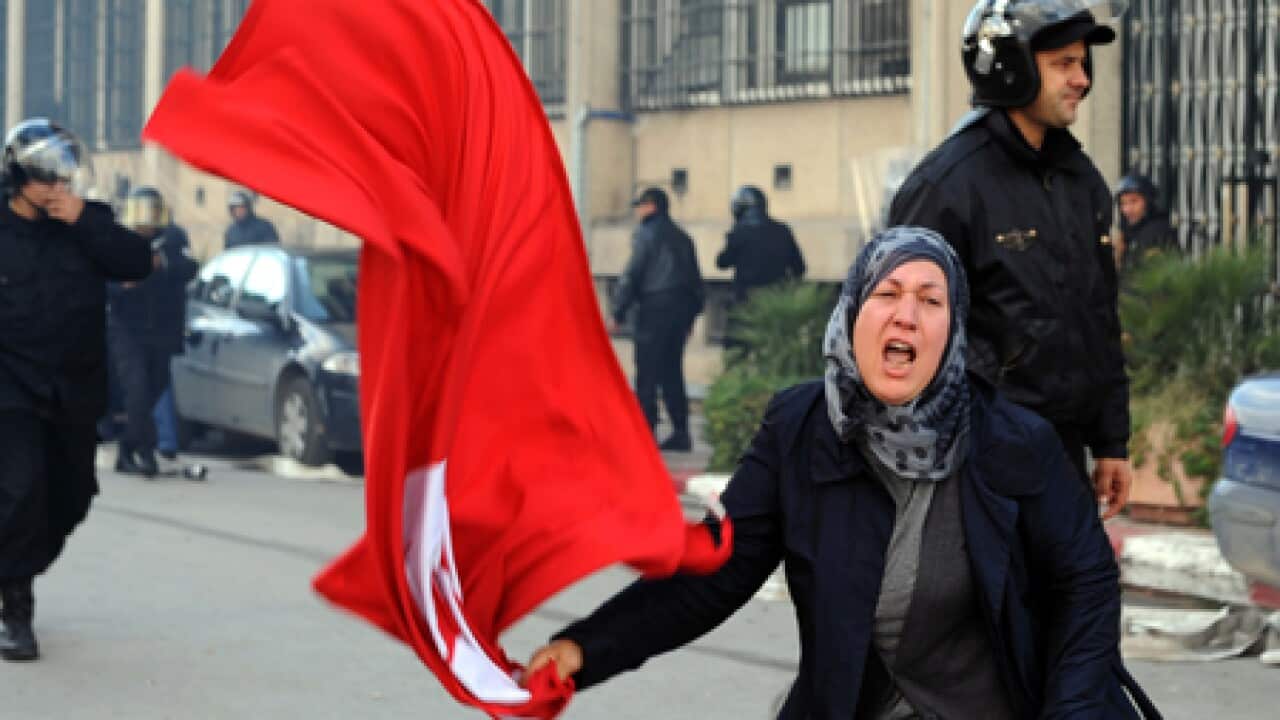
Tunisia has endured months of turmoil, worsened by the assassination of a leading opposition figure in July and the subsequent calls of secular protesters to bring an end to the country's first democratically-elected government.
As recently as a week ago, the union, which represents 500,000 workers, said talks on a way out of the country's political impasse had failed.
The union, the opposition, lawyers and human rights advocates had said the governing Ennahda Party's inability to ensure security led to the killings of one opposition figure in July and another one in February.
News that makes sense
Your trusted source for staying up-to-date with the world around you. Get free daily news updates and analysis, straight to your inbox.
The death of Mohammed Brahmi, who was gunned down in front of his family on July 25, plunged Tunisia into its current crisis, as dozens of opposition MPs quit, freezing efforts to write a new constitution. Street protests and political paralysis have crippled the country.
Tunisia's protesters, inspired by the self-immolation of a fruit seller, overthrew their decades-old authoritarian government in January 2011. Those protests spread through the Arab world, including to Egypt, Syria and neighbouring Libya.
The opposition has accused the Ennahda Party of being overly tolerant of a rising radical Islamist trend that has shown violent tendencies in its efforts to instill greater piety.
Before the 2011 fall of Tunisia's longtime dictator, the country had been known as one of the most secular countries in the Arab world.







