United States President Donald Trump said Tuesday that Israel and Hezbollah had agreed to stop fighting, adding that Iran talks were moving rapidly after seeming to be on the rocks over Israel's Lebanon offensive.
Trump said on social media that Israeli Prime Minister Benjamin Netanyahu had promised not to send troops to Beirut's southern suburbs as threatened, while Hezbollah had agreed that "all shooting will stop."
His comments came after Iran's news agency Tasnim reported Iran had suspended dialogue with mediators in protest at Israel's expanding offensive in Lebanon against Iran's ally Hezbollah.
"I had a very productive call with Prime Minister Bibi Netanyahu, of Israel, and there will be no Troops going to Beirut, and any Troops that are on their way, have already been turned back," Trump wrote.
"Likewise, through highly placed Representatives, I had a very good call with Hezbollah, and they agreed that all shooting will stop — That Israel will not attack them, and they will not attack Israel."
News that makes sense
Your trusted source for staying up-to-date with the world around you. Get free daily news updates and analysis, straight to your inbox.
In a separate post a few minutes later, Trump said that "talks are continuing, at a rapid pace, with the Islamic Republic of Iran. Thank you for your attention to this matter!"
Lebanon's embassy in the US confirmed on Tuesday that Hezbollah had accepted a US proposal on a "mutual cessation of attacks".
"The Lebanese authorities received confirmation of Hezbollah's acceptance of the US proposal providing for a mutual cessation of attacks," said an embassy statement released by the Lebanese president's office.
"Under the proposed arrangement, Israeli strikes on Dahiyeh would cease in exchange for Hezbollah refraining from launching attacks against Israel, with the ceasefire framework to be expanded to encompass all Lebanese territory," the statement added, referring to Beirut's southern suburbs.
Israeli Prime Minister Benjamin Netanyahu said on Tuesday he told US President Donald Trump that his country would strike the Lebanese capital if Hezbollah doesn't stop attacking Israel.
"I spoke this evening with President Trump and told him that if Hezbollah does not cease attacking our towns and our citizens, Israel will strike terrorist targets in Beirut," Netanyahu said, according to a statement released by his office.
"Our position on this remains unchanged. At the same time, the IDF will continue to operate as planned in southern Lebanon," he added.
Earlier on Tuesday, the US leader had given decidedly mixed signals about his enthusiasm for the talks to end the Iran war, which the United States and Israel launched on 28 February.
Trump told US broadcaster CNBC in a telephone interview shortly before his Truth Social posts that "I don't care" if the Iran talks collapsed.
"If they’re over, they’re over," Trump told CNBC. "Frankly, I thought they started to get very boring."
Trump separately told NBC News on Tuesday that he had not been informed that Iran was suspending negotiations but that, "I think we've been talking too much if you want to know the truth."
"I think going silent would be very good, and that could be that could be for a long time," he told NBC.
Trump says Iran truce talks moving at 'rapid pace' after Iran threats
But only hours before those statements, Trump had been saying the opposite.
"Talks are continuing, at a rapid pace, with the Islamic Republic of Iran," Trump said in a social media post made shortly after another post in which he said he had persuaded Israel and Iran-backed Hezbollah to de-escalate.
Weeks of indirect talks between the US and Iran marked by threats and several waves of air strikes have so far failed to bring about an end to the war or the reopening of the Strait of Hormuz, the key shipping channel for Gulf oil and gas.
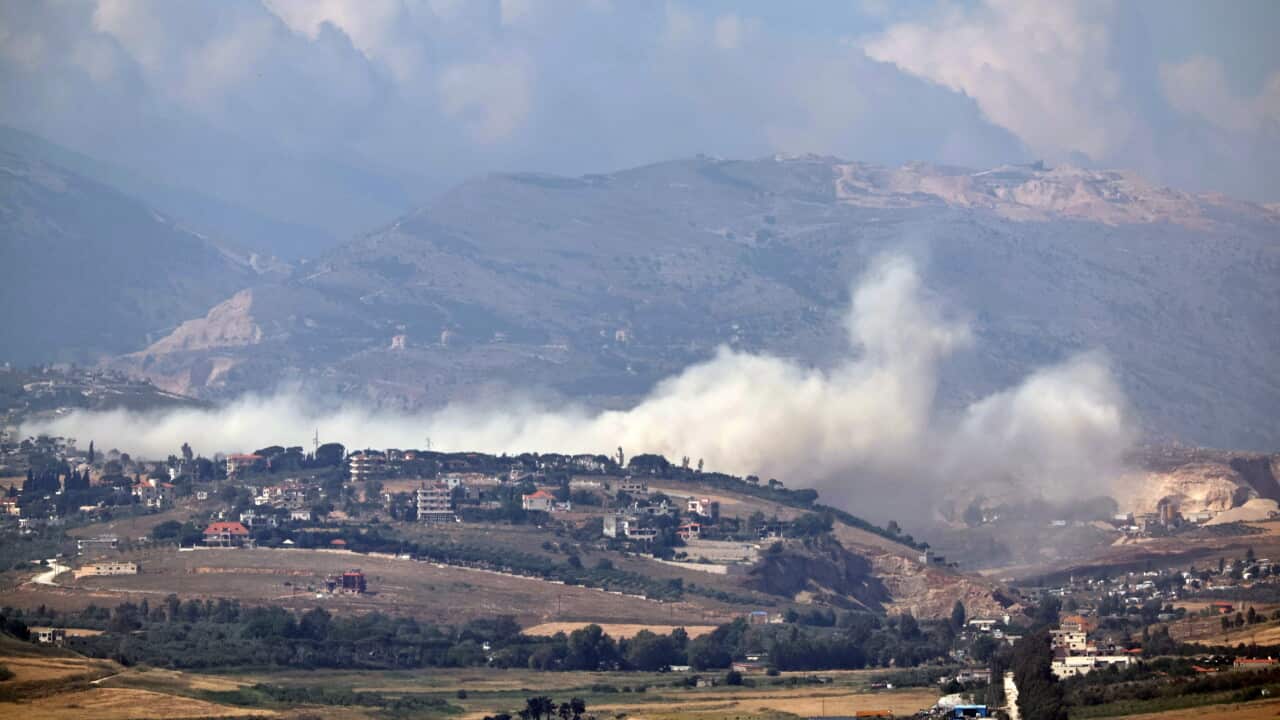
The latest US-Iran exchange of fire overnight coincided with Israel expanding its ground offensive in Lebanon, with Prime Minister Benjamin Netanyahu vowing to push deeper into the country and instructing his military to strike "terror targets" in Beirut's southern suburbs.
Israel's Arabic-language spokesman posted on X that residents of the suburbs, or Dahiyeh, should evacuate "to preserve their safety", and AFP images showed huge traffic jams as residents tried to flee.
The United States had backed Israel's operations against Hezbollah, while still trying to come to an agreement with Iran to end the war it launched alongside Israel in late February, and to reopen Hormuz and impose controls on Iran's nuclear program.
But Iran again said on Monday it had not engaged in any nuclear negotiations and insisted that Israel must halt its offensive in Lebanon before any wider deal to end the war could be agreed.
Ahead of a UN Security Council emergency meeting on Lebanon, the UN Secretary-General Antonio Guterres's spokesman said: "We are deeply alarmed by the escalation in military activities across southern Lebanon and beyond."
'Direct war'
The US naval blockade on Iran's ports and the escalation in Lebanon were "clear evidence of US non-compliance with the ceasefire", Iran's chief negotiator Mohammad Bagher Ghalibaf posted on X.
Late on Monday, Tasnim reported that "the Iranian negotiating team is suspending dialogues and exchange of texts through mediators", blaming Israel's actions in Lebanon.
And in a message carried by state TV, the Revolutionary Guards intelligence body said that "Iran considers crossing the red lines in Lebanon and Gaza to mean direct war".
It added: "In return, it is determined to carry out defensive operations by taking meaningful actions and opening new fronts, in addition to preserving the Strait of Hormuz equation."
Speaking to NBC, Trump said "It doesn't mean we're going to go and start dropping bombs all over there" and insisted the US would maintain its naval blockade.
Tasnim reported that Iran would continue to block the Strait of Hormuz and, with its allies, "activate other fronts, including the Bab al-Mandab Strait" at the entrance of the Red Sea.
Iran's Houthi allies in Yemen have previously attacked shipping in and around the latter strait, the closing of which could disrupt millions more barrels of oil that Saudi Arabia exports daily through its Red Sea port of Yanbu.
In a sign of the ongoing danger to shipping in the Gulf, the UKMTO maritime agency reported a "large explosion" on a cargo vessel off the coast of Iraq, "following a hit from an unknown projectile".
Sticking points
Speaking at a weekly briefing, Iranian foreign ministry spokesman Esmaeil Baqaei said: "No negotiations have taken place on the details of the nuclear file. At this stage, our priority is ending the war."
Trump has insisted that Iran's nuclear program be part of the deal, saying that Iran must not get nuclear weapons. Iran has always denied having such ambitions.
"We insist that a ceasefire in Lebanon is an essential condition for any deal aimed at ending the war," Baqaei said, adding: "The United States is also violating the ceasefire, including this morning."
The US military said it had carried out "self-defence strikes" on Iranian radar and drone control sites over the weekend — its third such wave in just over a week — after a US MQ-1 drone was downed.
Shortly afterwards, the Revolutionary Guards told state media they had targeted an airbase used by the US military for the attack.
They did not identify the country hosting the base, but Kuwait's military said its air defence had intercepted "hostile missile and drone attacks".
For the latest from SBS News, download our app and subscribe to our newsletter.







