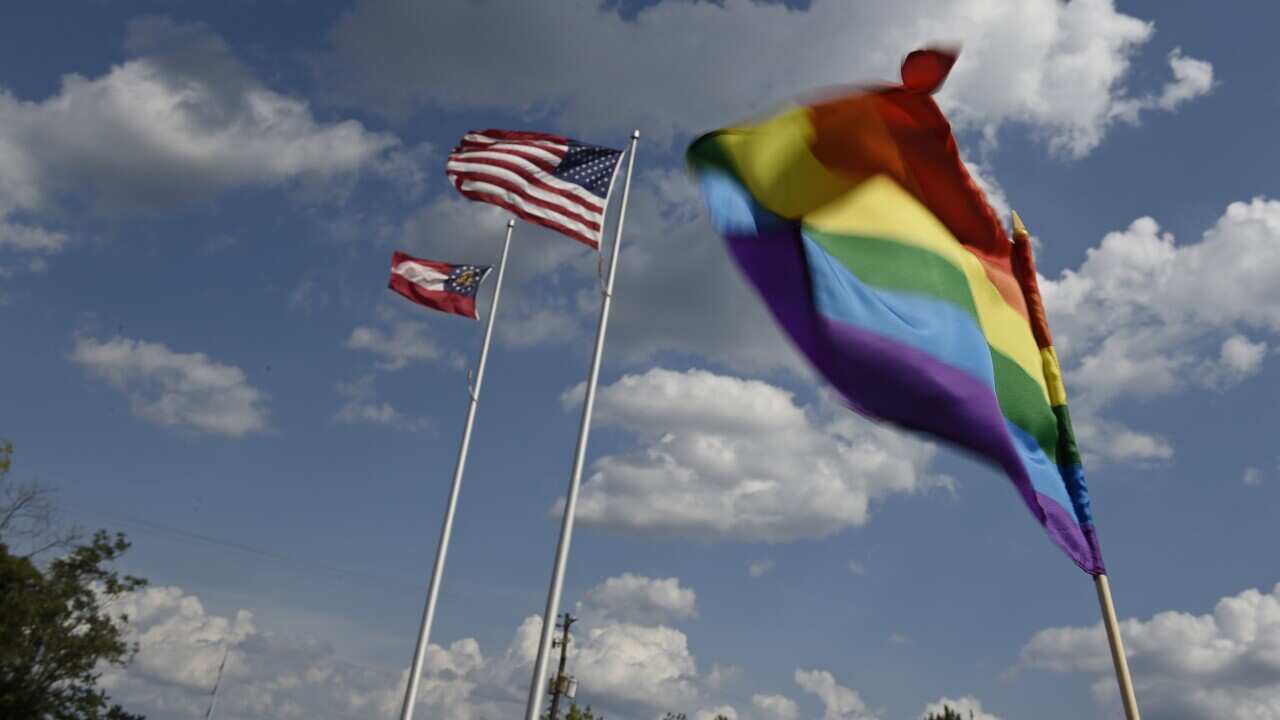
In America, the right to marry represents only one piece in the evolving legal framework for gay civil rights.
Currently no constitutional principle or nationwide law broadly prohibits discrimination based on sexual orientation. So in the majority of states, for example, landlords can legally turn away renters because they are gay and employers can reject job applicants for their sexual orientation.
And for opponents of a gay-marriage right who say it could infringe on their religious freedoms, the justices themselves disagreed sharply over the consequences of a decision that sparked banner-waving jubilation outside the columned building.
The four dissenting justices raised the specter that the ruling could erode the rights of religious individuals and institutions. Opponents of same-sex marriage have said it threatens the centuries-old American constitutional principle of religious freedom that permits rabbis, priests and other clergy to marry, or not, couples of their choosing.
News that makes sense
Your trusted source for staying up-to-date with the world around you. Get free daily news updates and analysis, straight to your inbox.
Chief Justice John Roberts, who for the first time in his 10-year-tenure read excerpts of a dissent from the bench, warned in his written opinion that "people of faith can take no comfort" in the ruling.
He questioned whether religious colleges could continue to restrict student housing to opposite-sex couples. Dissenting Justice Clarence Thomas went further, predicting churches would face demands to participate in civil marriages between same-sex couples.
Writing for the five-justice majority, Justice Anthony Kennedy emphasized that religious opponents "may continue to advocate with utmost, sincere conviction" that gay marriage is wrong. He noted that the Constitution protects religious people "as they seek to teach the principles that are so ... central to their lives and faiths."
It was a relatively brief reference in Kennedy's 28-page opinion, and it remains to be seen how constitutional principles might clash in future cases.
In the 36 of the 50 states that already issued marriage licenses to same-sex couples, few such conflicts involving religious objections have reached the courts.
Most related lawsuits have involved small wedding-service businesses, from venues to flowers and cakes, that declined to serve gay couples based on the owners' religious beliefs.
"This is far from over," said Jim Campbell, a lawyer for the Arizona-based Alliance Defending Freedom, which has represented individuals who have declined wedding services on religious grounds.
He said he was dismayed by Friday's ruling but pointed to Kennedy's assurance that religious organizations will be protected. "The decision is going to be used as a tool for people on both sides," Campbell said. "It's hard to say whose use of it is going to prevail."
'Equal dignity'
In the U.S., 22 of the 50 states and the District of Columbia prohibit discrimination based on sexual orientation in employment, housing and public accommodations, according to the Human Rights Campaign, a national gay-rights advocacy group based in Washington.
The Supreme Court case arose amid a transformation in American attitudes on gay rights and international change, including in Ireland last month, since the Netherlands became the first country to permit gay marriage nearly 15 years ago.
Advocates on both sides said on Friday the ruling will likely spawn a new round of litigation in areas such as parental rights and spousal benefits, as well as religion.
Declaring a right to marry does not revolve all rights for gay couples and their families. State laws vary regarding adoption, for example, and in some states where gay marriage was already allowed, lesbian parents have sued to get both of their names, not only the birth mother's, on the birth certificate.
Michigan, one of four states whose bans on gay marriage were challenged in Friday's case, earlier this month passed a law allowing private adoption agencies to refuse to place children with same-sex couples on religious grounds.
Separate lawsuits are already pending in lower courts over the timing of spousal benefits in the workplace and whether court rulings on marriage rights can be applied retroactively.
While Kennedy's opinion did not go beyond marriage rights for gays, it is likely to be tested in other situations. It represented the fourth time in nearly two decades that he has expansively interpreted the Constitution to protect gay rights. Once again, he laced his opinion with references to gay people's "dignity," concluding, "They ask for equal dignity in the eyes of the law. The Constitution grants them that right."
The question for future litigation is whether lower courts faced with other claims of discrimination will interpret the notion of equal dignity to apply beyond marriage.
(Reporting By Joan Biskupic; editing by Stuart Grudgings)







