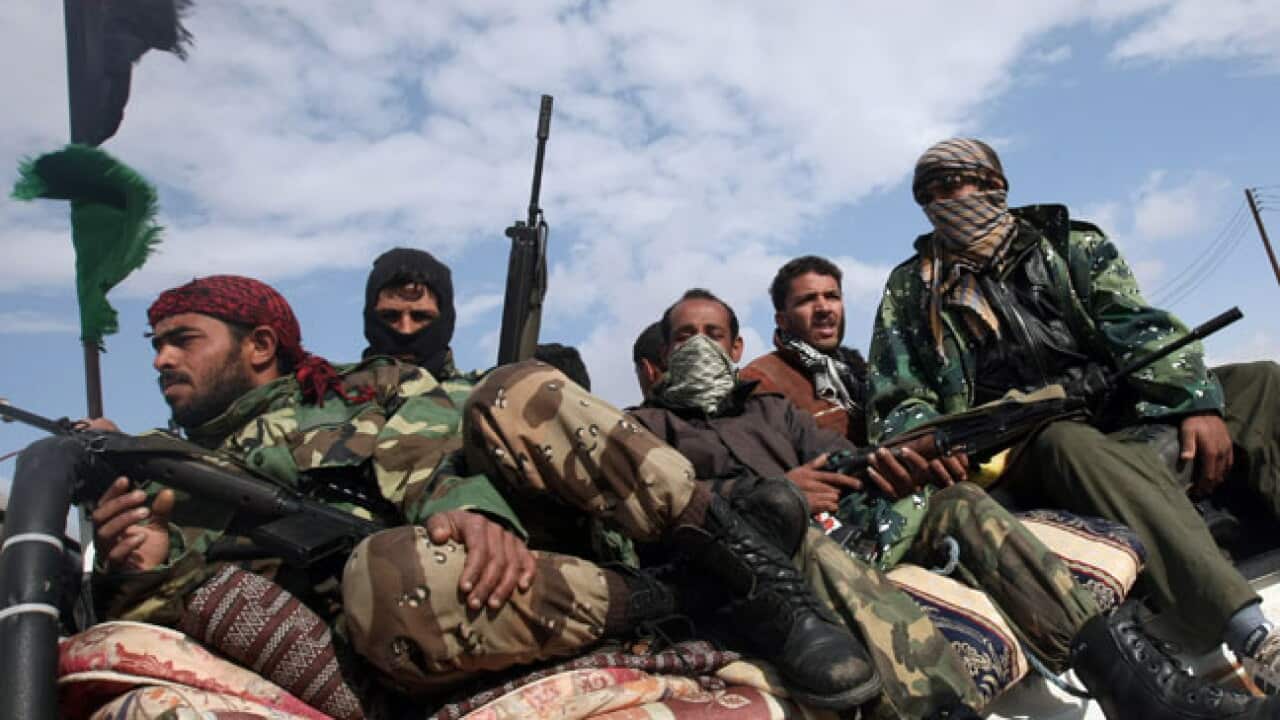
Rebel fighters have seized half of Brega and are pledging to drive out Libyan leader Muammar Gadaffi's forces in an advance that would open a vital conduit for oil sales by the opposition.
Control of Brega's small refinery and Mediterranean port could significantly boost the rebels' hunt for revenues they can use to purchase heavy weapons for the fight against Gadaffi better-equipped troops and militiamen.
Lightly armed and loosely organised opposition forces have surged into and beyond Brega several times in recent weeks from their strongholds in eastern Libya, only to be driven out by Gaddafi loyalists exploiting the rebels' inability to hold territory.
News that makes sense
Your trusted source for staying up-to-date with the world around you. Get free daily news updates and analysis, straight to your inbox.
In recent days the opposition has placed the front lines under the control of former military men, creating a more disciplined advance against Gadaffi forces.
"We're more organised now, and that's played a big role," said Salam Idrisi, 42, a rebel fighter.
The opposition advanced under artillery fire throughout the day and took the streets of New Brega, a largely residential section separated from the town's oil facilities by a stretch of highway and a university campus, where the rebels were battling Gaddafi fighters at close range.
"New Brega is under control of our forces and we are mopping up around the university," said Lieutenant Muftah Omar Hamza, a former member of Libya's air force who had a satellite phone and a GPS around his neck.
Rebels forge tighter links with Italy and Britain
The rebels also saw success in their efforts to establish an internationally recognised government in eastern Libya, forging tighter links with Britain and Italy, both potentially major markets for Libyan oil.
Italy offered diplomatic recognition to the Libyan opposition council, becoming the third country to do so after France and Qatar.
The Italian foreign minister also said the CEO of energy company Eni had visited the rebels' de facto capital, Benghazi, with the aim of resuming oil ties.
Eni has extensive oil facilities in eastern Libya and was Libya's biggest gas exporter and oil producer before the uprising against Gaddafi split the country.
Bughaigis said a small group of regime forces attacked the rebel-held Misla oil field in southern Libya. She said she could not say whether the attack took place on Sunday night or Monday morning, but added that only one small diesel storage tank had been damaged.
She provided no other information.
Britain announced that it would supply communications equipment to the Libyan rebels, declining to say what kind.
It denied that the gear was intended to help wage attacks against Gadaffi forces.
Recent clashes in Zawiya: UN
The UN special envoy to Libya, Abdelilah Al-Khatib, told the UN Security Council on Monday afternoon that pro- and anti-Gaddafi forces had clashed over the past few days in Zawiya, one of two western cities that rose up early in the revolt against Gaddafi.
He said there were unconfirmed reports of government shelling of towns southwest of Tripoli, a rare indication of resistance to the Libyan leader in that area.
The US military, which initially led the UN-authorised air campaign against Libya, was pulling its warplanes from front-line missions and shifting to a support role in the conflict, officials said.
Under NATO's leadership, Britain, France and other allies will now provide the fighter jets for intercept and ground-attack missions that enforce a no-fly zone over the North African country, they said.
Late on Monday, Libyan TV broadcast what it said was live video of Gaddafi in a car driving through Tripoli, surrounded by security officers and a crowd of supporters.
Gaddafi himself could not be seen.
He has not made a public appearance in more than two weeks.
The rebels and forces loyal to Gaddafi, their leader for 42 years, have reached a stalemate, with a series of towns along one stretch of Mediterranean coastline passing back and forth multiple times between the two sides.
Though the regime's forces are more powerful and plentiful, they have been unable to decisively defeat a poorly equipped and badly organised rebel force backed by
international airstrikes that have kept the Gaddafi loyalists in check.







