In brief
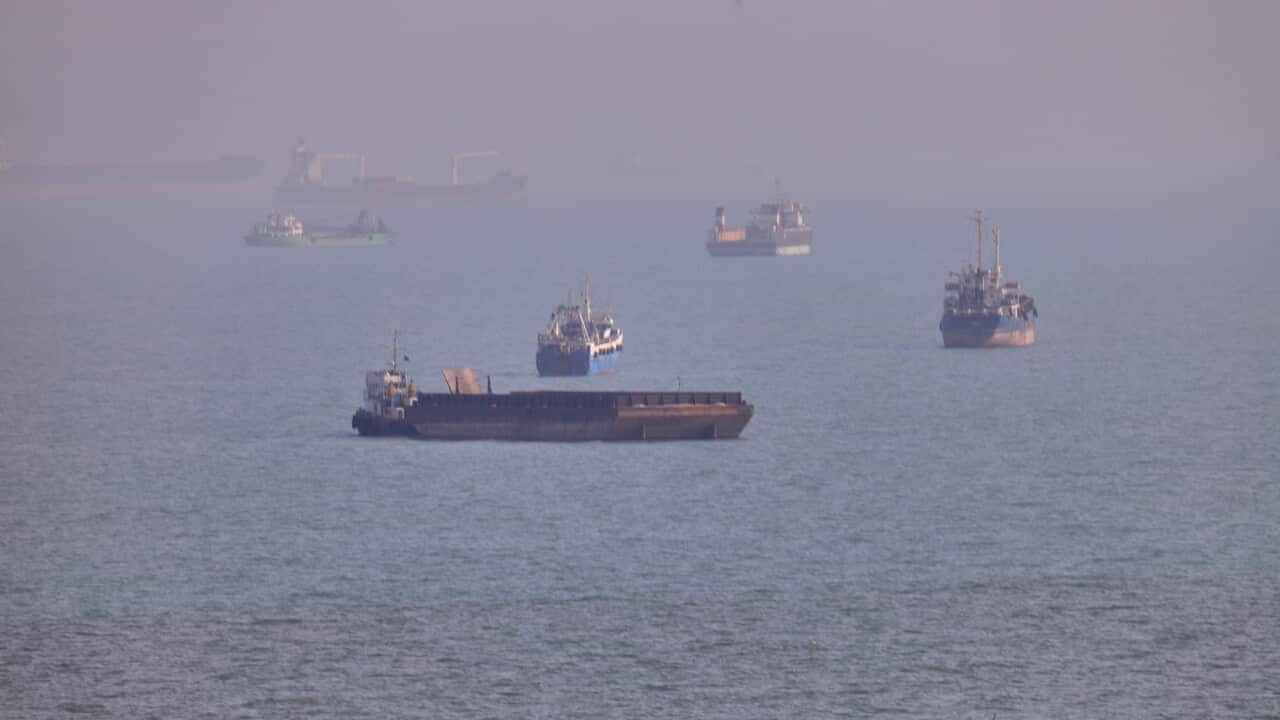
- Ships anchored in the Strait of Hormuz during the war in the Middle East may become home to biofouling species on their hulls.
- Experts worry if departing ships are not carefully prepared, it could result in a major biosecurity problem.
The economic ramifications of the closure of the Strait of Hormuz are much discussed. But so far, the risk of ecological damage following a long blockade of ships has been overlooked.
Our recent research shows that the more than 1,500 commercial vessels that have been laid up in the Gulf since February pose a significant environmental threat because they have been accumulating marine biofouling species on their hulls.
As the strait reopens, these ships may spread these organisms to ports they visit, potentially causing an international biosecurity “super-spreader” event.
Such incursions of alien marine plants, animals, parasites and diseases affect native ecosystems and wild fisheries as well as aquaculture stocks and coastal industries. They can lead to significant environmental damage and economic losses.
But the closure of the Strait of Hormuz is not the first time shipping disruptions have resulted in significant biofouling on idle vessels.
News that makes sense
Your trusted source for staying up-to-date with the world around you. Get free daily news updates and analysis, straight to your inbox.
Shipping disruptions
Global merchant vessel traffic is the main mode of transport for commodities, and researchers have identified 24 choke points in maritime trade.
But 20 of these have alternative routes, meaning shipping can be managed by rerouting vessels. This can take longer and cost more but avoids mass layups.
Only four choke points have no alternative routes, including the Strait of Hormuz, the Oresund Strait in the Baltic Sea, the Bosporus and Dardanelles straits out of the Black Sea, and the Bohai Strait in the Bohai Sea.
Disruptions at choke points can be caused by conflicts and wars (Strait of Hormuz, Suez Canal), terrorism and piracy (Bab el-Mandeb Strait in the Red Sea, Malacca Strait between Malaysia and Indonesia), maritime accidents (Suez Canal, 2021) and environmental impacts such as drought (Panama Canal in 2019 and 2023).
But disruptions can also be intentional. At any time, around 1% of the global commercial fleet is deliberately laid up because ships are taken out of service due to economic oversupply, seasonal market dynamics or the need for maintenance and upgrades.
Economic downturns such as the global financial crisis in 2008 have led to mass vessel layups following a sharp decline in global imports and exports. Thousands of vessels — about 10% of global container vessels and 25% of refrigerated vessels – were lying idle at anchor or pulled out of service.
The oil crisis during the 1970s laid up 466 tankers globally.
Large fishing fleets undergo seasonal layups associated with regulatory closures and weather-related limitations. For example, the conservation-related fishing closure in the South China Sea between May and August results in thousands of vessels laid up each year.
Similarly, fishing fleets in the North Pacific and Bering Sea operate within restricted seasonal windows and spend the off-season in a few high-density ports.
Threats to New Zealand and Australia
Stationary vessels can accumulate large amounts of biofouling in a short time, especially in tropical waters. When vessels subsequently leave locations, they take those species to new regions, potentially delivering the next alien animal or plant pest, parasite or disease.
The Persian/Arabian Gulf is home to more than 50 marine non-native species, and many species native to the region have already been introduced across the globe.
While New Zealand and Australia are not likely to receive a large number of vessels trapped in and near the Strait of Hormuz in the first month after reopening, research suggests numerous ships carrying potentially invasive species will be arriving within a year.
Both New Zealand and Australia have well-developed biosecurity rules and strong regulatory frameworks in place. This includes early detection and rapid response capabilities if ships with biofouling risk factors are identified.
For example, Biosecurity New Zealand was able to screen and take action when cruise ships were laid up during the COVID pandemic. Affected ships had to leave New Zealand waters or conduct maintenance to ensure their hulls and niche areas (propellers and rudders) were at an acceptable biosecurity standard of cleanliness.
However, management of biofouling on commercial vessels arriving for a short time remains challenging. We recommend the following actions to manage the biofouling risk for vessels arriving from the Strait of Hormuz region.
- Inspection to estimate the level of biofouling prior to departure. Several services exist in the region to assist in this task. Use of environmental DNA sampling near vessels could assist in identifying the level of biosecurity threat.
- When possible, in-water cleaning prior to departure from the Persian/Arabian Gulf region. However, this should capture ship biofouling and coating debris rather than further expose the environment to new introductions and contaminants. Safe and effective cleaning at the earliest opportunity will decrease bioinvasion threats.
- Forecasting of vessel routes, specifically identifying the first port after departing the gulf, and communicating with port and national authorities to assess biosecurity risks.
- National authorities and ports that receive vessels should implement early detection and rapid response using environmental DNA or low-cost, rapid assessments to identify new invasion events sufficiently early to respond.
- Authorities should establish rapid alerts and dissemination networks to share biosecurity events.
The opportunity to mitigate the impacts of this potential super-spreader event, and other similar events, requires global cooperation and action to protect our environments, economies and social values from marine biological invasions and their effects.
For the latest from SBS News, download our app and subscribe to our newsletter.








