
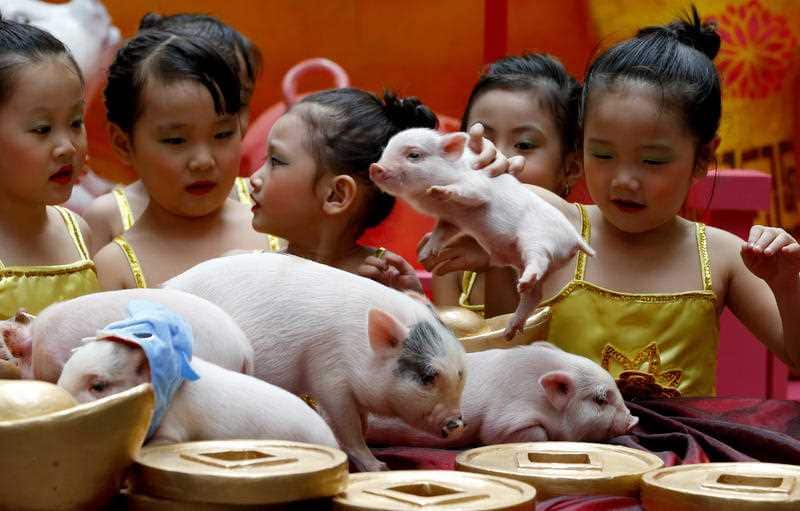
From Southeast Asia's centuries-old Chinese communities to the more recently established China towns of Sydney, London, Vancouver, Los Angeles and beyond, celebrations have been taking place across the globe.
The most important holiday of the Chinese calendar marks the New Year with a fortnight of festivities as reunited families wrap dumplings together and exchange gifts and red envelopes stuffed with money.
News that makes sense
Your trusted source for staying up-to-date with the world around you. Get free daily news updates and analysis, straight to your inbox.
Pigs symbolise good fortune and wealth in Chinese culture and this year's holiday brings a proliferation of porcine merchandise, greetings and decorations.
An estimated seven million Chinese tourists will head overseas over the Spring Festival this year, according to the official news agency Xinhua, citing numbers from Chinese travel agency Ctrip.
Prayers and greetings
In Hong Kong, flower markets were filled with residents picking out orchids, mandarins and peach blossoms to decorate their homes.
Image
Thousands of incense-carrying petitioners, some dressed in pig costumes, crammed into the city's famous Wong Tai Sin temple overnight, a popular location to mark the first prayers of the New Year.
In Malaysia, where 60 percent of the population is Muslim, and a quarter ethnic Chinese, some shopping centres chose not to display pig decorations, while some shops kept them inside.
But shoppers and traders said that was usual in a country where the Muslim majority are sensitive about an animal considered unclean in Islam, and overall there had been little controversy this year.
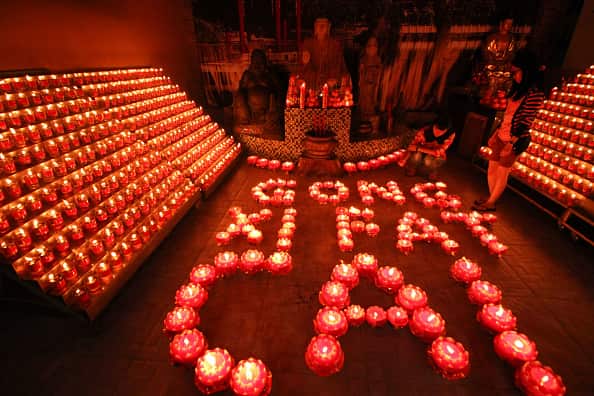
Next door in Indonesia, the world's largest Muslim-majority country which also has a sizeable ethnic Chinese population, the Lunar New Year is a public holiday.
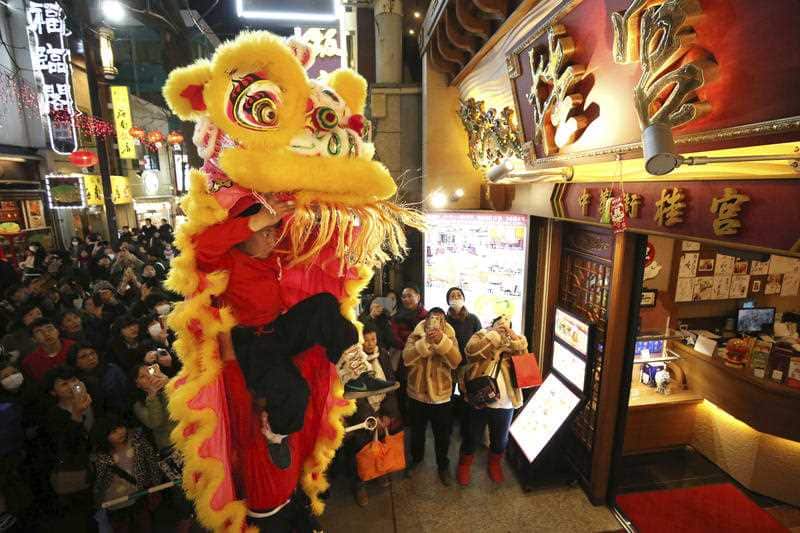
In Japan, the capital's famous Tokyo Tower was due to turn red in celebration of the New Year -- a first for the city.
It is also the most important holiday in Vietnam, where it is celebrated as Tet.
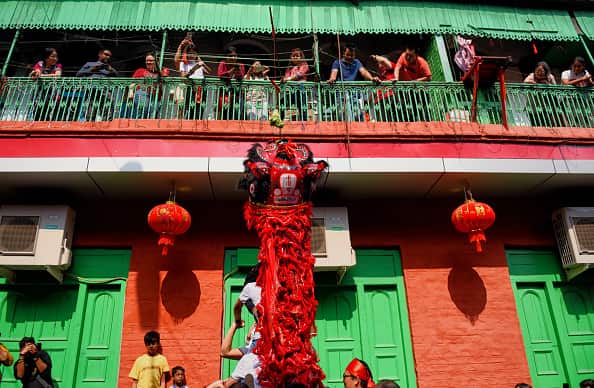
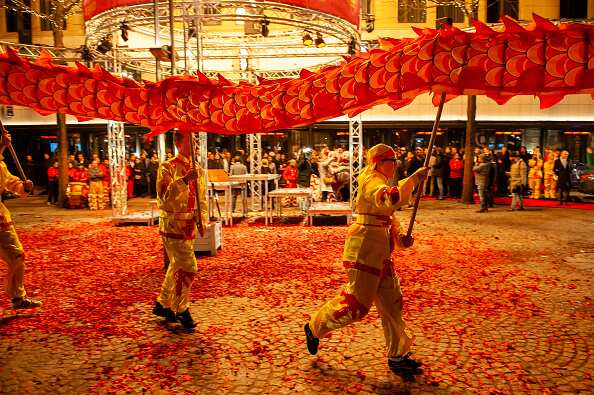
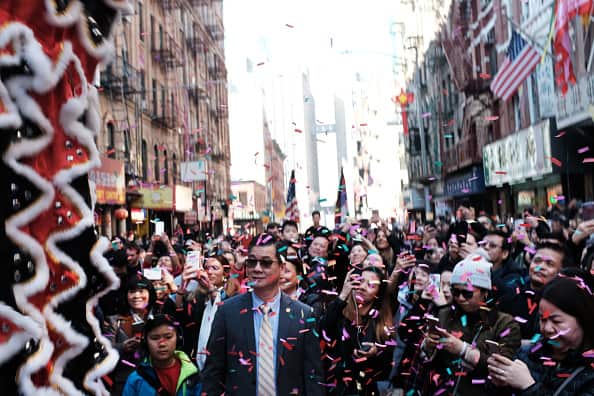
Parades and lion dances in Western cities such as New York and London were expected to draw large crowds.
Taiwan's president Tsai Ing-wen used her social media accounts to deliver a political sideswipe at Beijing with a message highlighting the island's democratic credentials and linguistic pluralism.
"In Taiwan we are able to maintain our cultural traditions," she said in a video in which she delivered the traditional new year greeting in five Chinese languages: Mandarin, Taiwanese, Hakka, Teochew and Cantonese.
China still sees Taiwan as part of its territory to be reunified, despite the two sides being ruled separately since the end of a civil war in 1949.







