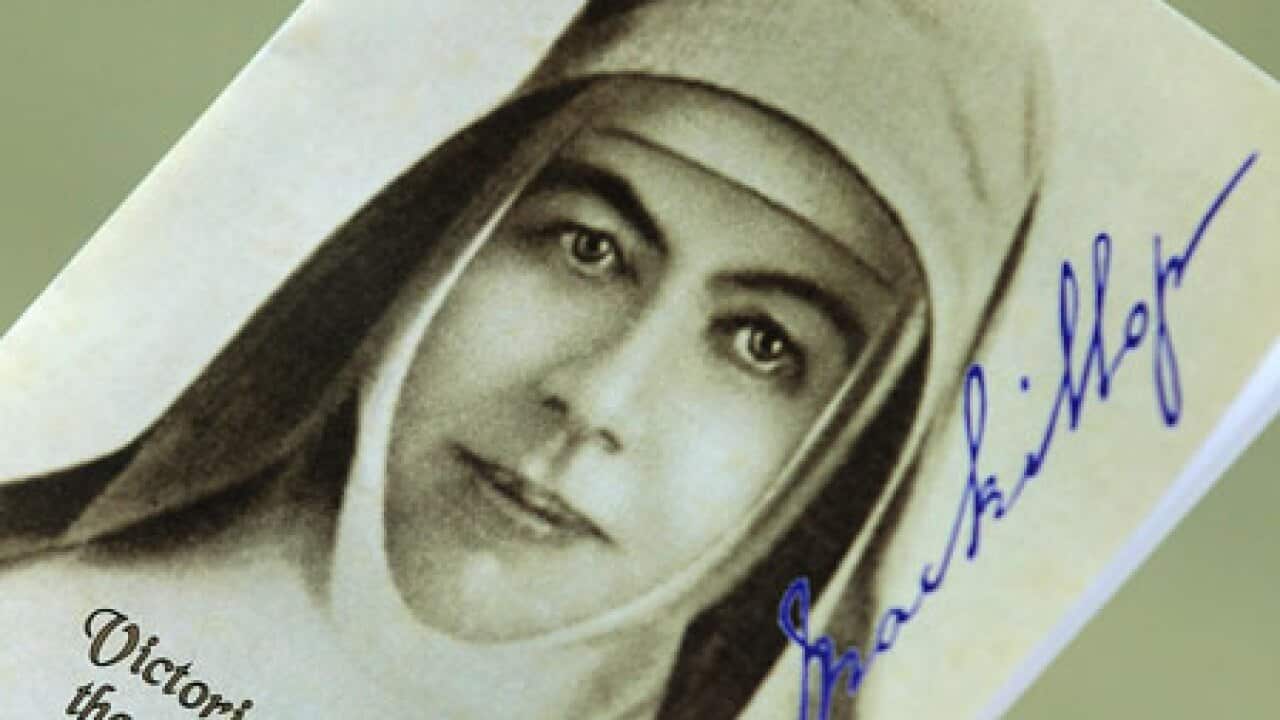
Pope Benedict XVI will meet with cardinals and bishops in Rome on Friday, February 19.
The names of those to be canonised will be announced shortly afterwards along with dates, the Sisters of St Joseph in Sydney said in a statement.
News that makes sense
Your trusted source for staying up-to-date with the world around you. Get free daily news updates and analysis, straight to your inbox.
"The Sisters of Saint Joseph, the Archdiocese of Sydney and the Australian Catholics Bishops Conference are eagerly awaiting news about the decision," they said.
Sister Maria Casey, the Australian Catholic Church's representative in Rome, who has led the push for Mary Mackillop's canonisation, will be present at the meeting.
Orphanages, refuges
Born in Fitzroy, Melbourne, in 1842, Mary MacKillop dedicated her life to helping the poor and needy.
In 1866 she founded the Sisters of Saint Joseph having previously opened a school in a disused stable in Penola, South Australia.
Her life thereafter was spent opening orphanages and refuges.
She maintained her faith and dedication to helping people throughout her life, despite a backlash from church leaders and many years of ill health, up until her death in Sydney in 1909 at the age of 67.
She was beatified by Pope John Paul II in Sydney on January 19, 1995 after the Vatican accepted she was responsible for the cure of a woman with terminal leukaemia in 1961.
Two miracles
A second miracle, the curing of NSW woman Kathleen Evans, who in 1993 developed inoperable lung cancer, was also recognised by the Vatican as attributed to Mary MacKillop.
Speaking publicly for the first time, Ms Evans told reporters in January she was just an average mother-of-five and grandmother to 20, who just happened to be touched by Mother Mary MacKillop.
During celebrations to mark the 100th anniversary of her death, in August last year, Sydney Archbishop Cardinal George Pell said her sainthood was "almost completely certain".
Sr Maria told AAP last year that confirmation of sainthood would give Australians someone to look up to.
"For Australians, it means that they have a hero or a model for young people and for people looking for inspiration," she said.







