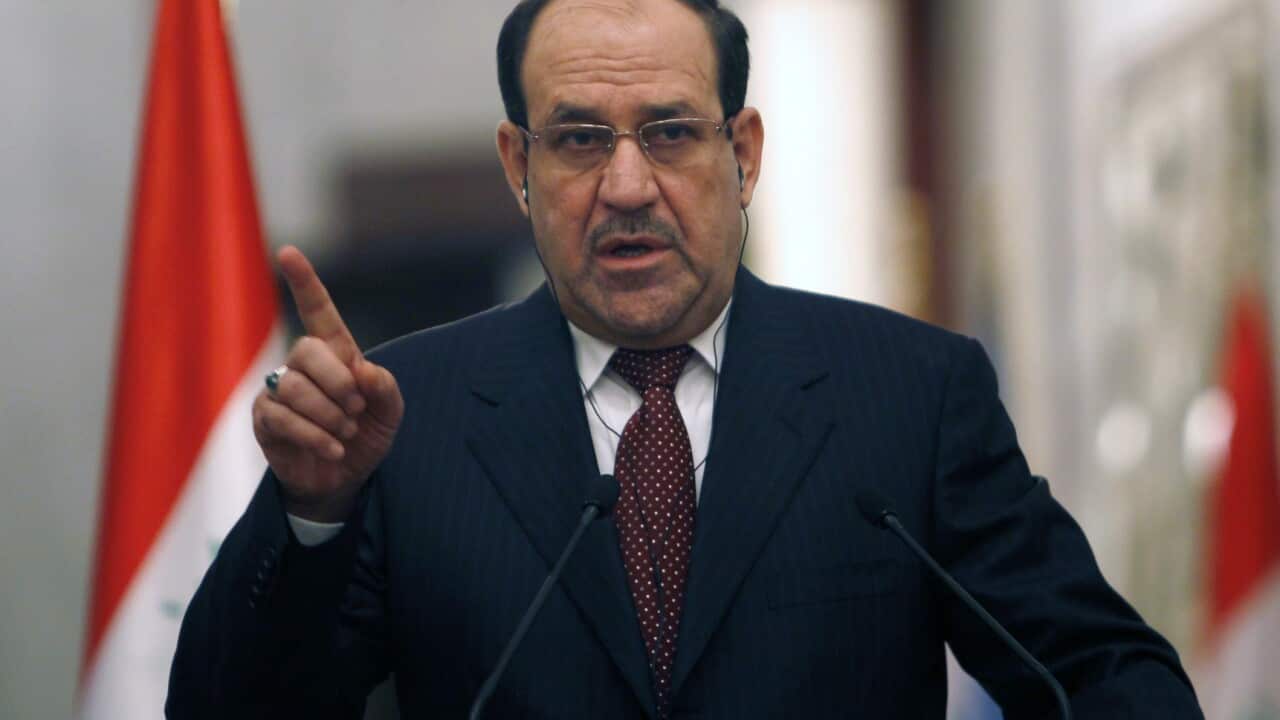
Iraqi Prime Minister Nouri al-Maliki won by far the most seats in parliamentary elections, results show, putting him in the driver's seat for a third term despite vocal opposition.
His State of Law alliance fell short of an overall majority, however, meaning Maliki will have to court rivals, some of whom have refused to countenance his bid for re-election.
Results from the election commission on Monday showed State of Law garnered 92 out of 328 parliamentary seats, with Maliki himself winning more than 721,000 personal votes.
Both were by far the highest such figures from the April 30 vote - the first since US troops withdrew from Iraq at the end of 2011 - and marked significant increases on his performance in the 2010 general election.
"I thank all the people who voted for us, and congratulate you on this great win," Maliki told supporters in televised remarks.
News that makes sense
Your trusted source for staying up-to-date with the world around you. Get free daily news updates and analysis, straight to your inbox.
"All of this points to ... a political majority," he said, referring to his efforts to rebuff so-called national unity governments made up of all the major parties.
Maliki's bloc won 30 seats in Baghdad alone and came first in 10 out of 18 provinces overall, all of them in the premier's traditional heartland in the Shi'ite-majority south.
Celebratory gunfire could be heard inside the heavily fortified Green Zone, home to Maliki's official residence and the US and British embassies, and in central Baghdad.
It was seen as an indication of security forces' support for the premier.
His main rivals all finished with between 19 and 34 seats overall, according to an AFP tally of election commission results.
"This sets Maliki up for a third term," said Ayham Kamel, Middle East and North Africa director at the Eurasia Group consultancy.
"It won't be without challenges, but ... the results make me even more confident that Maliki is going to be prime minister again."
The results can still be challenged and could change before being finally certified by the supreme court.
Both the American embassy and the UN mission welcomed the result, with Washington calling it "a testament to the courage and resilience of the Iraqi people, and another milestone in the democratic development of Iraq".
Iraq's political parties have for weeks been meeting and manoeuvring as they seek to build post-election alliances, but forming a new government could still take months.
The election and its aftermath came amid a surge in violence that has killed more than 3500 people this year, fuelling fears that Iraq could revert to the all-out conflict that cost tens of thousands of lives in 2006 and 2007.







