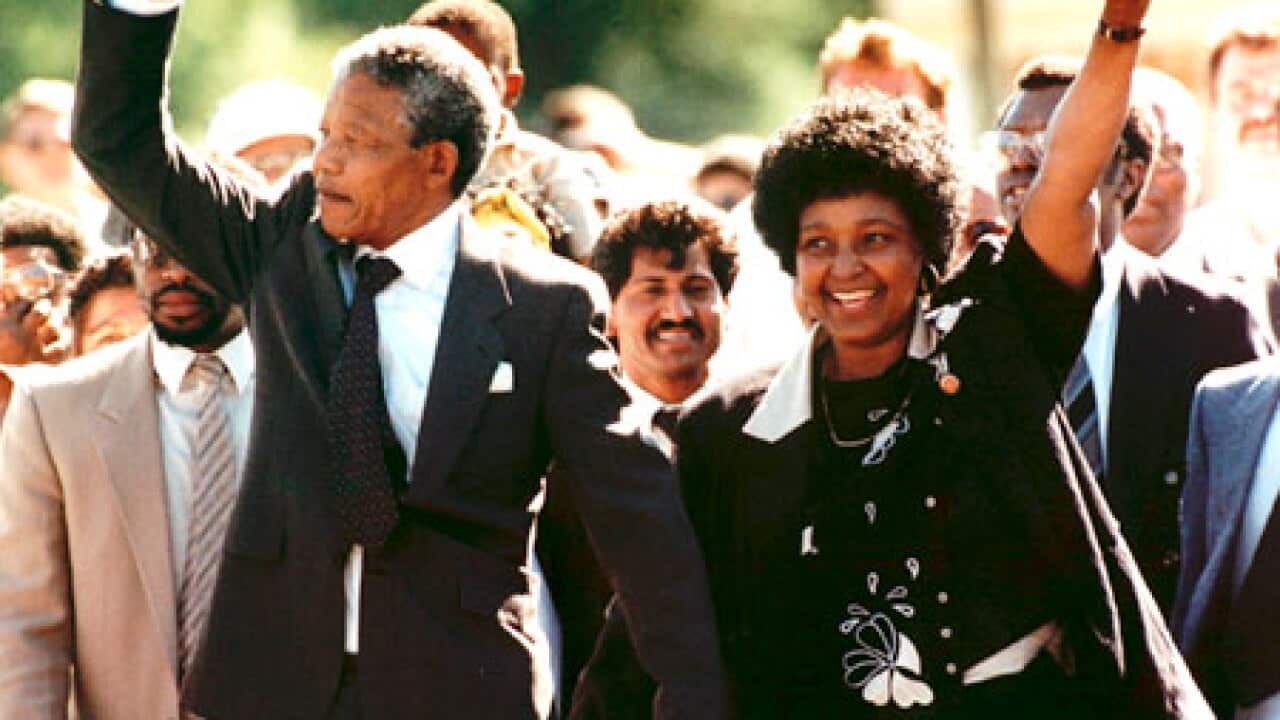
Twent years after announcing Nelson Mandela's release from prison, South Africa's last white president says dismantling apartheid averted catastrophe.
"The nine days between (his speech to parliament) and the release of Nelson Mandela on 11 February changed South Africa forever," FW de Klerk told a conference commemorating the 20th anniversary of the announcement.
"It is accordingly appropriate for us to celebrate the 20th anniversary of February 2, 1990 -- not to honour my role or the role of any other individual or party, but because it prevented a catastrophe," he said.
News that makes sense
Your trusted source for staying up-to-date with the world around you. Get free daily news updates and analysis, straight to your inbox.
Last pro-apartheid
De Klerk had been in office less than five months when he delivered the historic address to parliament, which called for a new democratic constitution, lifted the ban on dissident political parties and announced the release of all political prisoners, including his eventual successor as president, Mandela.
A one-time hardliner in the pro-apartheid National Party, De Klerk would go down in South African history as the last president of the white supremacist regime which ended when Mandela's ANC party won multi-racial elections in 1994.
"We would, no doubt, have been able to maintain control for many years but under increasingly grim and unacceptable circumstances," said De Klerk.
"Our young men would have spent half their time in military service; many more white South Africans would have left the country; and there would have been pervasive white poverty and unemployment among those who remained.
"Worse still, the prospects for a satisfactory negotiated settlement would have diminished with each successive cycle of revolution and repression."
Nobel Prize winner
Mandela's release nine days after De Klerk's address ended his 27-year imprisonment.
The two shared the Nobel Peace Prize in 1993 for their work in ending the apartheid regime and building a new democratic South Africa.
"A critically important factor was the acceptance by all sides that there could be neither a military nor a revolutionary victory -- and that continuing conflict would simply turn South African into a wasteland," said De Klerk.
Twenty years ago, De Klerk's speech was not an obvious political move.
"It was a brave move. A very brave move in the face of potential disaster," Paul Graham, executive director of the Institute for Democracy in Southern Africa, told AFP.
Brink of civil war
But some South Africans remember De Klerk less for his idealism than for his pragmatic attempt to save the country from disaster.
At the time, South Africa's divisive political system had brought the nation to the brink of civil war. The economy was collapsing under the weight of international sanctions, and the country was "a steadily deteriorating pariah" internationally, Graham said.
"FW deserves recognition not for any great desire to right the wrongs of the past, but for his pragmatism," said an editorial in The Star newspaper Tuesday.
"FW is not and never will be everyone's hero, but February 2, 1990 should be remembered as the day he had the bravery to do the right thing."
Challenges ahead
With the speech, De Klerk, now 73, set in motion the country's transformation into a multi-racial democracy.
Yet the country still faces many challenges 20 years on, including 30 percent unemployment, endemic crime, a faltering education system and the world's biggest divide between rich and poor.
"As we celebrate 20 years, I suspect there will be some reflection on whether we've made the best use we could have of the opportunities it provided," Graham said.
"There's a sense that it's a still-unfinished project, I suppose."







