
Chancellor Angela Merkel spoke of Germany's "everlasting responsibility" to oppose anti-Semitism during a visit to Israel on Thursday as she and Prime Minister Benjamin Netanyahu brushed past their differences and promoted cooperation between their nations.
The one-day visit by Merkel and members of her cabinet was part of German-Israeli government consultations held regularly, but came after Netanyahu's harsh criticism of European countries over their efforts to keep alive the Iran nuclear deal.
Germany and other European countries have also repeatedly hit out at Israeli settlement building in the occupied West Bank and warned over threats to remaining prospects for a two-state solution to the conflict with the Palestinians.
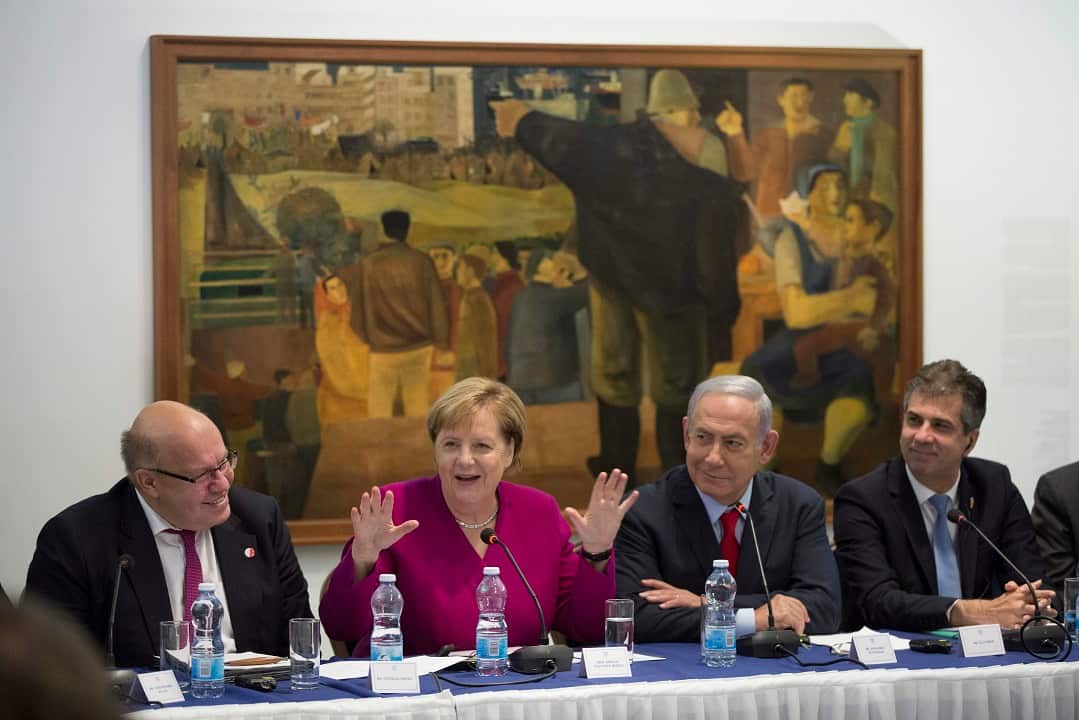
But both leaders seemed determined to have the visit run smoothly, greeting each other warmly after Merkel's arrival on Wednesday night and touring an innovation exhibit together on Thursday.
News that makes sense
Your trusted source for staying up-to-date with the world around you. Get free daily news updates and analysis, straight to your inbox.
Merkel began the day with a visit to Israel's Holocaust memorial high in the hills above Jerusalem.
After laying a wreath in the Yad Vashem memorial's solemn Hall of Remembrance, where an eternal flame burns, she spoke of Germany's responsibility as the perpetrator of the Holocaust.
"From this comes the everlasting responsibility of Germany to remember this crime and to oppose anti-Semitism, xenophobia, hatred and violence," she said, reading out the message she wrote in the memorial's guest book.
Later after receiving an honorary doctorate from Israel's Haifa University, she answered questions from students and touched on the Iran nuclear deal.
Netanyahu has urged European nations to follow the lead of US President Donald Trump and withdraw from the accord with his country's main enemy.
Germany, like other signatories to the deal, says it is preventing Iran from obtaining nuclear weapons for now.
Merkel noted the Iranian presence in neighbouring Syria and how that has exacerbated the threat from Israel's enemy.
She said the nuclear deal would be discussed further with Netanyahu.
"On the principle that everything must be done to prevent nuclear armament, we absolutely agree," she said.
'She's lost hope'
Germany says the joint government meeting on Thursday afternoon will focus on economic ties, innovation and technology, while noting that the consultations have been in place for 10 years.
Felix Klein, who heads the German government's fight against anti-Semitism, is part of the delegation. Fears over a resurgence in anti-Semitism in Germany are expected to be discussed.
Merkel said ahead of the trip that there was "unfortunately a lot of anti-Semitism" in Germany, while also noting the two countries were linked by a "unique relationship".
There was, however, no shortage of controversy in the run-up to the visit.
Netanyahu's criticism of Europe related to Iran has been especially strong, and last week at the UN General Assembly he accused EU nations of "appeasement".
At the same time, Germany has remained steadfast in its support for a two-state solution and in recent weeks joined calls against Israel's planned demolition of a Bedouin village located in a strategic area of the occupied West Bank.
On Wednesday, children from the village, Khan al-Ahmar, held signs with Merkel's picture outside the German representative office in Ramallah to ask for help.
Speaking to students from Haifa University, Merkel denied a report that she threatened to cancel the trip if Israel moved ahead with demolition of the village beforehand.
Yoram Ben-Zeev, a former Israeli ambassador to Germany, said Merkel would likely only "go through the motions" during the visit on issues related to the conflict with the Palestinians.
"I think that for the time being she's lost hope that things can move," Ben-Zeev told AFP, noting Trump's confusing statements on the conflict, Netanyahu's right-wing stance and Palestinian president Mahmud Abbas's unpopularity.
"Why should she put her hands in the fire?"
The last joint government consultations in 2017 were postponed, with scheduling conflicts cited as the official reason.
There were reports however that Merkel was unhappy with a law passed then related to Israeli settlement building in the occupied West Bank.
The same year, a visit to Israel by Germany's then-foreign minister Sigmar Gabriel ended in acrimony when Netanyahu cancelled their meeting.
Netanyahu made the decision after Gabriel refused to call off meetings with rights groups critical of Israel's government.







