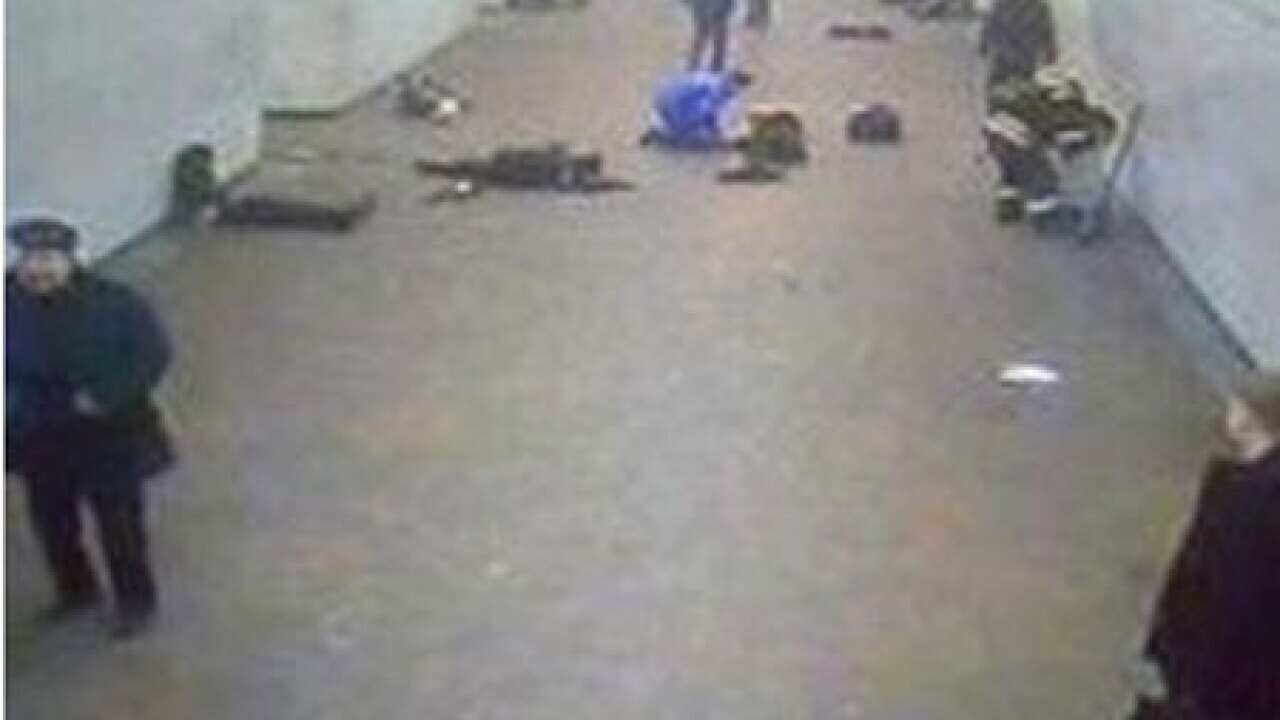
Female suicide bombers have been blamed by Russia's FSB Security Service for the twin blasts on Moscow's Metro, which have killed around 35 people, although reports are varying.
Later in the day, Russian authorities confirmed their belief that a group from the north Caucasus was responsible.
"The preliminary theory is that the terrorist attacks were carried out by terror groups linked to the North Caucasus. We consider this the main theory," FSB chief Alexander Bortnikov said, quoted by Russian news agencies.
Separatists inlcuding Chechen operatives have previously committed acts of terrorism in Moscow, although no claims have been made for the most recent attacks, and no firm evidence yet produced.
Scores killed by two bombings
News that makes sense
Your trusted source for staying up-to-date with the world around you. Get free daily news updates and analysis, straight to your inbox.
Dozens of people were killed after the explosions ripped through the metro system during the early morning rush hour, emergency services said.
"According to preliminary information, both blasts have been executed by female suicide bombers," a FSB spokesman told AFP.
Russian Special Services called the blasts a "planned terrorist attack", according to a source who spoke to the RIA news agency.
President Dmitry Medvedev was briefed by the director of the FSB secret service, the Kremlin press service said.
The FSB has "informed the president on the measures that are being taken to help the victims and to establish the causes of the explosions," the Kremlin press service said in a statement.
The president was also briefed by the prosecutor-general and the emergency minister and the health and social development minister, Russian news agencies reported, citing the Kremlin press service.
Russian authorities were later joined by NATO in their condemnation of the attacks.
Attack while train stopped at station
The first explosion took place on a train while it was in the Lubyanka station in central Moscow, the spokeswoman for the Russian emergencies ministry Irina Andrianova told the ITAR-TASS news agency.
"14 people died in the wagon of the train and 11 on the platform," she said. At least 10 people were wounded.
Minutes later, a second explosion went off at the Park Kulturi metro station, also in central Moscow, Russian news agencies reported.
The initial death toll from the second blast was put at 12, although the first reports spoke of 15 dead.
Andrianova said this blast also took place in a train carriage while it was on the platform.
She added that rescue workers were on the scene. ITAR-TASS said emergency services were impeded from accessing the site of the blast due to the early morning rush hour traffic.
A Moscow resident told the BBC some hours after the event that only one metro line was shut, and the city was 'slowly getting back to normal again.'
Eye on restless Caucasus region
Over the last decade, the Russian capital has been hit by a string of deadly explosions claimed by militants from its turbulent southern region of Chechnya, but this has become less frequent in the last years.
Ingushetia and Dagestan, regions neighbouring Chechnya in Russia's south, also suffer from serious unrest and opposition to Russian rule.
Chechnya itself has seen a worrying rise in violence over the last months as the pro-Kremlin local authorities seek to clamp down on an Islamist uprising.







