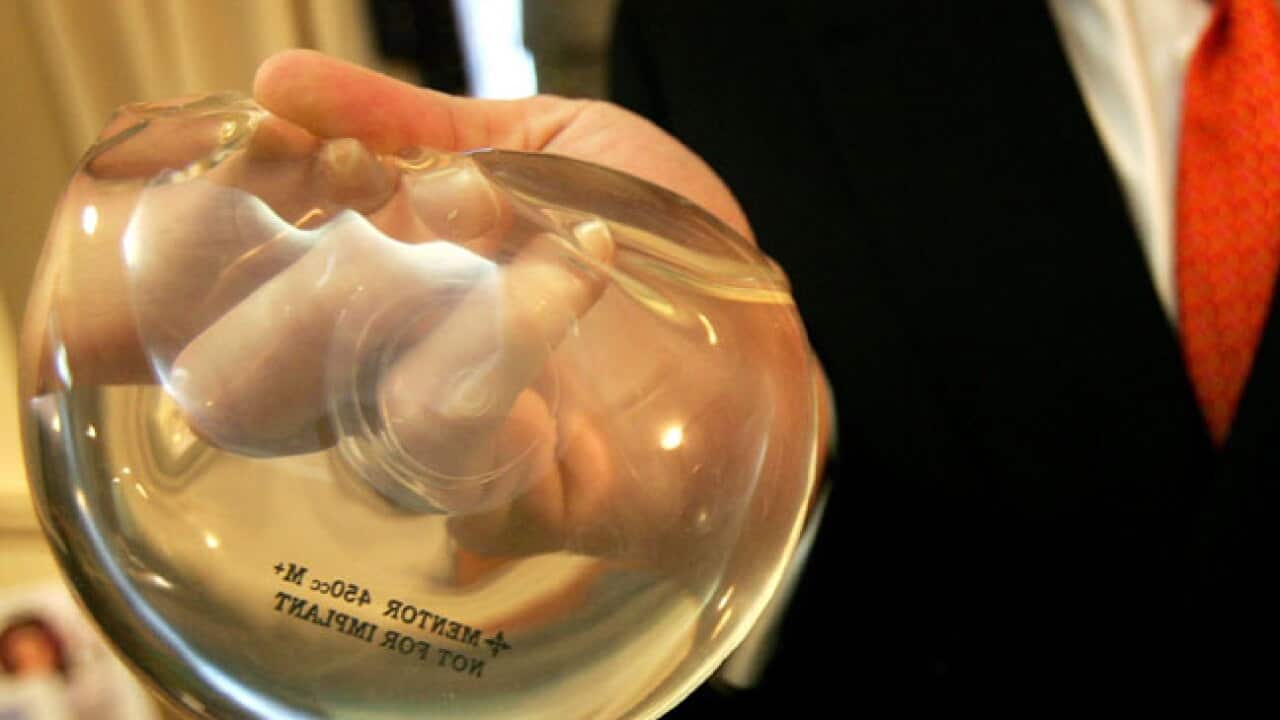
Germany and the Czech Republic advised women Friday to have potentially faulty breast implants made by French firm PIP removed, but Britain said it was not convinced of the need.
Germany's Federal Institute for Medications and Medical Products (BfArM) recommended that implants made by the firm at the heart of the scandal should be removed "as a precautionary measure".
The Czech health ministry gave similar advice to up to 2,000 women there.
News that makes sense
Your trusted source for staying up-to-date with the world around you. Get free daily news updates and analysis, straight to your inbox.
And while Britain said there was no evidence requiring a general recommendation to remove the implants of some 40,000 women, it said those who had received them from the state-run National Health Service could have the prostheses removed free of charge.
About 300,000 women in 65 countries are estimated to have received implants made by Poly Implant Prothese (PIP), which allegedly used an illegal industrial-grade gel that investigators say has led to abnormally high rates of ruptured implants.
Some estimates of the number of women affected are higher.
France has already advised the removal of the PIP implants, while 13 other countries in Europe and in Latin America have urged women to get regular checkups.
Two of them of them -- Bolivia and Venezuela -- are offering operations to have the prostheses removed.
Australia, however, has said it found no evidence that the implants posed a risk.
French police are investigating the now-defunct PIP and its founder Jean-Claude Mas, 72.
According to the minutes of a police interview conducted in October and seen by AFP, Mas admitted to investigators that he switched the gel and hoodwinked quality inspectors in order to boost profits.
The scandal has led to more than 450 lawsuits filed in three countries.
Germany's BfArM said it was revising advice issued on December 23 that women should ask their doctors to check whether the implants had developed tears before deciding if further action was necessary.
"Due to the rising number of notices from doctors, trade organisations and hospitals in recent days, the BfArM has expanded its risk assessment," the institute said.
"These notices say that silicone from such implants increasingly and over time can leak, even in those without tears."
The German government has not said how many women have received the implants, but reported 19 incidents of leaking.
The Czech health ministry said its experts had not yet detected any "acute risk of serious health problems."
But in a message on its website it said: "All patients are recommended to have the implants removed at the clinic where they received them."
Anyone who chose not to to so should undergo annual checks, it added.







