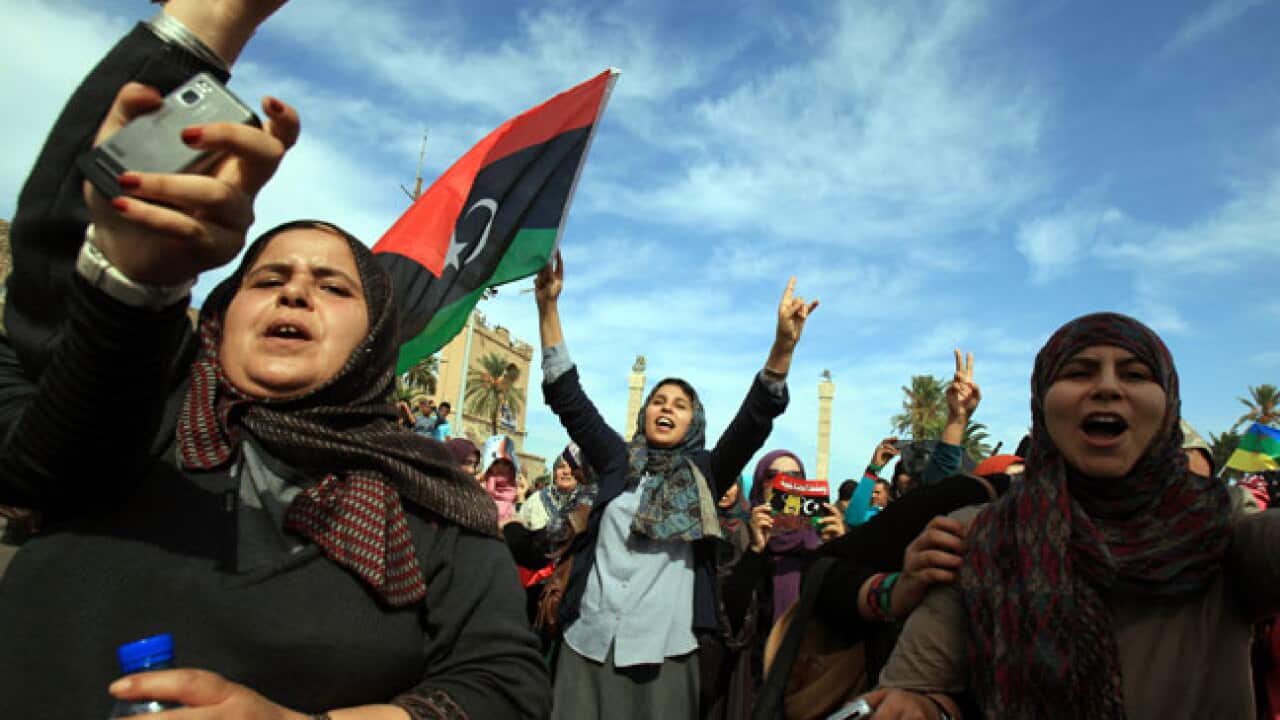
More conflict and uncertainty lies ahead for the Libyan people in the wake of dictator Muammar Gaddafi's death, an expert predicts.
RMIT University international affairs expert Dr Binoy Kampmark says the dictator's killing will mean greater stability for the National Transitional Council (NTC), created in the aftermath of the uprising against Gaddafi.
"It means that a key figure in the uprising has been eliminated quite literally, and it means that there will be certainty for (the transitional council)," Dr Kampmark said.
News that makes sense
Your trusted source for staying up-to-date with the world around you. Get free daily news updates and analysis, straight to your inbox.
But he says there will be uncertain times for the people of Libya.
"The transitional council itself is marred by inner conflicts, so that's one of the problems there, we're not sure how those conflicts will play out," he said.
The 69-year-old Libyan strongman was killed by new regime forces in their final assault on the last pocket of resistance in his hometown Sirte on Thursday.
Dr Kampmark predicts more conflict, given Libya is already racially divided and its capital Tripoli is run by militias with various loyalties.
"All of them claimed to be united against, for instance, Gaddafi for a time, but of course now that Gaddafi is dead the common object is gone, so it means that the possibility for further conflict may actually exist amongst the members of the NTC," he said.
Dr Kampmark said the killing could set a precedent for international intervention.
"It sets the precedent for intervention in the case of a collection of powers such as NATO in terms of backing UN security council resolutions," he said.
"And it means that the Arab Spring is not just a case of local movements that don't have external support.
"It seems that the Libyan example shows that external forces will be involved when it comes to overthrowing regimes in the context of the Arab Spring."







