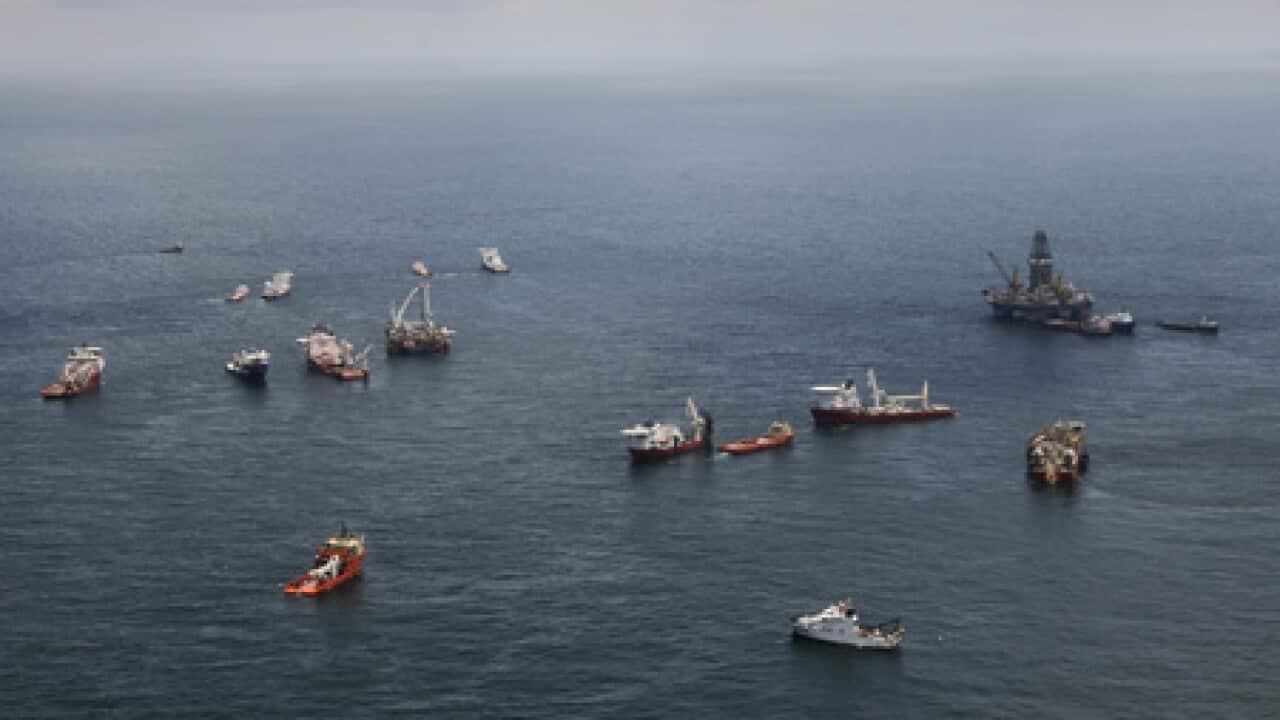
US officials have urged further study of the damage to sea life wreaked by BP's broken well in the Gulf of Mexico, and warned that the energy giant would face a "large financial penalty."
White House energy chief Carol Browner declined to say if criminal charges could be brought, as the US Justice Department continues to investigate the causes of the spill that unleashed the worst maritime oil disaster in history.
But following a week of rosy government reports on vanishing oil in the high seas, the US pointman on the disaster said a clear picture of the pollution and its effect on the environment was only beginning to come into view.
News that makes sense
Your trusted source for staying up-to-date with the world around you. Get free daily news updates and analysis, straight to your inbox.
"I think what we need to understand is there's a lot of oil that's been taken care of. There's a lot of oil that's still out there," said Coast Guard Admiral Thad Allen on CNN.
"You need to keep a steady hand at the tiller here, keep this clean-up going," said Allen.
"What was permanently done to the marshes and the beaches, what was permanently done to the juvenile fish and seafood stocks -- how does that relate to future losses?
"We have to quantify that somehow. That takes a lot of study," Allen said. "And that's the process that we've been moving into now."
An estimated 4.9 million barrels, more than 205 million gallons, spewed from BP's ruptured well in the 87 days from the beginning of the disaster on April 20 until the leak was finally capped on July 15, the US government has said.
About 800,000 barrels were captured by containment operations that syphoned oil from the gushing wellhead to ships on the surface.
The numbers could play a crucial role in determining how much BP is fined under the Clean Water Act, which allows the US government to seek civil penalties for illegal oil discharges.
Browner, director of the White House Office of Energy and Climate Change Policy, said the British energy giant would be on the hook for massive penalties.
"BP will be held absolutely accountable," she told NBC's "Meet the Press" program. "There will be a large financial penalty."
Fines under the law range from 1,100 dollars per barrel spilled to as high as 4,300 dollars per barrel spilled, if negligence is proven, meaning BP could theoretically face fines of up to 17.6 billion dollars for the 4.1 million barrels that poured into the sea.
A US government report released Wednesday said nearly three quarters of the oil has all but disappeared.
Then the Food and Drug Administration on Friday assured that it was highly unlikely that the chemicals used to break up spilled crude into small particles would enter the food chain and cause harm to humans.
At a barbecue Sunday President Barack Obama was to feature Gulf of Mexico seafood; Obama says he trusts in its quality despite the BP oil spill.
However, top officials have also warned that the impact of the largest accidental oil spill in history is expected to be felt for decades to come.
Asked about the apparent contradictions, Allen said the information should become more precise as time goes on.
"I don't think it's the end-all, be-all; I think it should evolve," he said of the National Oceanic and Atmospheric Administration (NOAA) report. "But it's more information than we had before."
The report said only 26 percent of the oil remains close to its original form, floating on the ocean water or suspended under the surface.
The other 74 percent has either evaporated or been burned, skimmed, recovered from the underwater wellhead or dispersed, the panel of government and independent scientists found.
In response to concerns over the potential for toxins to enter the food supply after BP poured close to 1.8 million gallons of chemical dispersant into the Gulf to break up the crude slick, Browner said seafood testing would continue.
"No one is saying don't worry. What we're saying is, right now the tests show nothing of concern," said Browner.
"We're going to continue to test. We're not going away. We're going to continue to work with the Gulf Coast communities, to make sure their economic losses are honored, to get the fisheries reopened when appropriate," she said.
"You can't put this much oil out there and not be concerned."
BP said this week it has cemented closed the runaway well, which ruptured after an explosion on the Deepwater Horizon rig April 20 that killed 11 workers and unleashed the biggest maritime spill on record.
Allen said that work should begin later this week on a relief well that aims to put a permanent end to the problem.







