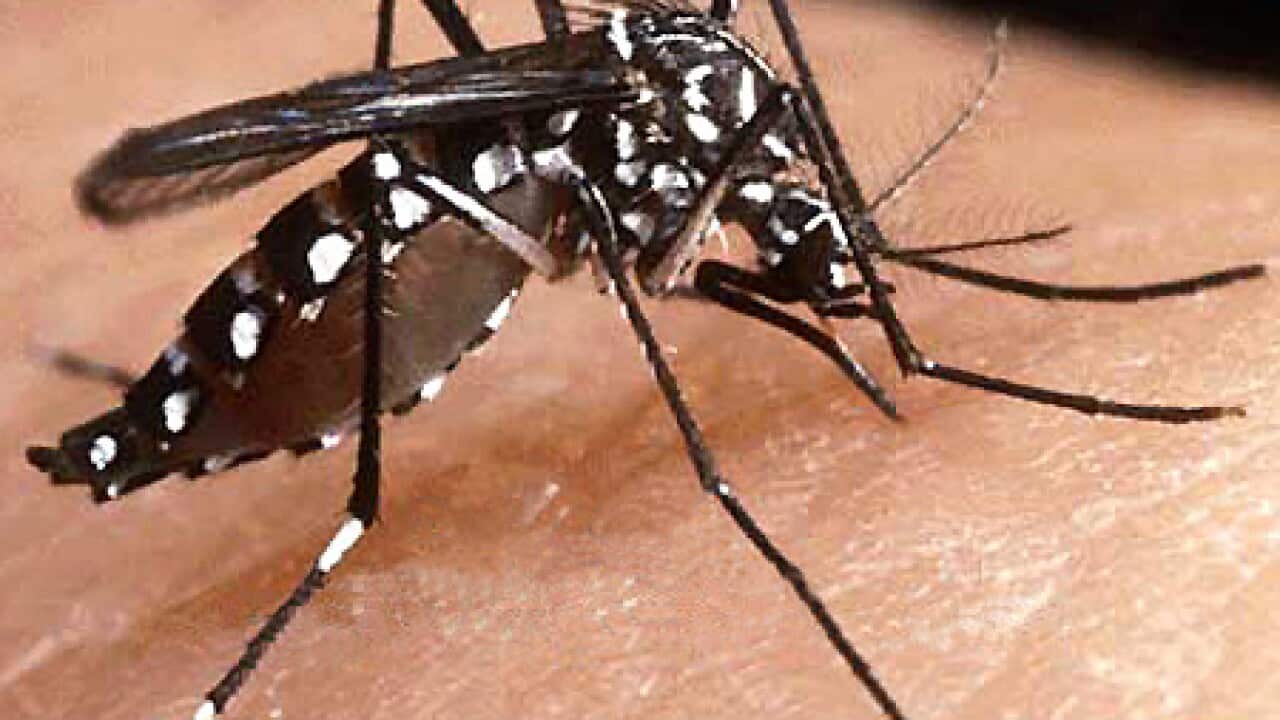
A 19-year-old tourist has died after contracting one of Australia's most rare mosquito-borne diseases while on holiday in the Northern Territory.
The Northern Territory Department of Health issued a warning advising people cover up to avoid being bitten, after the Canadian woman became the third person in the NT to contract Murray Valley encephalitis (MVE) this year.
The woman became unwell when she arrived home from a holiday in the NT earlier this month and was admitted to hospital in Calgary, Alberta, where she died on Tuesday.
Acting director of the Centre for Disease Control Peter Markey, in a statement released late on Wednesday, said it was not known exactly where in the NT the woman caught the disease.
He said that in addition to the three confirmed cases of MVE, there had also been one case of a related virus, called Kunjin.
News that makes sense
Your trusted source for staying up-to-date with the world around you. Get free daily news updates and analysis, straight to your inbox.
"There is also a two-year-old child with suspected MVE in Royal Darwin Hospital, who acquired the disease in the Kimberley (in Western Australia)," he said.
Earlier this month a 27-year-old man died from the disease in South Australia.
A 47-year-old man also caught the virus in SA, but was discharged from hospital.
SA Health's chief medical officer, Paddy Phillips, said the two cases were the first reported instances of locally acquired MVE since 1974.
Dr Markey said MVE was the most dangerous endemic mosquito-borne disease in the NT, for which there is no specific medical treatments.
Unlike other mosquito-borne illnesses, which are not typically fatal, such as Ross River fever, about 25 per cent of people who contract MVE die.
Many MVE patients will suffer from delirium and coma, leading to paralysis or brain damage.
People who have visited or live in or around wetlands or rivers are most likely to be at risk.
"Higher than average rainfall during the past wet season, in particular rainfall in Central Australia and the Barkly, has meant the risk of Murray Valley encephalitis and Kunjin extends across all of the Northern Territory until at least July," Dr Markey said.
In February, MVE was detected in sentinel chicken flocks in the northern Victorian towns of Mildura, Robinvale, Kerang and Barmah, as well in the New South Wales town of Tooleybuc, near Swan Hill.
Sentinel chickens across the NT have also shown signs of MVE and Kunjin.
A fact sheet issued by the NSW Department of Health said MVE could not be passed from animals to humans, but that mosquitoes which fed on infected water birds could transmit the disease to people.
Symptoms include severe headaches, high fevers, tremors and seizures.







