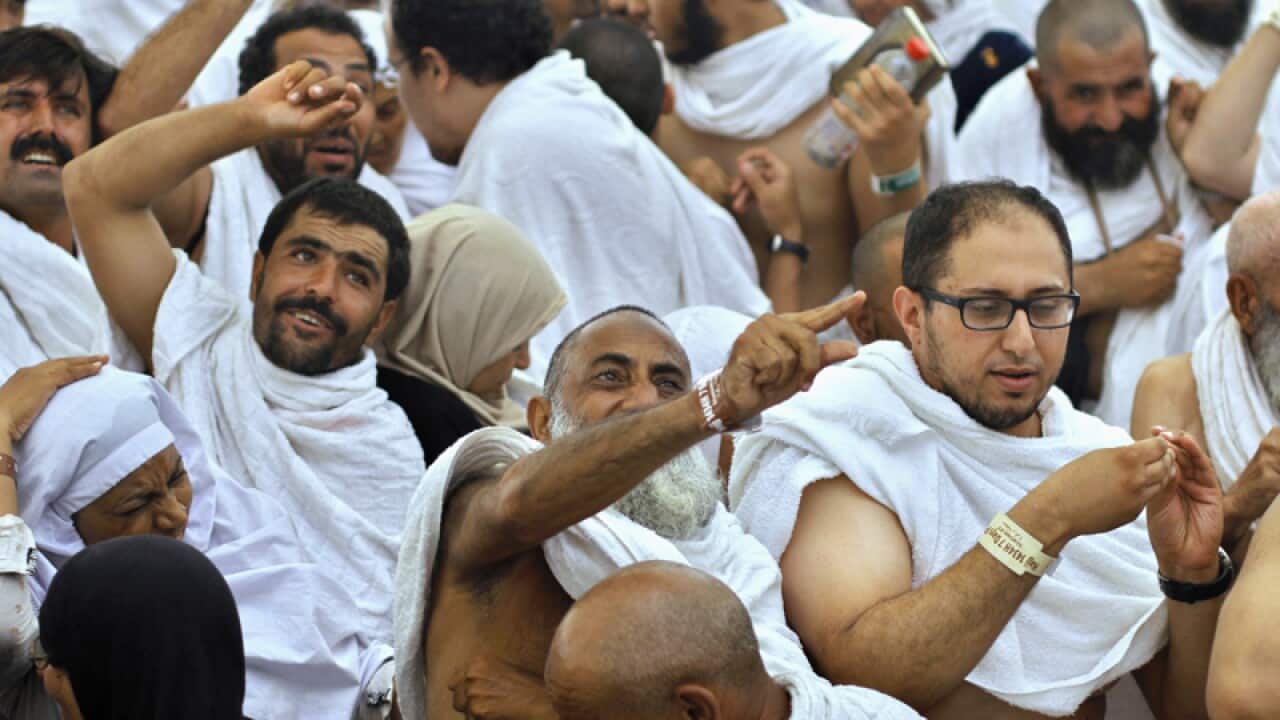
Around two million Muslims have converged on Mina in Saudi Arabia to symbolically stone the devil, the final stage of the annual hajj pilgrimage that has so far gone off without incident.
The occasion coincides with the first day of Eid al-Adha, the feast of sacrifice, which is celebrated by Muslims around the world.
The numbers were sharply lower this year because quotas were reduced due to massive construction work to expand the Grand Mosque, Islam's holiest worship place, and fears over the deadly MERS coronavirus.
Health ministry spokesman Khaled al-Merghalani said no cases of coronavirus nor any other disease had been detected, making this year's hajj so far free from diseases and incidents.
The Saudi public statistics department says there are a total of 1.98 million pilgrims. Of those, 1.38 million came from 188 countries, a 21 per cent slide, while there were 600,700 domestic pilgrims, a massive drop of 57 per cent.
News that makes sense
Your trusted source for staying up-to-date with the world around you. Get free daily news updates and analysis, straight to your inbox.
Although the numbers were sharply reduced from 3.2 million last year, the crowds of faithful managed to transform the Mina Valley, just outside the holy city of Mecca, into a vast sea of white as they flocked from all directions towards the place of stoning.
An endless torrent of pilgrims, dressed in the ihram, a two-piece seamless white garment, cried "Allahu akbar" (God is greatest) as they hurled pebbles they had collected overnight at nearby Muzdalifah at concrete pillars representing the devil.
Some pilgrims also took the opportunity to reflect on unrest in their home countries.
A small group of Syrians were seen carrying the rebels' flag, while a number of Egyptians raised their four fingers, a sign of support for deposed Islamist president Mohamed Morsi.
Hundreds of police guarding the multi-storey building where the stoning ritual is carried out at times struggled to control the crowd but those performing the ritual reported a less chaotic experience than in past years.
The stoning rituals continue until Friday but pilgrims in a hurry can complete it in a day.
The ritual is an emulation of Ibrahim's stoning of the devil when he appeared at three spots trying to dissuade the biblical patriarch from obeying God's order to sacrifice his son, Ishmael.
The pilgrims have been on the move since early Sunday when the hajj began.







