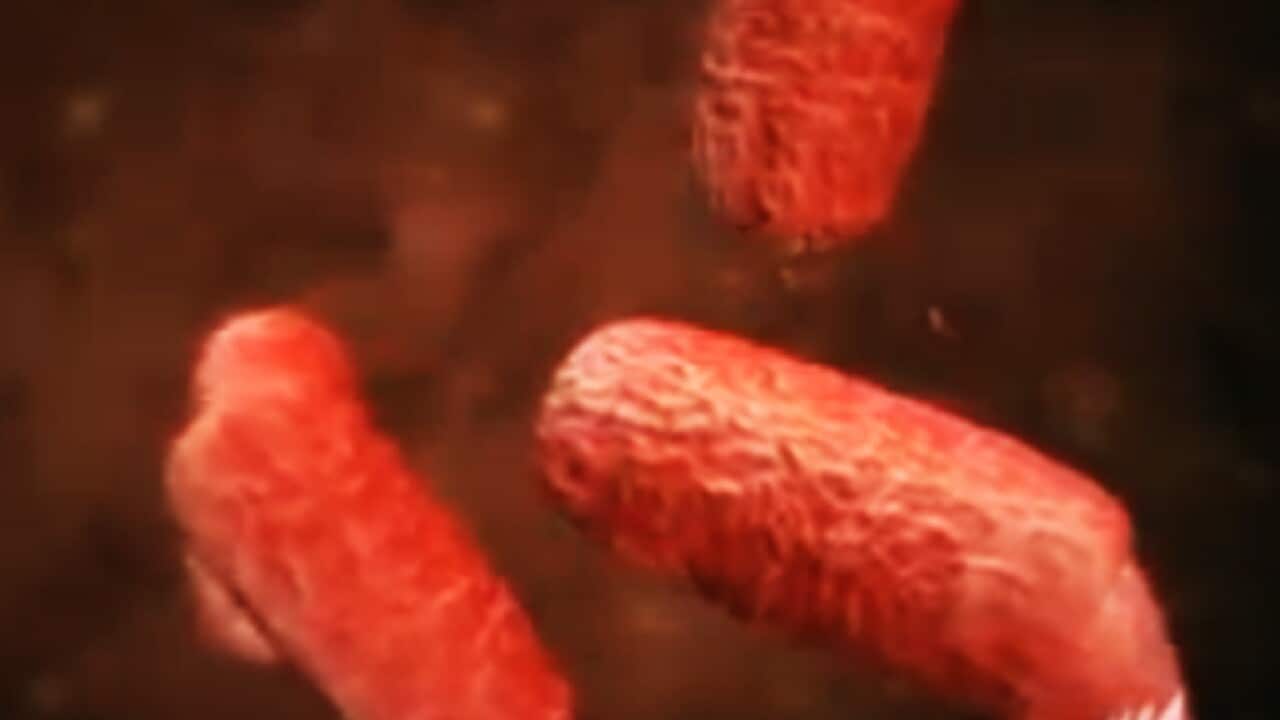
Scientists have yet to trace the source of an E coli outbreak that has spread to 12 countries and killed at least 19 people, mainly in Germany, as experts on Saturday ruled out links to a Hamburg festival.
The European Commission said it would send an expert team to Germany to bolster efforts to find the origin of the killer bacteria as Qatar became the latest country to ban imports of salad items from Germany.
German weekly newspaper Focus reported Saturday that authorities suspected a harbour festival that took place in Hamburg on May 6-8 and drew 1.5 million visitors from Germany and abroad.
News that makes sense
Your trusted source for staying up-to-date with the world around you. Get free daily news updates and analysis, straight to your inbox.
But the country's national disease body, the Robert-Koch Institute, said there did not appear to be a connection. "Press information regarding a link between the E. coli infections and large gatherings does not correspond with the institute's knowledge," German news agency DPA quoted it as saying.
Local media reported that a man in his 50s who died in Brandenberg may be the 20th victim of the bacteria in Europe. But the cause of death was uncertain as he had several infections besides E. coli.
German reports also claimed police were investigating a deliberate act and were checking two restaurants in the northern town of Lubeck, one in which 17 diners fell ill and another in which eight women were affected, one of whom died.
Christian Seyfert, a spokesman for the consumer protection ministry in the region told AFP that speculation about the eateries' link to the outbreak was unfounded.
Biggest epidemic in decades
Germany is facing its biggest epidemic caused by bacteria in recent decades. All but one of the fatalities since the outbreak of enterohaemorrhagic E. coli (EHEC) poisoning began last month have occurred in Germany. A patient who died in Sweden had recently returned from Germany.
Federal Health Minister Daniel Bahr will on Sunday visit the Hamburg hospital where several people died, the government announced Saturday.
Cases of E. coli poisoning have also been reported in Austria, Britain, the Czech Republic, Denmark, France, The Netherlands, Norway, Spain, Sweden, Switzerland and the United States. Each is related to German travel.
Regional German health authorities have reported more than 2,000 cases of people falling ill, with symptoms including stomach cramps, diarrhoea, fever and vomiting.
A large majority are female, suggesting the source is "probably something that women prefer more than men," Andrea Ellis, an epidemiologist at the World Health Organisation's (WHO) department of food safety, said in Geneva.
In some cases the infection can lead to the potentially life-threatening condition haemolytic uraemic syndrome (HUS), a kidney disease.
At least 552 people, 520 of them in Germany, have contracted HUS, according to the WHO, with 10 other European countries and the United States reporting HUS or EHEC infections.
Rare E. coli strain
The WHO has identified the bacteria as a rare E. coli strain never before connected to an outbreak of food poisoning. But researchers in Hamburg and China have found it was a "new type", extremely aggressive and resistant to antibiotics.
The health crisis has triggered trade tensions in Europe.
Berlin initially blamed the outbreak on cucumbers imported from Spain, provoking a backlash from Madrid which said it would seek damages from Europe for slander.
Tens of thousands of tonnes of Spanish produce went unsold, costing Spanish growers an estimated 200 million euros ($290 million) a week.
And countries like Russia and Lebanon banned vegetables from the EU, in moves criticised by the 27-member bloc.
Qatar has banned the import of cucumbers, tomatoes and lettuce from both Spain and Germany, state news agency QNA reported Saturday, and "will not hesitate" to ban all vegetables from all European countries if necessary, the agency quoted a health council spokesperson as saying.
To ease tension over heavy trade losses, European agriculture ministers are scheduled to meet in Luxembourg for talks after June 17, according to diplomats.







