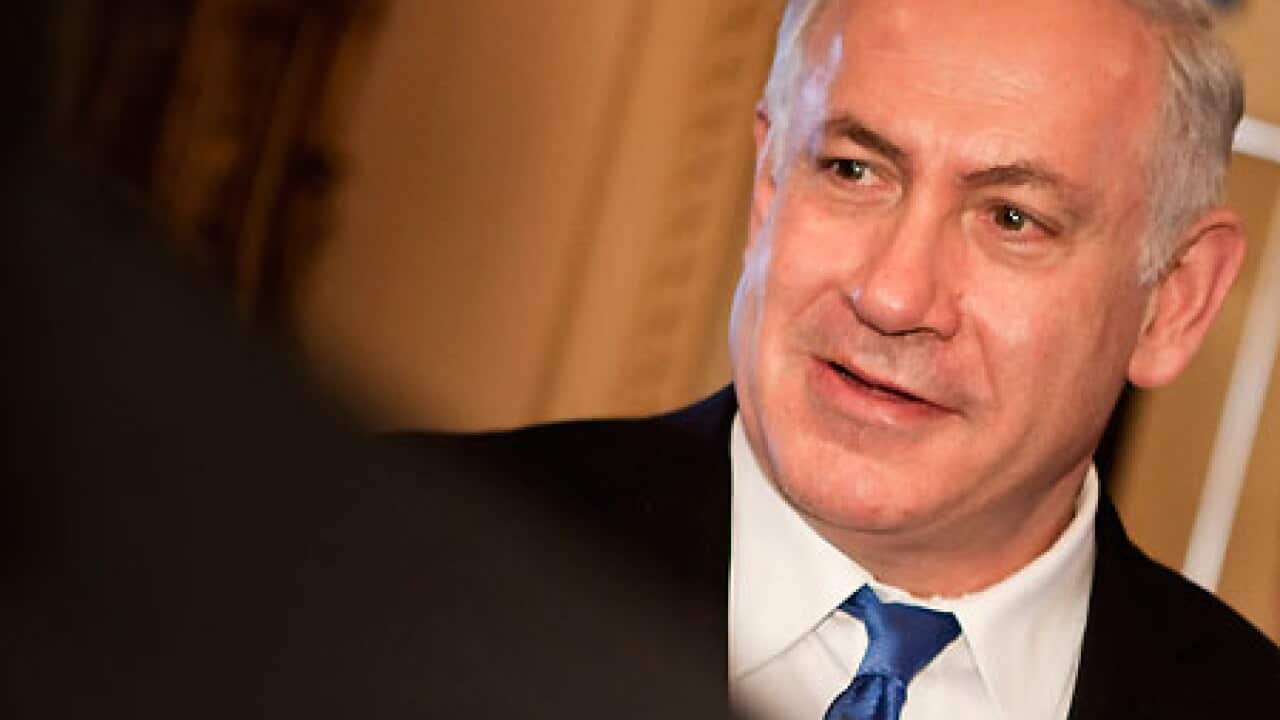
Israeli Prime Minister Benjamin Netanyahu on Monday proposed a new settlement freeze in exchange for Palestinian recognition of Israel as the Jewish homeland; but the move was swiftly dismissed by the Palestinians.
In a speech at the opening of the winter session of parliament, Netanyahu spelled out his price for a renewal of a freeze on Israeli settlement building in the occupied West Bank, which is seen as key to salvaging peace talks which the Palestinians are threatening to abandon.
"If the Palestinian leadership will unequivocally say to its people that it recognises Israel as the national state of the Jewish people, I will be ready to convene my cabinet and ask for another moratorium on building," he said.
News that makes sense
Your trusted source for staying up-to-date with the world around you. Get free daily news updates and analysis, straight to your inbox.
"I have already passed on the message through quiet channels and I am now saying it in public," he said in a live televised address.
Issue unrelated, say Palestinians
But his offer was immediately rejected by Palestinian chief negotiator Saeb Erakat, who told AFP the issue was completely unrelated to the crisis in the peace talks.
"This order has nothing to do with the peace process or with the obligations that Israel has not implemented," Erakat told AFP by phone from Amman, Jordan. "This is completely rejected."
Direct peace talks between Israel and the Palestinians began on September 2 but ground to a halt two weeks ago after the expiry of a partial 10-month moratorium on Jewish settlement building.
Despite huge diplomatic pressure to reimpose the freeze, Netanyahu has refused to do so, instead urging the Palestinians not to abandon the talks.
Recognition of Israel as a Jewish state has never been one of the core issues for resolving the conflict, but since Netanyahu came to power in 2009, it has become one of his key demands in any peace deal with the Palestinians.
"I'm not setting this as a condition for talks," he said on Monday. "But there is no doubt that such a step on the part of the Palestinian Authority would represent a confidence-building measure which would open a new horizon of hope and also trust."
Refugee issue
The Palestinians formally recognised Israel as a state on the eve of the 1993 Oslo Accords, but have rejected the demand to recognise its Jewish character because that would amount to an effective renunciation of their cherished right of return for refugees from the 1948 Arab-Israeli war.
"What could convince the government, and more so the citizens of Israel, that the Palestinians are truly ready to live with us in peace?" Netanyahu asked rhetorically.
"Something that would signal a real change on the Palestinian side?"
Earlier, the Israeli government endorsed a bill mandating that a national referendum be held before any withdrawal from occupied east Jerusalem or the Golan Heights, the justice ministry said.
"The inter-ministerial committee on legislation ratified a bill proposed by Likud MP Yaariv Levin about withdrawing from territories where Israel has sovereignty," a ministry spokesman told AFP of territories annexed by Israel after the 1967 Middle East war.
The measure must still pass three readings in parliament, although Israeli with the government's support, its passage into law is greatly eased.
Obstacle to peace: Opposition
Defence Minister and Labour party leader Ehud Barak, who has been under fire from members of his own party for being too accommodating towards Netanyahu, called Monday's decision an obstacle to peace.
"The referendum bill in the form in which it was passed today... raises question marks regarding the government's willingness and ability to advance a peace process," he said in a statement.
"The government must do everything possible to remove from the road the obstacle it has placed there today," he added.







