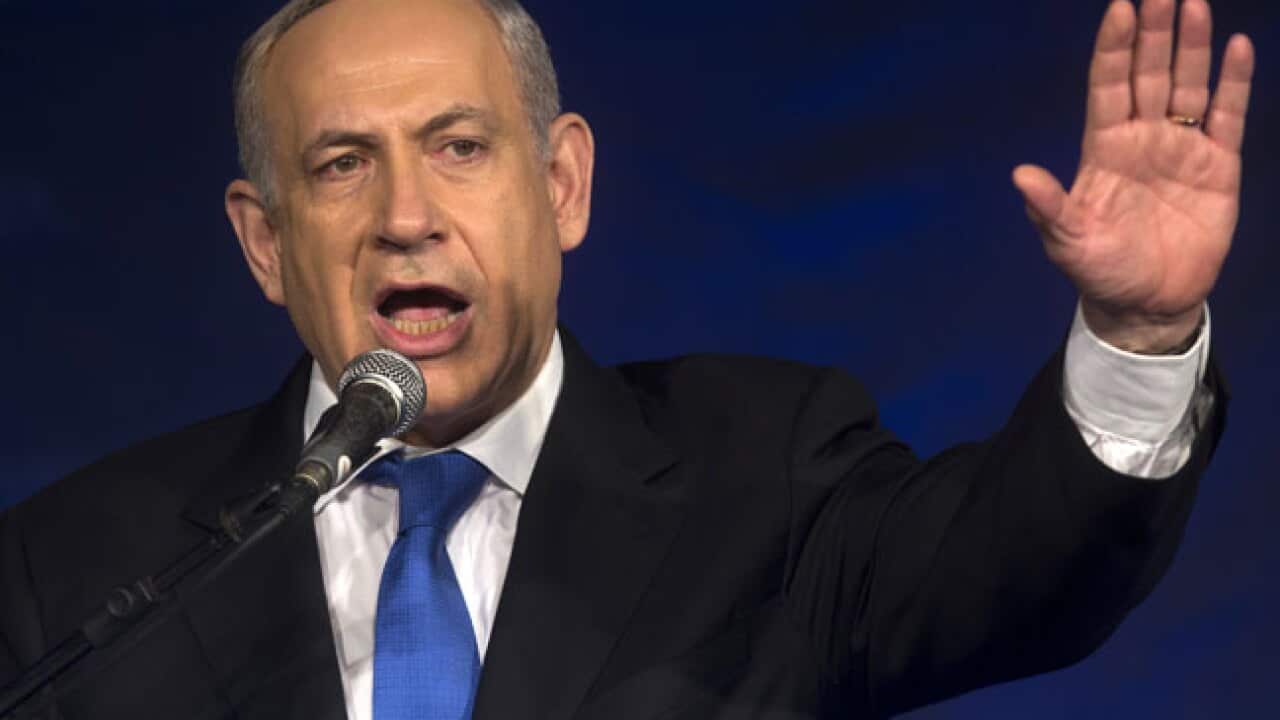
Israeli Prime Minister Benjamin Netanyahu said it was necessary to form the 'broadest possible government' after his Likud-Beitenu list won a narrow election victory.
"We need to form the broadest possible government," he said in a victory speech to around a 100 cheering supporters from his right-wing Likud, with exit pols showing its joint list with the hardline nationalist Yisrael Beitenu winning 31 seats in the 120-member parliament.
Earlier in the evening, Netanyahu implied that the first candidate to join a coalition he might head would be Yair Lapid's Yesh Atid, which was projected to have won 18-19 seats.
News that makes sense
Your trusted source for staying up-to-date with the world around you. Get free daily news updates and analysis, straight to your inbox.
In remarks published on Facebook, Netanyahu wrote he told Lapid that "We have an opportunity to do great things for Israel. The election campaign is behind us, and we can now focus on action for the benefit of all of Israel."
The far-right nationalist religious Jewish Home party, which had been widely expected to take second place, won 12 seats.
Although Israel's political system does not specify that the party with the most votes is guaranteed to form the next coalition, Netanyahu is widely expected to be handed the task of pulling together 61 MPs to form a majority.
Polls have consistently predicted Netanyahu's reelection, with pundits suggesting he would preside over a coalition leaning further to the right. The exit polls suggest it is now more likely to be a centre-right government.
Shortly after the polls were broadcast, Netanyahu thanked Israelis for reelecting him for a second consecutive term in office and pledged to build a coalition which was "as broad as possible."
"I wish to thank millions of Israelis who realised their democratic right today," he wrote on his Facebook page.
"Based on the results in the exit polls, it's clear the citizens of Israel determined they want me to continue as prime minister, and that I form a government as wide as possible," he wrote.
He said he would immediately begin efforts to to do that.
PALESTINIAN PEACE TALKS KEY ISSUE
The new government will be faced with tackling two key issues: how to revive moribund peace talks with the Palestinians and how to tackle the question of Iran's contested nuclear programme, which Israel and much of the West believes is a guise for a weapons drive.
But domestic challenges will be no less pressing, with a major budget crisis and austerity cuts on the horizon, as Israelis express widespread discontent over spiralling prices.
Election day is a public holiday in Israel, and in Tel Aviv thousands packed the beaches to enjoy a snap of unseasonably warm weather, but voting stations were also busy as people turned out to cast their ballots.







