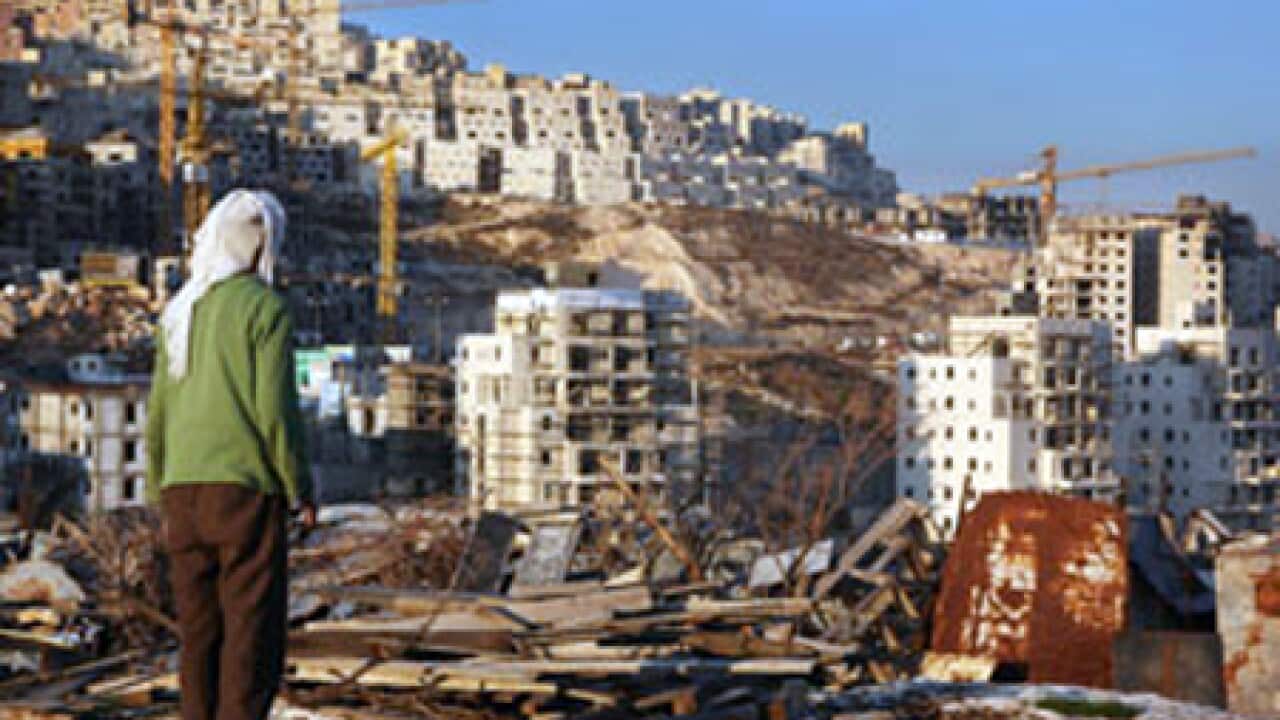
Israel on Wednesday rejected an international outcry over its plans to build 1,100 new homes in Gilo in annexed east Jerusalem, insisting the neighbourhood was 'not a settlement.'
"Gilo is not a settlement, nor is it an outpost," Mark Regev, a spokesman for Israeli Prime Minister Benjamin Netanyahu told AFP.
"Gilo is a neighbourhood in the very heart of Jerusalem some five minutes from the centre of the city," he said. "There is no contradiction between this decision, which is only a planning decision, and the government's pursuit of peace through the principle of two states for two peoples.
News that makes sense
Your trusted source for staying up-to-date with the world around you. Get free daily news updates and analysis, straight to your inbox.
The housing plan, which was signed off by Israel's interior ministry on Tuesday, drew a sharply worded response from the Palestinians, and a chorus of condemnation from Britain, China, France and the United States.
And they were joined in their criticism on Wednesday by Egypt, Italy and Russia.
"Such an Israeli step reflects the country's intention to continue with its provocative policy and defiance of the international consensus regarding the illegitimacy of settlement activities," said Egypt's Foreign Minister Mohammed Amr.
Italy expressed its "profound disappointment" at the move, and Russia said it was "counting (on Israel) so that the construction projects in east Jerusalem are reviewed."
Gilo lies in mostly Arab east Jerusalem, which Israel captured along with the West Bank from Jordan during the 1967 Six Day War and later annexed in a move not recognised by the international community.
Israel considers both halves of the Holy City its "eternal, indivisible" capital, and does not view construction in the east to be settlement activity.
"All Israeli governments over the last 40 years have built in Jewish neighbourhoods of Jerusalem and there has been no change in policy," Regev said.
The Palestinians, who fiercely oppose any Israeli construction in the city's eastern sector, which they want as capital of their future state, denounced the move as a de facto rejection of a Quartet proposal for fresh peace talks.
The diplomatic grouping had on Friday urged both sides to return to direct talks within a month, with the goal of reaching an agreement by the end of 2012.
The Palestinians say they will not return to peace talks without a settlement freeze and have yet to respond to the Quartet's proposal, which is the subject of several leadership meetings in Ramallah on Wednesday and Thursday.
In its statement, which is aimed at defusing tensions over a Palestinian bid to secure UN membership, the Quartet urged both sides "to refrain from provocative actions."
Around 200,000 Israelis live in occupied east Jerusalem alongside nearly 270,000 Palestinians.







