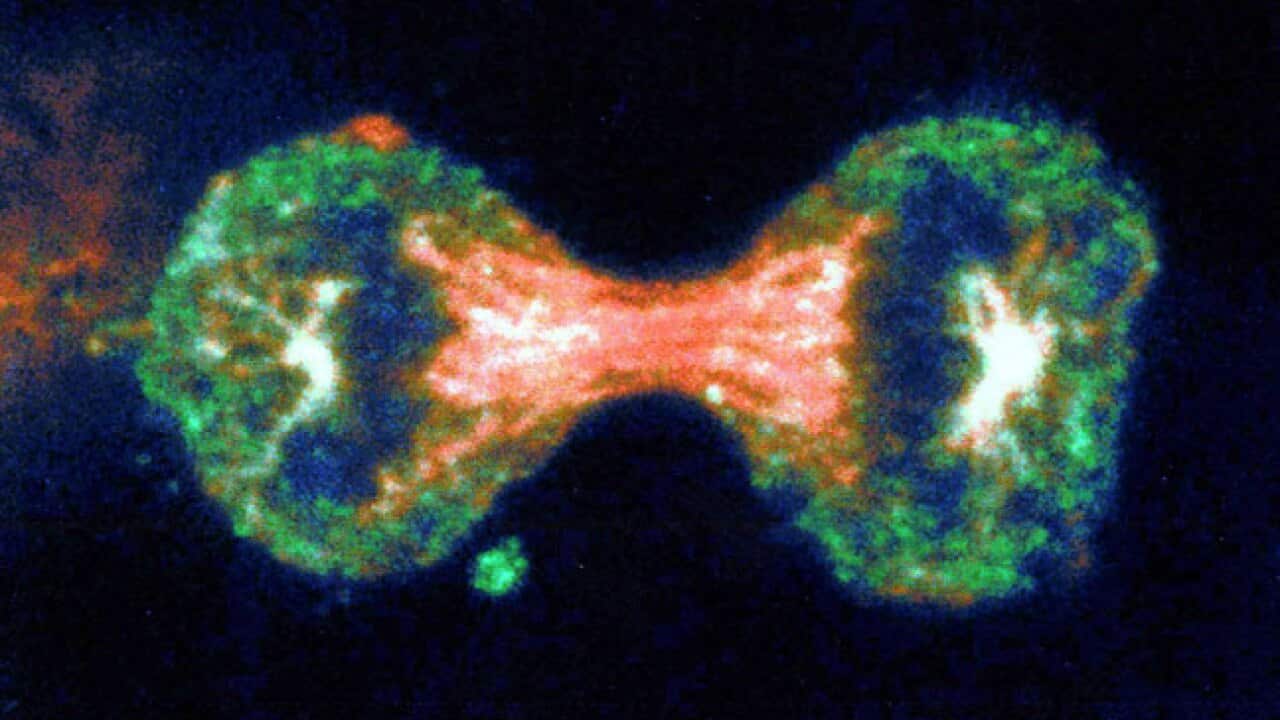
US researchers say they have found a way to attack late-stage breast and liver cancer tumours by
attaching a potent chemotherapy drug to tiny carbon particles known as nanodiamonds.
The technique was tested in mice and showed that nanodiamonds helped the drug, doxorubicin, get inside the normally chemo-resistant tumour and shrink it, said the study published in the journal Science Translational Medicine on Wednesday.
Without the nanodiamonds, the drug was either rejected by the body and failed to work on the tumour, or in higher doses it was too powerful for the patient to survive.
"This is the first work to demonstrate the significance and translational potential of nanodiamonds in the treatment of chemotherapy-resistant cancers," said the study.
News that makes sense
Your trusted source for staying up-to-date with the world around you. Get free daily news updates and analysis, straight to your inbox.
The research shows promise for possible use in humans because chemotherapy drug resistance causes treatment to fail in 90 per cent of cancers that have spread inside the body, known as metastatic cancer.
"What is most interesting from this study is when we took an even higher dose of the drug, that dose was so toxic that the animals all died. They didn't even last long enough to finish the study," said lead author Dean Ho of Northwestern University.
"But when we took that same higher dose and bound it to the nanodiamond, not only did all the animals survive the study, the tumour sizes were the smallest that we saw in the study," he told AFP.
Ho said he became interested in using carbon particles to deliver drugs more than three years ago, and was attracted to nanodiamonds because they have been shown in car uses to work well with water, a key requirement in medical uses, too.
"We also saw that the shape of the diamond was very conducive because it is a very ordered structure and that is always good for biology," Ho added.
Nanodiamonds are typically formed in explosions, such as in coal mining or oil refinery operations, and are even thought to result from meteorite landings.
"What is neat about it is it is almost like a waste material, it is going to be produced anyways," said Ho.
"So instead of throwing it out, taking this by product and simply processing it with things like acid washing, milling, sonification, it can yield very uniform particles of between two and eight nanometers in diameter."
Ho said it would likely be a few years before the therapy may be available on the market, and that researchers would first look at how the technique works in larger animals before human clinical trials can start.
"Nanodiamonds possess numerous hallmarks of an ideal drug delivery system and are promising platforms for advancing cancer therapy," said co-author Edward Chow, a postdoctoral fellow with the GW Hooper Foundation, which helped fund the research, and the University of California, San Francisco.
Other funding for the study came from the National Institutes of Health, the National Science Foundation, and the American Cancer Institute.







