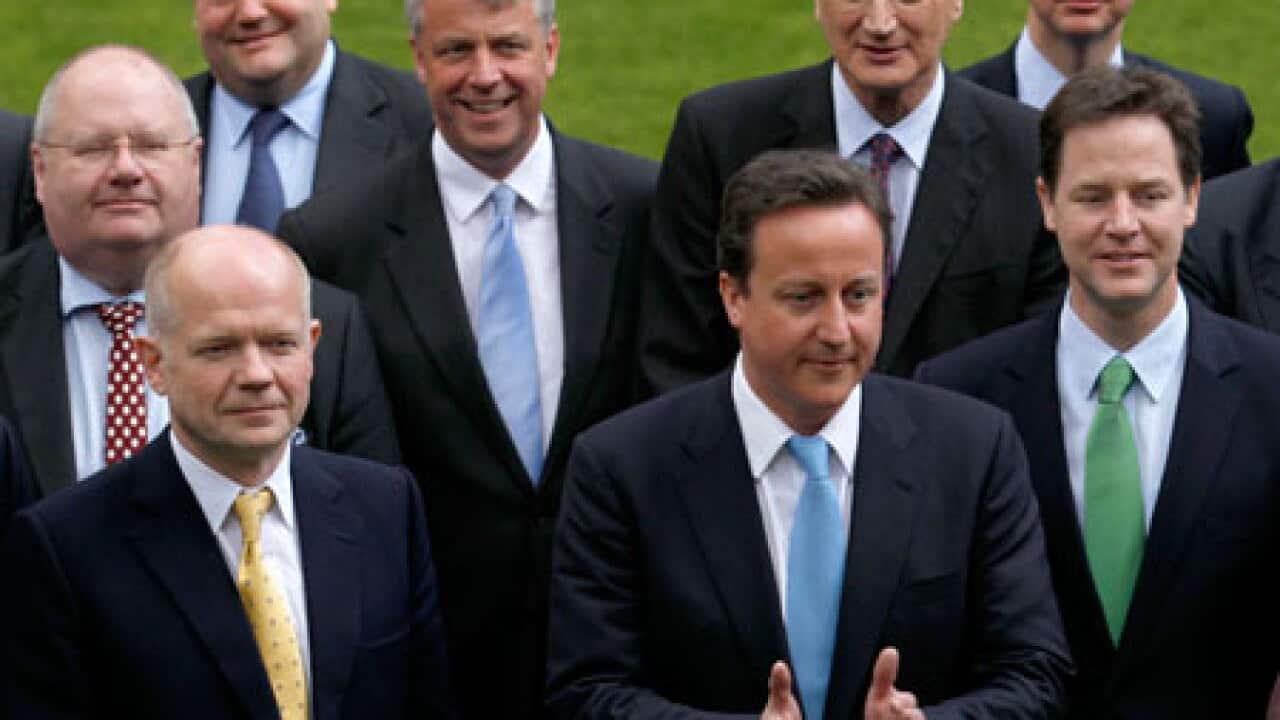
Prime Minister David Cameron's three-day-old administration was criticised by activists, the press and even his new coalition partners for picking an almost entirely white, male and upper-class Cabinet despite pledging that his Conservative party would no longer be an old boys club.
Cameron and his deputy prime minister, Nick Clegg of the Liberal Democrats, both grew up in wealthy families and attended elite schools. The 23-member Cabinet they selected after forging a coalition government this week includes Britain's first female Muslim to sit at Cabinet, but only three other women. Only two run government departments, the mark of influence and power.
Twenty-two Cabinet members are white, and at least 16 went to top universities Oxford or Cambridge.
News that makes sense
Your trusted source for staying up-to-date with the world around you. Get free daily news updates and analysis, straight to your inbox.
Cameron has been trying to detoxify the image of the Conservative party as a small club of aristocrats hostile to minorities and indifferent to the poor. He's been including more minority candidates and pledged in his campaign that a third of senior government jobs would go to women.
The participation of the left-leaning Lib Dems also raised expectations of more diversity, now dashed.
"Cabinet jobs for well-heeled school chums," the Daily Mirror tabloid scoffed on Friday. "A huge step backward," wrote gender rights activists in a letter to The Times. "Awash with buddies, backslapping and in-jokes," said a columnist for The Guardian newspaper.
Complaints flow
Radio shows were inundated by complaints about the lack of women and minorities in the upper echelons of power.
"When you look at the negotiating teams, they were male and pale," Liberal Democrat lawmaker Lynne Featherstone told the BBC, referring to senior leaders from both parties who cobbled together the power-sharing deal. "We must do better."
Other European nations have greater gender equity at the top. About half of Norway and Sweden's Cabinets consist of women, and Germany has six women in its current 16-member Cabinet. Six of Austria's 13 top ministers are female. In Switzerland, women make up less than a third of the parliament, but within Cabinet there are three women out of seven members.
Former Prime Minister Tony Blair had six women in his 2005 Cabinet. Gordon Brown, who resigned this week, had five in his team.
"The numbers (of women in government) have certainly gone down, and so has the significance of the posts they hold," said Margaret Beckett, who served as foreign secretary under Blair. "(Cameron's) rhetoric has been that we need to bring more women into the administration, but his decisions have not matched that."
Eight per cent of Britain's population consists of ethnic minorities, with Indians being the largest group followed by Pakistanis.
Sayeeda Warsi, the first Muslim woman to sit at Cabinet, has not been given a defined policy area.
Theresa May, the most senior female figure in the Conservative Party and the new Home Secretary, will also serve as minister for equalities.
Her appointment was questioned by some gay rights activists. Although praised as a Conservative moderniser, May voted against equalising the age of sexual consent for gays and heterosexuals in 1998, and in 2002 she voted against letting gay couples adopt children. May did, however, vote in favour of civil partnerships.
Cameron's new recruits 'inexperienced'
Analysts say Cameron's efforts to increase diversity in the party's upper ranks by recruiting women candidates - mockingly dubbed "Cameron's cuties" by the press - didn't work because the new recruits don't yet have enough experience.
"Cameron - and Clegg - were acutely aware they have very few women on which they could credibly draw," said Colin Hay, a politics professor at the University of Sheffield. "The politics of the past was gender discriminatory ... the irony, in a way, is that the Cabinet remains a sort of last bastion of that old order."







