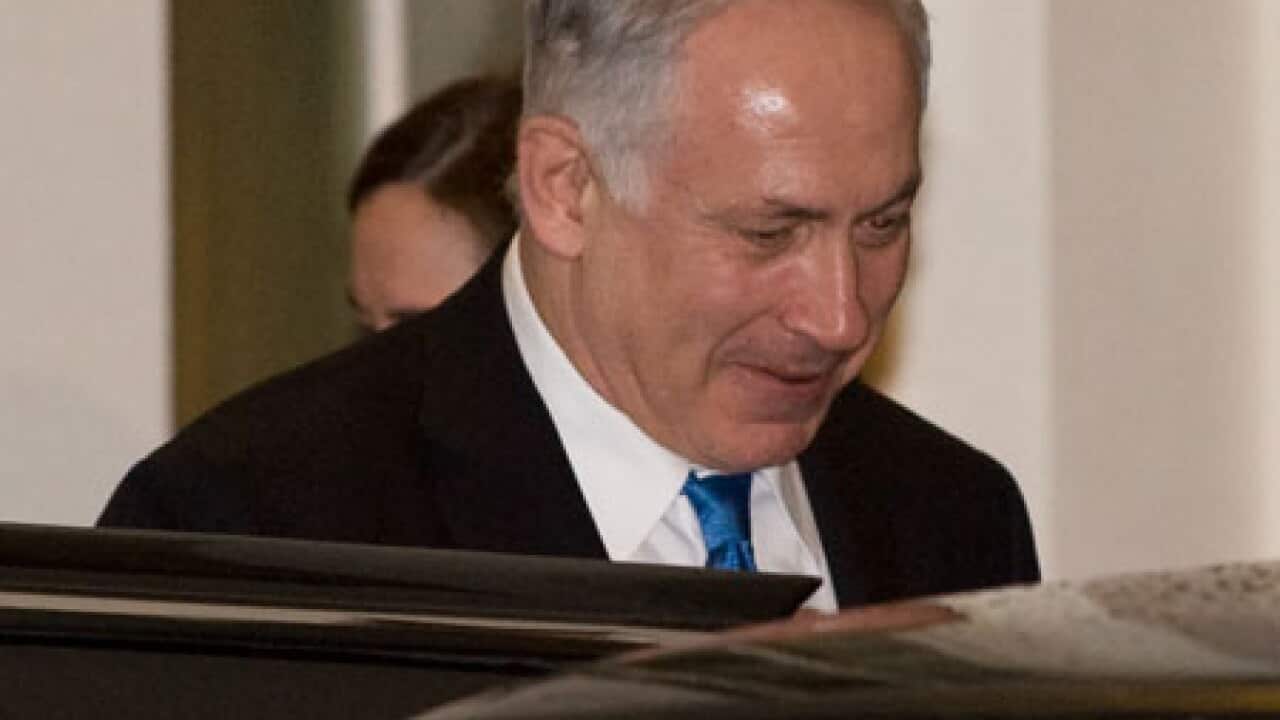
The US appears in no mood to blink first in its tense showdown with Israel after reportedly handing Prime Minister Benjamin Netanyahu a blueprint to kickstart moribund peace talks.
President Barack Obama reportedly walked out on his meeting with Netanyahu, eschewing the PM's company in order to have dinner with his family.
"I'm going to the residential wing to have dinner with Michelle and the girls," the UK's Times Online reported Obama as saying.
The President added that Netanyahu should consult with his aides about goodwill gestures Israel was prepared to make towards the Palestinians before renewed peace talks, according to Times Online.
News that makes sense
Your trusted source for staying up-to-date with the world around you. Get free daily news updates and analysis, straight to your inbox.
"I'm still around," he reportedly said. ''Let me know if there is anything new.''
The Prime Minister left America "disgraced, isolated, and altogether weaker than when he came," wrote a senior analyst in Israeli newspaper Haaretz.
Media leap on snub
Other Israeli papers reported the snub as the kind reserved for the most derided of leaders. Maariv compared it to the treatment reserved for the President of Equatorial Guinea, while Yedioth Ahronot said he was "received like the last of the wazirs from Lower Senegal."
Netanyahu returned home after three days of meetings in Washington with no signs of a break in the impasse, triggered by Israel's refusal to back down on settlement building.
As Israeli media said he been showered in humiliation, the White House sought to give an upbeat tone to Netanyahu's trip.
"We are making progress on important issues," spokesman Robert Gibbs insisted as President Barack Obama flew to Iowa on Air Force One.
News blackout around meeting
But there was an unusually opaque news blackout, no concrete achievements were reported and the Israeli leader was given none of the trappings usually reserved for visitors such as photo op and press conference.
Early Thursday Defense Secretary Robert Gates was even at pains to renew administration warnings that Israeli-Palestinian tensions harm US security interests in the Middle East.
"The lack of progress toward Middle East peace is clearly an issue that's exploited by our adversaries in the region," Gates said adding it "does affect US national security interests in the region."
Blueprint for peace talks
Netanyahu reportedly returned to Israel carrying a written blueprint to get the peace process moving again, some 15 months after it was suspended following Israel's assault on the Gaza Strip in late 2008.
The document covers all issues, including Jerusalem, which need to be resolved to end the deadlock, the Washington Post said.
It includes Obama's demand to freeze all settlement construction in east Jerusalem and the West Bank, Israeli radio said.
Peace process stalled
Netanyahu is supposed to sell the plan to his cabinet, while US envoy George Mitchell will present it to the Palestinian Authority.
But Israeli media said a briefing Netanyahu had intended to give his inner forum of seven senior ministers had now been postponed until Friday. Netanyahu's office would not comment.
The row erupted into the open during a visit to Israel by Vice President Joe Biden when the Israeli interior ministry announced the construction of 1,600 new settlements in Arab east Jerusalem.
But experts say the settlement issue is not really the root cause of the worst dispute between the two allies in years.
"The reason the fight continues is not the settlements, it's because they haven't convinced Netanyahu to proceed toward a final status agreement," said an analyst.
New determination from US
Others have also noted a new determination on Washington's part, despite the nation's strong pro-Israel lobby, some of whom gathered for this week's conference of the powerful American Israel Public Affairs Committee,
"Picking a fight with an Israeli prime minister the week before AIPAC's meeting in Washington will strike many foreigners as a gutsy move," said Walter Russell Mead, from the Center of Foreign Relations.
"Especially in the Middle East, where lurid conspiracy theories about Jewish cabals in Washington are widely credited by both the street and otherwise sophisticated insiders."
Just how far Obama's administration is willing to push the dispute remains to be seen.
But some commentators have suggested Washington wants to force Netanyahu to break up his current rightwing coalition and partner with his centrist rival, Tzipi Livni, head of the Kadima party.
But in a BBC interview, US Secretary of State Hillary Clinton denied any such speculation. "We're not taking any position and we have no particular stake in who the Israelis choose to govern them," she said.







