The renewed crisis comes just as all three key regional players -- China, Japan and South Korea -- go through transitions to leaders who in varying ways have hinted they are seeking new ways to handle the regional pariah.
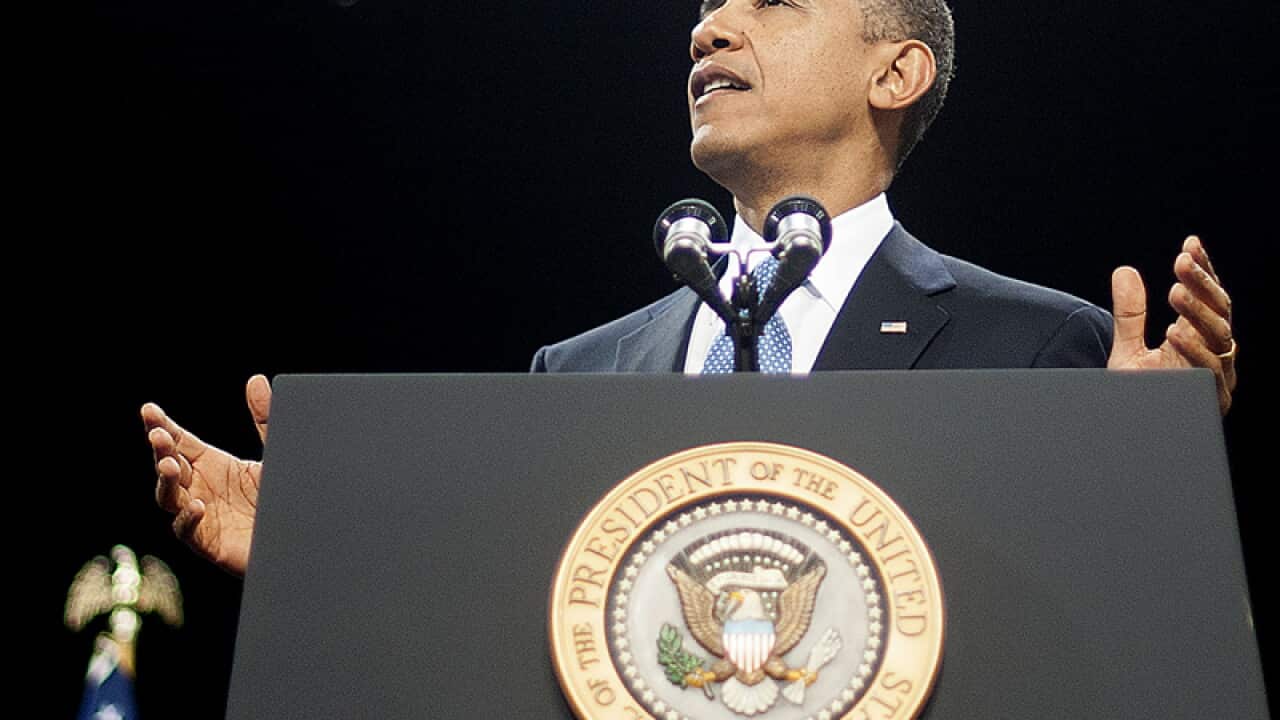
US President Barack Obama has made engagement a key priority in his foreign policy, but had largely given up hope on North Korea and embraced what his aides called "strategic patience" -- waiting for change from the regime.
News that makes sense
Your trusted source for staying up-to-date with the world around you. Get free daily news updates and analysis, straight to your inbox.
Administration officials had hoped for fresh ideas from South Korean president-elect Park Geun-Hye, but calls during her electoral campaign to reach out to North Korea will be complicated at the very least by the nuclear test.
In a replay of the fallout of North Korea's nuclear explosion in 2009, the country's third test comes as Obama is still putting together a new team, with Asia policymakers from his first term stepping down.
Kurt Campbell, the assistant secretary of state for East Asia who quit on Friday, said that the United States had been consulting with Park to coordinate on North Korea.
"It was very clear that as they go forward, they want to go forward in tandem with the United States in any effort to carefully and responsibly begin a dialogue with the North," Campbell said on January 29 after visiting Seoul.
Campbell warned that a nuclear test "could have a deeply negative consequence in terms of creating an environment where it's difficult to resume the kind of diplomacy that we all hope for."
Park has promised to take a new approach on North Korea after the hard line of outgoing president Lee Myung-Bak, a close ally of Obama.
In North Korea's main ally China, where Xi Jinping is preparing to take over as president, state-run media had been unusually critical of the plans to test a bomb.
China's Global Times has warned that the relationship sealed in the 1950-53 Korean War may break down over a nuclear test, although many experts doubt Beijing would prefer the prospect of a unified, US-allied Korea on its border.
"North Korea has a remarkable knack for never missing an opportunity to miss an opportunity. They did this when the Obama administration offered the potential of a hand" in 2009, said Charles Armstrong, director of the Center for Korea Studies at Columbia University.
"Something similar is happening. Park Geun-Hye could have been poised to do something very positive in North-South relations, but now it's going to be very difficult for her," he said.
"From my understanding, the mood in Washington is just to ignore this and not even make North Korea's nuclear program a significant issue among foreign policy concerns," he said.
Armstrong warned of risks, saying: "North Korea is not going to go away. The more this issue is ignored, the more North Korea's nuclear arsenal and the more the potential for instability are going to grow."
Duyeon Kim, senior non-proliferation and East Asia fellow at the Center for Arms Control and Non-Proliferation, also doubted that the United States or South Korea would try new ideas on North Korea.
"It's very difficult to expect Washington or Seoul to engage North Korea anytime soon," she said.
She said that North Korea appeared to be "playing offense" by seeking recognition as a nuclear weapons state.
One year ago, the United States had voiced guarded hope over the North's young leader Kim Jong-Un and flirted with a new approach, reaching a deal to provide badly needed food aid in exchange for a nuclear and missile freeze.
US officials privately call the deal a mistake, saying they failed to realize that North Korea would not be dissuaded from a rocket launch for the centennial, in April last year, of the birth of regime founder Kim Il-Sung.
US officials hope the nuclear test will at least give common cause to Park and Japanese Prime Minister Shinzo Abe, a conservative whose views on colonial history have been seen as a potential impediment to closer ties among the two.







