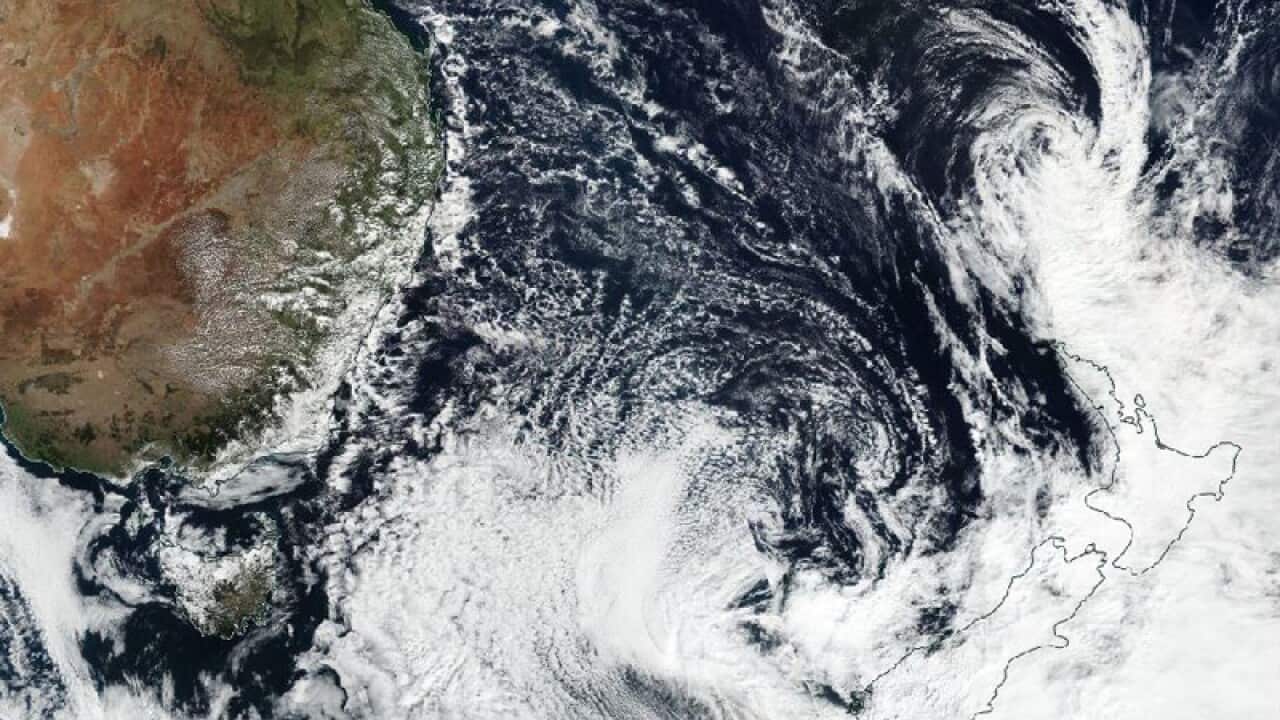
Cyclone Cook has battered New Zealand's Bay of Plenty, leaving homes flooded and many without electricity, but has quickly swept down the North Island without matching the feared destruction of the Wahine storm of 1968.
"The worst is over. At the moment it's lying just southeast of Cook Strait," MetService meteorologist John Crouch about 5am on Friday.
It should pass the east of the South Island during Friday morning, bringing rain and wind to the eastern seaboard, he said.
Cook brought heavy bands of rain and strong winds.
The strongest wind gust was 209km/h recorded at White Island around 4pm on Thursday and Cape Kidnappers' winds hit 154km/h at 9pm. However, winds around the Bay of Plenty were generally much lower.
News that makes sense
Your trusted source for staying up-to-date with the world around you. Get free daily news updates and analysis, straight to your inbox.
Earlier on Thursday, forecasters were warning Cook could be in the same league as ex-Tropical Cyclone Giselle in 1968, which hit the whole country and resulted in the fatal Wahine ferry disaster which killed 53 people.
However, authorities weren't forced to close the Auckland Harbour Bridge and there hasn't been comparable destruction.
"It probably wasn't as significant as we were initially thinking," Mr Crouch told NZ Newswire.
Cook was small and compact, wasn't as deep as previous lows and moved quickly over the North Island, Mr Crouch said. It also tracked further east than thought so Auckland wasn't badly hit.
Firefighters responded to 50 weather-related calls in the Hawke's Bay until about 9.30pm but there was nothing after 10pm, the Fire Service's Murray Dunbar says.
Nevertheless, the Waikato and Bay of Plenty face a clean-up.
On Thursday, emergency services received dozens of calls about homes flooding, along with powerlines and trees brought down.
Two people were hospitalised in the Hawke's Bay after a tree brought down by the cyclone struck their car.
The weather also disrupted regional flights across the country.
Waves up to 5m were expected to hit coastal areas and prompted Civil Defence calls for people to evacuate low-lying and vulnerable coastal areas earlier in the day.







