
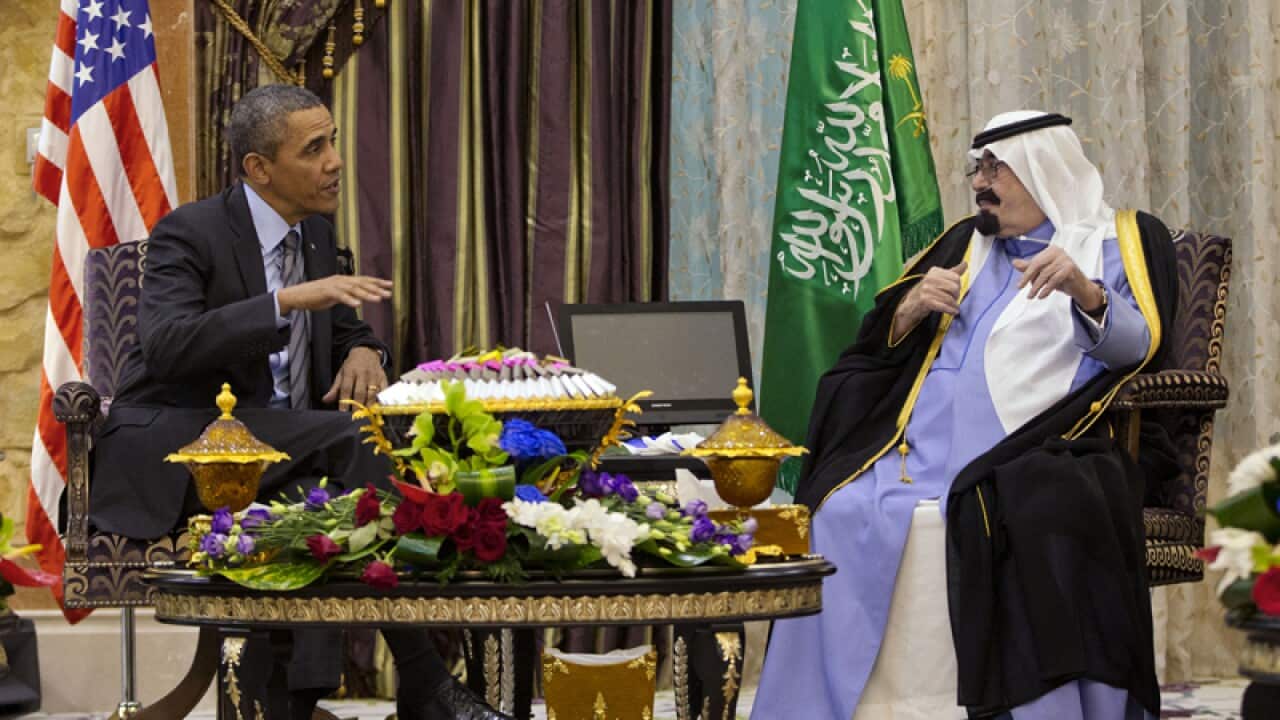
US President Barack Obama is holding talks with Saudi King Abdullah in Riyadh on arming Syria's moderate opposition, as the long-time allies seek to bridge their differences over Iran and Syria.
Obama arrived from Italy for an evening meeting with the monarch on a royal estate outside Riyadh.
Discussions would focus on ways to "empower" Syria's moderate opposition, including militarily, a senior White House official said.
"That will definitely be one of the main topics of conversation is how do we best empower the moderate opposition inside of Syria politically, militarily as a counterweight to (President Bashar) Assad," deputy national security adviser Ben Rhodes told reporters travelling with Obama on board Air Force One.
Rhodes said US-Saudi ties have been improving thanks to co-operation over ways to support Syria's opposition.
News that makes sense
Your trusted source for staying up-to-date with the world around you. Get free daily news updates and analysis, straight to your inbox.
"Our relationship with the Saudis is in a stronger place today than it was in the fall (autumn) when we had some tactical differences about our Syria policy," said Rhodes.
Saudi Arabia is disappointed over Obama's 11th-hour decision last year not to take military action against the Syrian regime over chemical weapons attacks.
It also has strong reservations about efforts by Washington and other major world powers to negotiate a deal with Iran on its nuclear program.
Saudi analyst Abdel Aziz al-Sagr, who heads the Gulf Research Centre, said Saudi-US relations are "tense due to Washington's stances" on the Middle East, especially Iran.
The recent rapprochement between Tehran and Washington "must not take place at the expense of relations with Riyadh," Sagr said.
Sunni Muslim Saudi Arabia, long wary of Shi'ite Iran's regional ambitions, views a November deal between world powers and Iran over its nuclear program as a risky venture that could embolden Tehran.
The interim agreement curbs Iran's controversial nuclear activities in exchange for limited sanctions relief, and is aimed at buying time to negotiate a comprehensive accord.
Analyst Khaled al-Dakhil spoke of "major differences" with Washington, adding that Obama will focus on easing "Saudi fears on Iran and on regional security".
Saudi Arabia, the largest power in the six-nation Gulf Cooperation Council, fears that a possible US withdrawal from the Middle East and a diplomatic overture towards Iran would further feed Tehran's regional ambitions.
Iranian-Saudi rivalry crystallised with the Syrian conflict: Tehran backs President Bashar al-Assad's regime, while several GCC states support the rebellion.