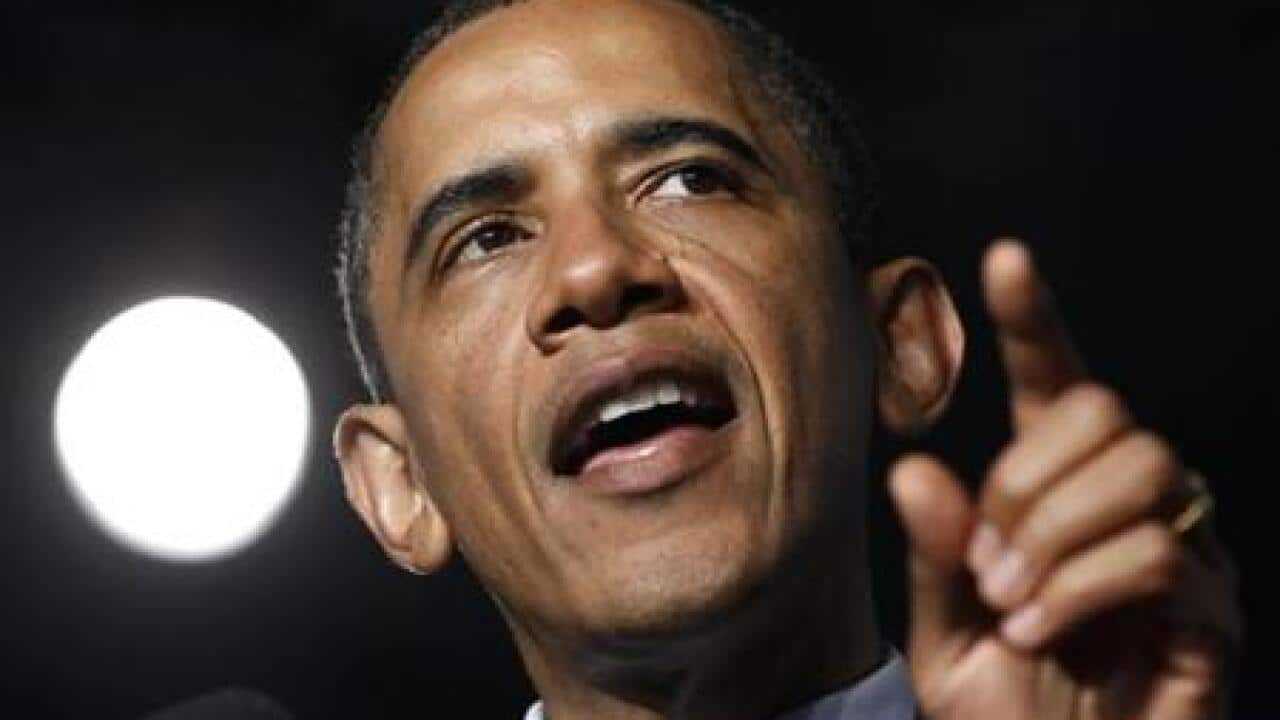
As the dollar slid to new lows and stock markets wobbled, the White House raised the stakes as Obama's Democratic allies and his Republican foes remained deadlocked in a bitter battle to raise the $14.3 trillion debt limit.
With a week to go before the United States hits an August 2 deadline and runs out of funds, Republican House Speaker John Boehner insisted his plan to raise the ceiling in two stages was the only "reasonable approach."
News that makes sense
Your trusted source for staying up-to-date with the world around you. Get free daily news updates and analysis, straight to your inbox.
"It has real caps and a real process for cutting spending before the end of this year," he said of the plan which would initially hike the debt ceiling just enough to last until February or March 2012, and then follow with a second increase that would last into 2013.
But in a solemn address to the nation late Monday, Obama said a two-stage debt ceiling increase was "kicking the can further down the road" and would only plunge the country into crisis once again in six months time.
"We can't allow the American people to become collateral damage to Washington's political warfare," Obama said, warning of a "deep economic crisis" if the United States, still emerging from recession, defaults.
The Office of Management and Budget said Tuesday the US administration "strongly opposes" the Boehner plan and if it is presented to Obama "the president's senior advisors would recommend that he veto this bill."
The Obama administration has said it will run out of funds to pay its bills from August 2 unless the debt ceiling is raised to allow it to continue borrowing.
Republicans have said they will only agree to raising the debt limit if there are accompanying measures to rein in the ballooning US deficit.
Obama has agreed to a raft of deep spending cuts, but Republicans emboldened by newly elected arch-conservative Tea Party lawmakers have refused his demand for matching revenue increases to be imposed on the rich and big corporations.
Republican House Majority Leader Eric Cantor called on the party "to stop grumbling and whining and to come together as conservatives and rally behind the speaker and call the president's bluff," a Republican source said.
But Democratic Senate Majority Leader Harry Reid urged Republicans to support an alternative Senate plan which he said was "the best shot we have to avoiding an economic crisis a week from today."
His plan would call for a single $2.7 trillion hike in the debt ceiling, backed by the same amount of spending cuts over 10 years and does not include tax increases.
He said Senate Democrats would start reaching out to Republicans to support his "reasonable middle ground," warning that Boehner's plan was "dead on arrival in the Senate."
There are mounting global fears Congress will fail to resolve the deadlock by Tuesday, August 2.
Christine Lagarde, the new head of the International Monetary Fund, urged the two sides to find a compromise. "The clock is irremediably ticking, and people really have to find a solution," she said in New York.
She warned that a default "would be a very, very, very serious event. Not for the United States alone, but for the global economy at large."
And Brazilian Finance Minister Guido Mantega, whose country's economy is booming, said the United States needed to come "to its senses," saying he believed there would be a solution "but I am worried by the turn of events."
World markets were jittery with US stocks falling, with the Dow Jones Industrial Average down 64 points (0.52 percent) at midday.
European equities also ended mixed while the dollar slid against the euro and yen. By 1900 GMT the dollar had dropped almost one percent in a day against the euro, which was buying $1.4516.
But in a glimmer of hope, analysts said Tuesday that strong tax receipts meant the United States could have up to two extra weeks after August 2 before it could be forced to default.
Wrightson ICAP said they think August 15 is "the critical deadline from a cash-flow perspective."
"It still looks as though they'll have enough cash in August to fund operations into the second week of the month," their chief economist Lou Crandall said.
Washington hit its debt ceiling on May 16 but has used spending and accounting adjustments, as well as higher-than-expected tax receipts, to continue operating normally.







