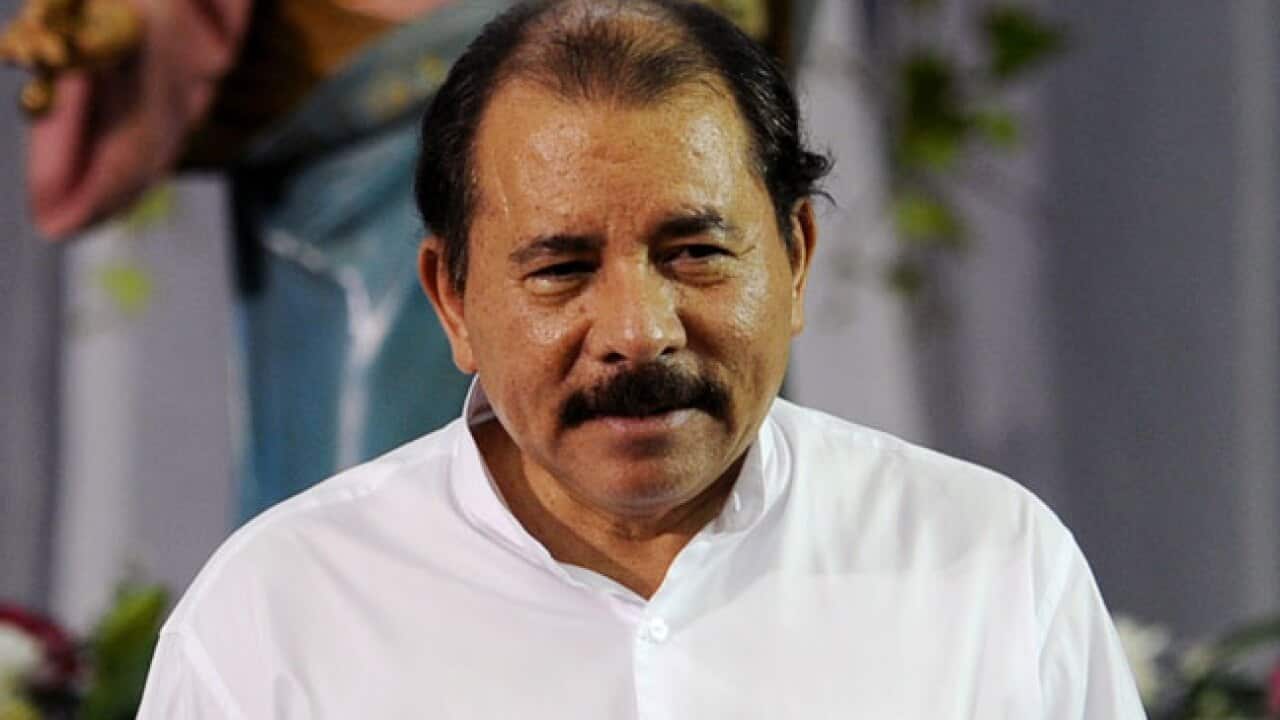
Daniel Ortega looked set to keep hold of the presidency as Nicaraguans voted Sunday, after the former Sandinista rebel leader bypassed the constitution to stand for a third term.
Ortega receives financial aid from Venezuelan President Hugo Chavez while embracing former foes, such as the business elite and the church, and has presided over economic growth in Central America's largest and poorest nation.
He faced a fractured opposition in a vote marred by accusations of irregularities and complaints from international observers.
News that makes sense
Your trusted source for staying up-to-date with the world around you. Get free daily news updates and analysis, straight to your inbox.
Dante Caputo, head of observers from the Organization of American States (OAS) regional body, said his staff were blocked from 20 percent of 52 polling stations, out of some 4,200 altogether, mid-way through voting.
"This is going to affect our capacity to work," Caputo told a news conference.
Roberto Rivas, president of the Supreme Electoral Council, which many accuse of favoring Ortega, earlier reported "isolated incidents." Rivas accused the opposition of provoking disorder.
At least 15 protesters and two policemen were hurt Saturday when supporters of Ortega and his main rival Fabio Gadea, a 79-year-old right-wing radio host, clashed outside the capital Managua.
Tension has risen since a Supreme Court ruling in November 2009 cleared the way for the 65-year-old former revolutionary to seek re-election to a third term. Consecutive re-elections and third terms were supposedly banned.
Ortega, who was first elected president of the nation of almost six million in 1984, has been a central figure since leading a Marxist guerrilla movement to oust the Somoza dynasty of dictatorships in 1979.
US president Ronald Reagan accused the Sandinista National Liberation Front of fostering revolutionary movements in the region and Ortega was voted out of power in 1990 after a civil war against US-backed Contra rebels.
But Ortega, who had two unsuccessful bids for the presidency in 1996 and 2001, modified his message and crucially reconciled with Cardinal Miguel Obando y Bravo, a key figure in the staunchly Roman Catholic nation.
Since 2006, Nicaragua's economy has enjoyed steady growth and exports have doubled.
In pre-election polls, Ortega, who was elected to a five-year term in 2006, scored around 48 percent, around 18 points higher than his closest rival Gadea.
Gadea stands on an anti-corruption ticket, while former president Arnoldo Aleman has fought off corruption allegations and polled a distant third.
With Ortega so comfortably ahead, his four right-wing rivals have focused on Congress, where 90 seats are also up for grabs.
Ortega still enjoys solid support in rural and marginalized areas of Nicaragua, where almost half of the population live in poverty.
"Daniel is helping things 'gently,' helping the poor," said taxi driver Manuel Ruiz as he voted Sunday.
Opponents criticize Ortega's clinging to power as well as the aid he has received from Chavez -- estimated at more than $1.6 billion since 2007 -- which has propped up popular social programs, including for subsidized housing.
Meanwhile, Ortega has succeeded in wooing investors, with Nicaragua seen as a relatively safe haven alongside some of the world's most violent nations, such as neighboring Honduras or El Salvador.
Ortega also maintains a free trade deal with the United States, despite his anti-imperialist discourse and links to Washington enemies such as Iran.
A total of 3.4 million Nicaraguans over the age of 16 are eligible to vote, with the winner needing more than 40 percent or at least 35 percent and a lead of more than five to avoid a runoff.
Voting was due to close at 6 pm (00:00 GMT), with first results expected around four hours later.







