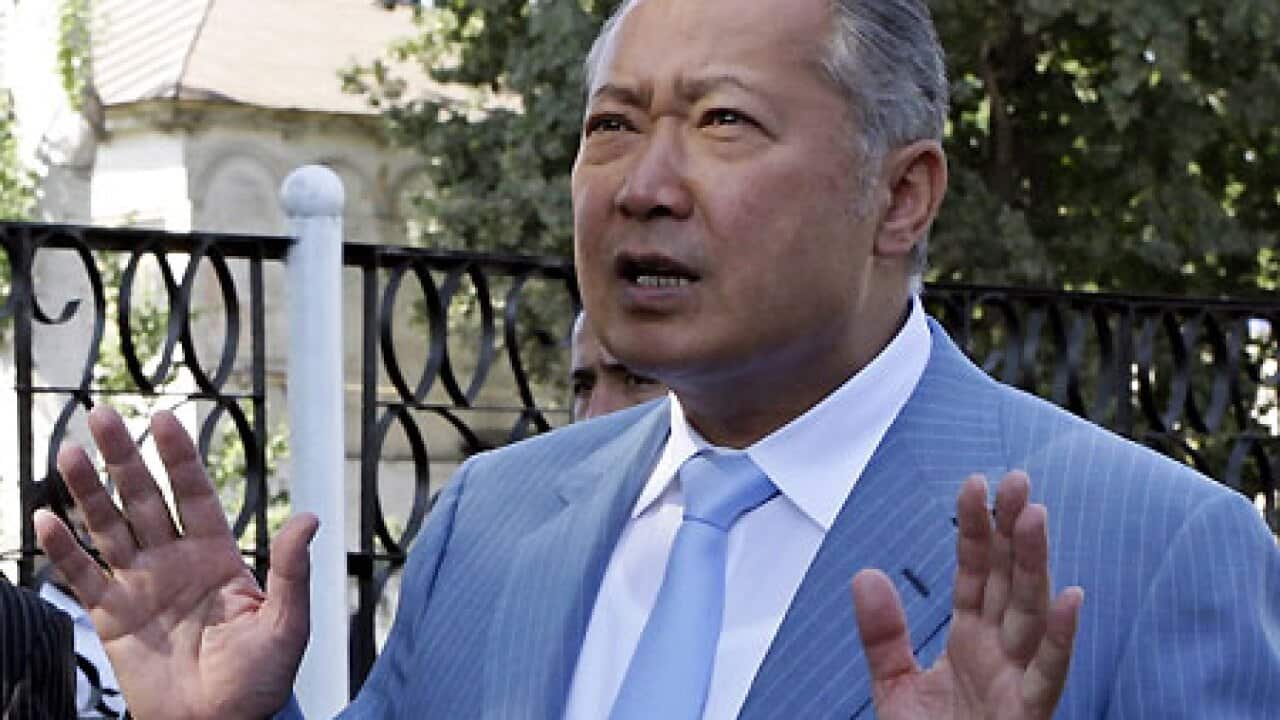
Kyrgyzstan's President, Kurmanbek Bakiyev, was swept to power by a series of violent street protests. Five years on, he has been ousted in the same way.
Bakiyev, 60, took office in 2005 following a popular uprising which became known as the Tulip Revolution.
His predecessor, Askar Akayev, was forced into exile, as Bakiyev's supporters turned to him to take action on corruption, and turn around the country's troubled economy.
News that makes sense
Your trusted source for staying up-to-date with the world around you. Get free daily news updates and analysis, straight to your inbox.
But his time in power has been tarnished by claims he was becoming increasingly authoritarian.
Bakiyev was born in Masadan, Jalalabad province, when Kyrgyzstan - then known as the Kyrgyz Soviet Socialist Republic - was part of the Soviet Union.
Tulip Revolution
Trained as an electrical engineer, Bakiyev worked in plants and factories and served in the Soviet Army before turning to a career in politics.
He rose through the ranks of local councils to become the governor of Jalalabad, and was appointed Prime Minister in 2000.
But he was forced to quit in 2002 when riot police fired on protesters at a demonstration in the southern city of Aksy, killing five people.
Three years later, he led the Tulip Revolution, and was elected president with overwhelming levels of support.
He has been re-elected twice in the years since - most recently in August 2009.
Election fraud
But both polls were tainted by allegations of election fraud, and there has been a growing tide of opposition to his leadership amid claims of corruption.
In the wake of the 2010 revolt, Bakiyev remained defiant, despite fleeing the capital, Bishkek, for his homeland in the country's south.
"I declare that as president I have not abdicated and am not abdicating responsibility," he insisted.
Bakiyev has blamed outside influences for what he labelled a "state coup attempt".
"I will not name any concrete countries, (but) without outside forces it is virtually impossible to conduct such a coordinated operation," he said.







