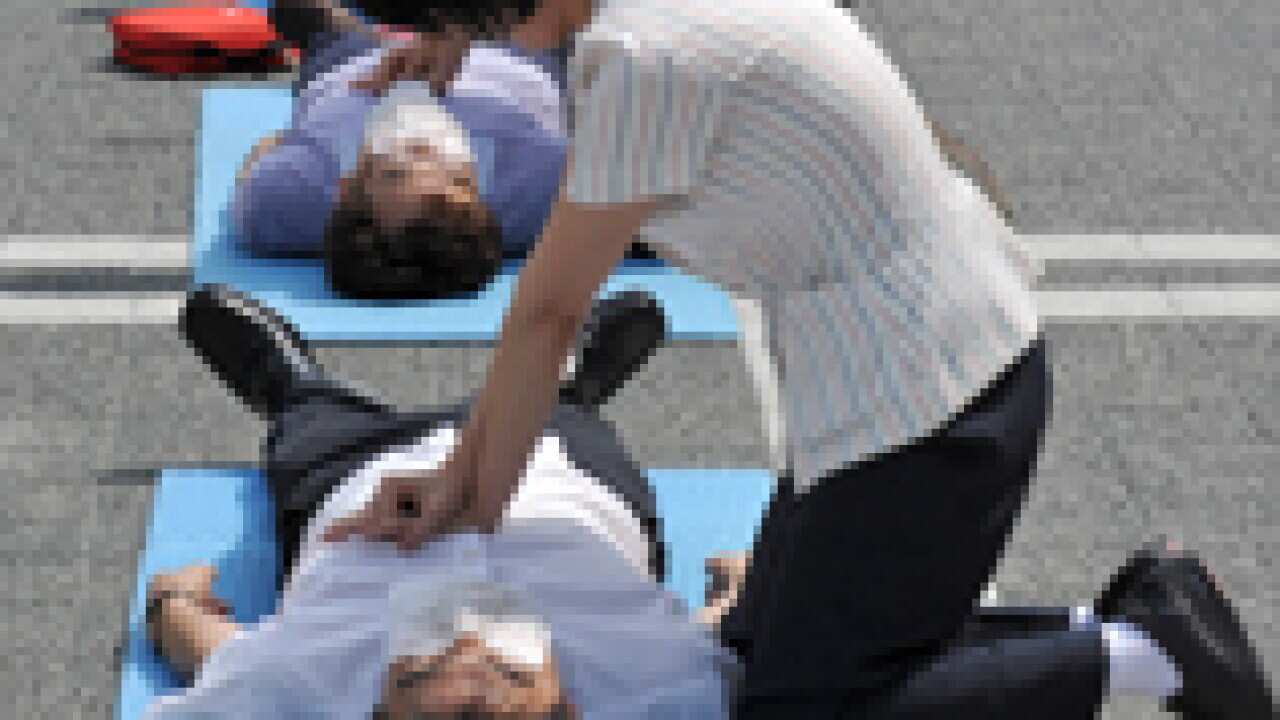
To the untrained or reluctant, CPR can be daunting.
But new research from the US has added to growing evidence that cardiopulmonary resuscitation can be far simpler and even more effective for the patient if mouth-to-mouth is taken out of the procedure.
Experts in Australia agree, but have urged people to learn full CPR in the case of an emergency.
News that makes sense
Your trusted source for staying up-to-date with the world around you. Get free daily news updates and analysis, straight to your inbox.
Some 400,000 people a year are trained in the technique by St John Ambulance Australia.
Students use a face shield to protect themselves when giving the kiss of life, but statistics show a fear of infection stops some people from administering CPR.
Robyn Galwey of St John's Ambulance says the risk is minimal "but still people have their sensibilities and they were reluctant to give it."
Now, a US study recommends untrained people who try to resuscitate cardiac arrest patients should skip mouth-to-mouth and focus on chest compressions.
Galwey says any attempt is better than no attempt - but mouth to mouth can be given the skip in some circumstances.
"Any attempt to resuscitate a patient is better than no attempt at all so if you're untrained or you're unwilling to give mouth-to-mouth then give compression-only CPR", he told SBS.
One research article showed that in the case of a heart-attack, uninterrupted compressions kept up pressure in the chest.
"Statistics show less than a third or a quarter of people who collapse in a cardiac arrest have any resuscitation attempt given to them before an ambulance arrives", Galwey said.
With only one in twelve people in Australia currently holding a current 1st aid certificate, medical authorities are urging more Australians to learn full CPR.







