By Olaf Morgenstern, National Institute of Water and Atmospheric Research and Peter Braesicke, University of Cambridge
SAVING THE OZONE: Part seven in our series exploring on the Montreal Protocol on Substances that Deplete the Ozone Layer – dubbed “the world's most successful environmental agreement” – explains how the protocol reduced skin cancer.
The Montreal Protocol for the protection of the stratospheric ozone layer is widely hailed as the most successful international agreement on environmental regulation. But it didn't just protect “the environment”, it also saved the lives of thousands of human beings.
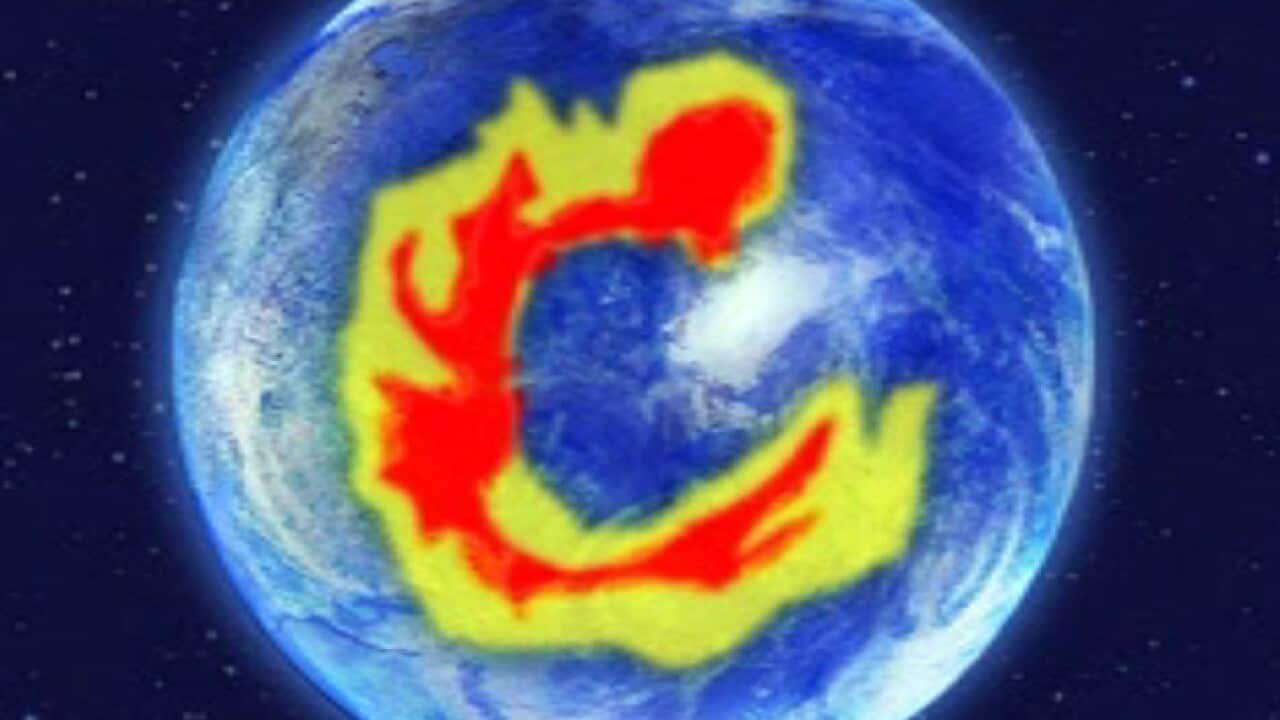
Adopted in 1987, the protocol and its Amendments and Adjustments have successfully reduced the emissions of ozone-depleting substances (ODSs). In the lower atmosphere, many ODSs are chemically inactive, but in the stratosphere (above ~17 km) they break up under intense ultraviolet radiation. This liberates their halogen atoms which causes chemical ozone destruction. The most dramatic consequence is the Antarctic ozone hole, discovered in 1985.
Also at middle latitudes, such as over Australia, a substantial thinning of the ozone layer has been observed. The thinning of the ozone layer causes an increase of ultraviolet (UV) radiation at the Earth's surface, which is linked to the occurrence of skin cancer. Australia has one of the highest rates of skin cancer worldwide.
News that makes sense
Your trusted source for staying up-to-date with the world around you. Get free daily news updates and analysis, straight to your inbox.
A recent study which appeared in the journal Photochemical and Photobiological Sciences quantifies how much the Montreal Protocol may have reduced skin cancer. The study uses two types of models. The first are two chemistry-climate models (CCMs). They combine representations of atmospheric physics with formulations of stratospheric ozone chemistry. The second is a medical risk model which translates the projected surface UV intensities inferred from the CCMs into rates of skin cancer.
These models are then used to simulate two projections. One, of the ozone layer in compliance with the Montreal Protocol. Second, the alternative: the protocol's absence and market-driven growth of ozone depleting substances.
Fed into the CCMs, these two scenarios produce dramatically different projections of surface UV, which the authors then use to infer skin cancer occurrences. This latter step is complicated by the time lag of several decades between exposure of a young individual to UV and the occurrence of skin cancer much later in life.
Putting all the available information together, the authors suggest that the Montreal Protocol will prevent two million cases per annum (or 16% of cases that would have occurred) of skin cancer worldwide by 2030. Beyond 2030, in the no-Montreal Protocol scenario, the rate of occurrence of skin cancer would continue to grow dramatically.
Eight geographical regions are investigated, including North-Eastern Australia (Queensland). They find that in Queensland, up to 200 additional cases of skin cancer per million people per year are expected to occur as a result of the past and projected ozone depletion. This is in contrast to what would have occurred without the man-made damage to the ozone layer.
This represents the largest additional occurrence of skin cancer due to ozone depletion of any of the eight regions studied, but still only amounts to a few percent of the total rate of skin cancer occurrence in Queensland. This is because there are other important factors that make up Australia's skin cancer risk. These are unrelated to ozone depletion, and include predominantly fair skin type and lifestyle.
If we had let ozone depleting substances increase, there would have been 1100-1500 additional skin cancer cases per million people per year in parts of Australia in the year 2030.
The study is the first of its kind to quantify the health benefit of the Montreal Protocol for skin cancer. The Montreal Protocol essentially contained the risk of skin cancer due to man-made ozone depletion to a few percent of additional occurrences. Had no action been taken, by 2030 the skin cancer risk would have increased by much more, not to speak of the decades beyond.
Read more on the Montreal Protocol's 25th anniversary.
Peter Braesicke receives funding from NERC and ESA funds to work on stratospheric ozone and its past and future development. He does not receive company sponsorship.
Olaf Morgenstern does not work for, consult to, own shares in or receive funding from any company or organisation that would benefit from this article, and has no relevant affiliations.








