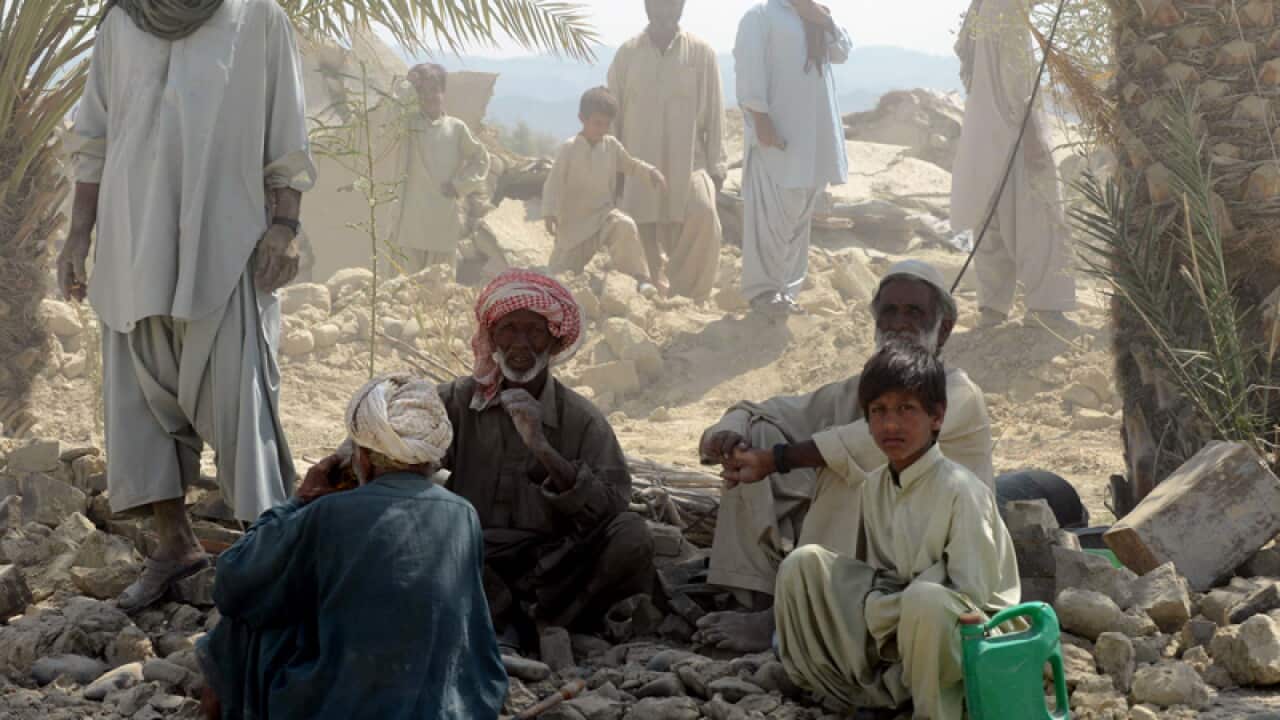
Tens of thousands of survivors of Pakistan's earthquake are waiting for help in soaring temperatures, as the death toll rose past 350 and anger grew at the slow pace of government aid.
More than 100,000 people made homeless by Tuesday's 7.7-magnitude quake spent a second night in the open or under makeshift shelters on Thursday as response teams struggled to reach the remote region in the southwestern province of Baluchistan.
"At least 357 people died and 620 others injured," the Provincial Disaster Management Authority said in Quetta.
It said 311 people died in Awaran district, where the quake struck, and 46 were killed in neighbouring Kech district.
The sheer scale of the territory involved is daunting - the population of Awaran is scattered over more than 21,000 square kilometres of remote and rugged terrain - and infrastructure is extremely limited, with few medical facilities or even roads.
News that makes sense
Your trusted source for staying up-to-date with the world around you. Get free daily news updates and analysis, straight to your inbox.
The area is also home to Baluch separatist rebels waging a decade-long insurgency.
Highlighting the danger from militants, a helicopter carrying the head of the National Disaster Management Authority came under rocket fire in Awaran, though no damage was done and no one was hurt.
Hours later paramilitary troops helping the relief effort were fired at with small arms by suspected rebels, but there were no casualties.
The quake is Pakistan's deadliest since the devastating Kashmir tremor of 2005 which killed 73,000. The toll is expected to rise further as rescue teams dig through the rubble of countless flattened mud-brick homes.
Interior Minister Chaudhry Nisar told parliament "huge activity" was under way to help those affected but he admitted teams were struggling to reach some areas, even 40 hours after the quake.
The government is preparing to send more than 14,000 tents, Nisar said, and is using a C-130 transport plane to reach difficult areas.
In Arawan town, around 200 angry survivors demonstrated outside government offices complaining they had not been given food or shelter.
Survivors in Gajjar, some 120 kilometres east of Awaran, where the quake killed at least 108 people, said they were forced to scavenge for food.
Abdul Rasheed, a survivor in nearby Khaliq Abad, said residents were raking through rubble to find biscuits to feed their children.
"I dug out biscuits from the dust from the rubble of my shop and gave it to my children as we have nothing to eat and we are eating raw barley to survive," Rasheed told AFP.
At a local madrassa administrator Hafiz Muhammad Ashraf showed AFP a mass grave of 22 female students who were buried in the rubble of the Muslim seminary.
Temperatures in the arid region were reaching 42 degrees Celsius and many survivors said they were desperate for some relief from the blistering heat.







