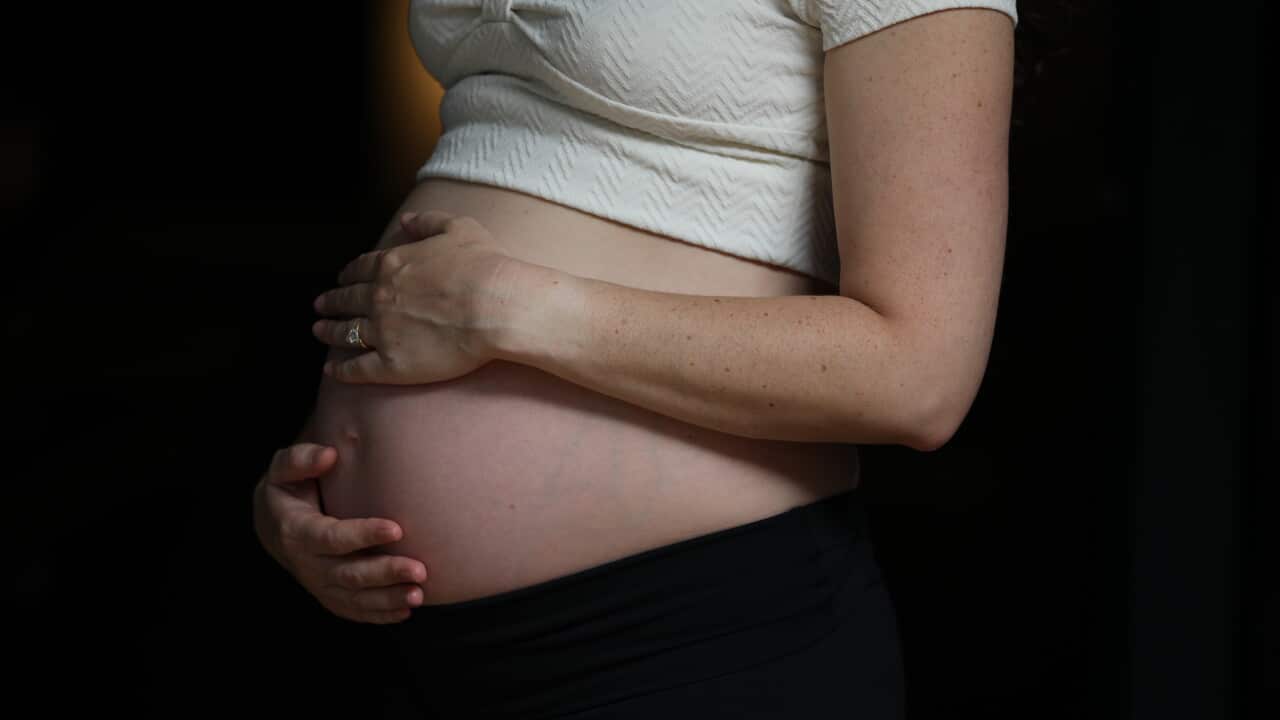
Researchers looked at 124,333 siblings and found no evidence that mothers who took paracetamol while pregnant were more likely to have children with autism spectrum disorder (ASD) or attention deficit hyperactivity disorder (ADHD).
The latest findings, from a team of researchers at the University of Hong Kong, add to the mounting evidence disproving US President Donald Trump's advice in 2025 that doctors should not give pregnant women Tylenol - a brand name for paracetamol in the US.
"Taking Tylenol is not good. I'll say it. Not good," Trump said in September.
"Fight like hell not to take it."
News that makes sense
Your trusted source for staying up-to-date with the world around you. Get free daily news updates and analysis, straight to your inbox.
Trump's announcement was roundly rejected by the Australian Medical Association and Australia's Therapeutic Goods Administration; however, Health Minister Mark Butler expressed concern that expectant mothers could be dissuaded from treating pain.
"I was really worried when those comments first started being reported, that there would be more than 200,000 women in Australia who are pregnant right now who'd be unsure or even afraid about what to do if they got sick," he told Channel Nine in September.
Co-author of the new research, assistant professor Shan Luo from the Department of Family Medicine and Primary Care at the University of Hong Kong, told SBS News that, as a mother herself, she hopes the findings will help replace "fear" with "data" for expecting parents.
"Pregnancy is a time when every decision can feel high-stakes, especially when the headlines are alarming."
"We wanted to provide clearer evidence to help women and clinicians make decisions based on data rather than fear."
The large scale 'sibling study'
In Australia, paracetamol is classed as a Category A drug, and is considered safe to use during pregnancy.
Concerns around paracetamol, or acetaminophen, stem from its ability to cross the placental barrier, meaning that it can affect the fetus.
Hong Kong's public healthcare system provided researchers with a unique opportunity to study the effects of paracetamol on a massive scale and over an extended period of time.
Co-author professor Ian Chi Kei Wong, head of the Department of Pharmacology and Pharmacy at the University of Hong Kong, told SBS News their sample size began with more than 700,000 mother-child pairs from 2001 and 2023.
"Hong Kong has long-established electronic health records in the public healthcare system, and these records can be linked across mothers and children over time," Wong said.
The final sample size was whittled down to 124, 333 siblings. Studying siblings allowed the researchers to manage variables like genetics and socioeconomics. The researchers used dispensing records to track paracetamol use for each pregnancy.
"By comparing siblings from the same family, where the mother used paracetamol in one pregnancy but not the other, we can reduce the influence of those shared family factors," Luo said.
"Was the child exposed to paracetamol during pregnancy more likely to develop autism or ADHD than the sibling who was not exposed?"
The answer was no.
The gap between 'science' and 'fear'
A month after Trump's initial claims about Tylenol and autism, US health and human services secretary Robert F Kennedy Jr walked back the initial claim.
"The causative association between Tylenol given in pregnancy and the perinatal period is not sufficient to say it definitely causes autism. But it is very suggestive," he told the media in October 2025.

At the time, the Australian Medical Association's Dr Maria Bolton told ABC Radio that the misinformation could have a chilling effect on parents.
"[These claims] just create anxiety, guilt and confusion at a time when all [pregnant women] need is support."
Paracetamol use is common in pregnancy to treat pain and fever, and in the Hong Kong study researchers found around 43 per cent of pregnancies involved the dispensing of painkillers.
The researchers noted, however, that just because a painkiller is "dispensed", it doesn't necessarily mean it was "consumed".
"Some may have received the medicine and not taken it, while others may have bought paracetamol over the counter or received it in the private sector, which would not be fully captured in our public healthcare records," Wong said.
However, the size of the study means this limitation is unlikely to have affected the overall result.
Co-author professor Peter Tanuseputro urged worried mothers not to avoid treatment based on fear.
"Paracetamol should not be used unnecessarily, but it should not be avoided when it is clinically needed," he told SBS News.
"Untreated fever or significant pain is not risk-free during pregnancy, and alternative medicines may carry greater concerns."
"My advice would be to not make decisions based on fear alone."
For the latest from SBS News, download our app and subscribe to our newsletter.







