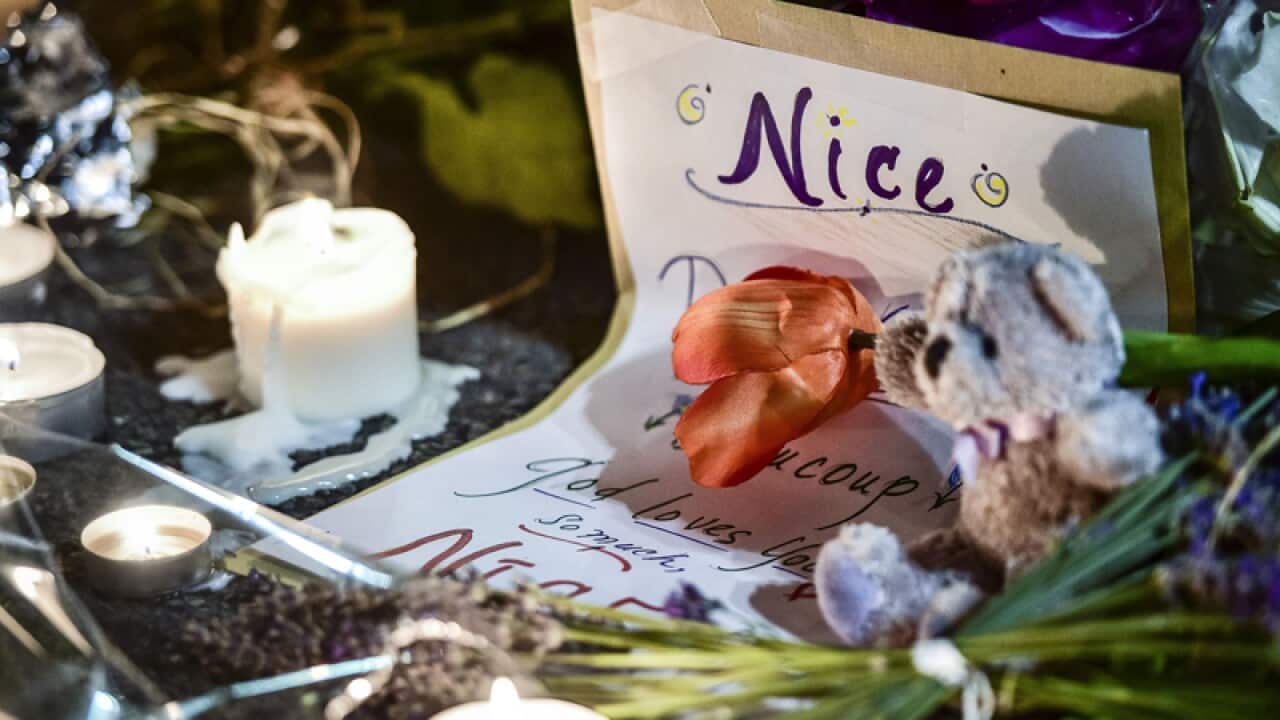
An eerie feeling hung over Nice's blood-stained Promenade des Anglais as shops and restaurants opened for business on Saturday, with small vigils and flowers peppering the walkway outside.
A jewel in the French Riviera, Nice's sunny Mediterranean shoreline, artistic heritage and ubiquitous open-air terraces attract some four million tourists a year.
And it was precisely this international culture that was hit on Thursday's Bastille Day in a bloody truck rampage killing at least 84 people that threatened to dim the ancient city's sparkle.
"The economy on the Cote d'Azur is going to suffer, and we're just at the beginning of the season," said Chechen nightclub bouncer Roustam Khaitaev, whose daughter Sabrina was among those injured in the attack. "There'll be no one else for the rest of the season. Bars, restaurants, they'll all suffer."
Restaurants were largely empty as the sun set, yet on the promenade a few metres away thousands of local residents and tourists enjoying the evening air painted a seemingly familiar picture.
News that makes sense
Your trusted source for staying up-to-date with the world around you. Get free daily news updates and analysis, straight to your inbox.
But many had come to pay tribute to those who died.
Tourists and locals walked solemnly among the roses, candles, teddy bears and notes of grief and sympathy that had been placed where the dead lay less than 48 hours earlier - their blood still visible on the pavement.
Most of those interviewed by The Associated Press said they felt it was right to reopen the promenade so soon after the attack.
"I think it's important for people to be able to reflect on what happened by seeing this," said Marie-Francoise Hulia, who lives in Nice. "It's important not to have a memorial hidden away in some corner of the town."
Carlo Marnini said he had driven from Milan, Italy, to pay his respects to a city he has vacationed in for many years.
"The world mustn't stop," he said. "Terrorism mustn't win."
Nice - with its 12km of shoreline - has been synonymous with tourism since the late 18th century when it became a fashionable destination for upper class English holidaymakers.
This particular heritage is remembered in the name of the city's most famous spot, the Promenade des Anglais - French for "Walkway of the English."







