
in brief
- The reopening of four airports in Indonesia has been delayed.
- The probability of another volcanic eruption remained high, the country's geology agency warned.
Indonesia's main airport and three others postponed reopening on Monday after halting operations following a volcanic eruption that left hundreds of thousands of passengers stranded.
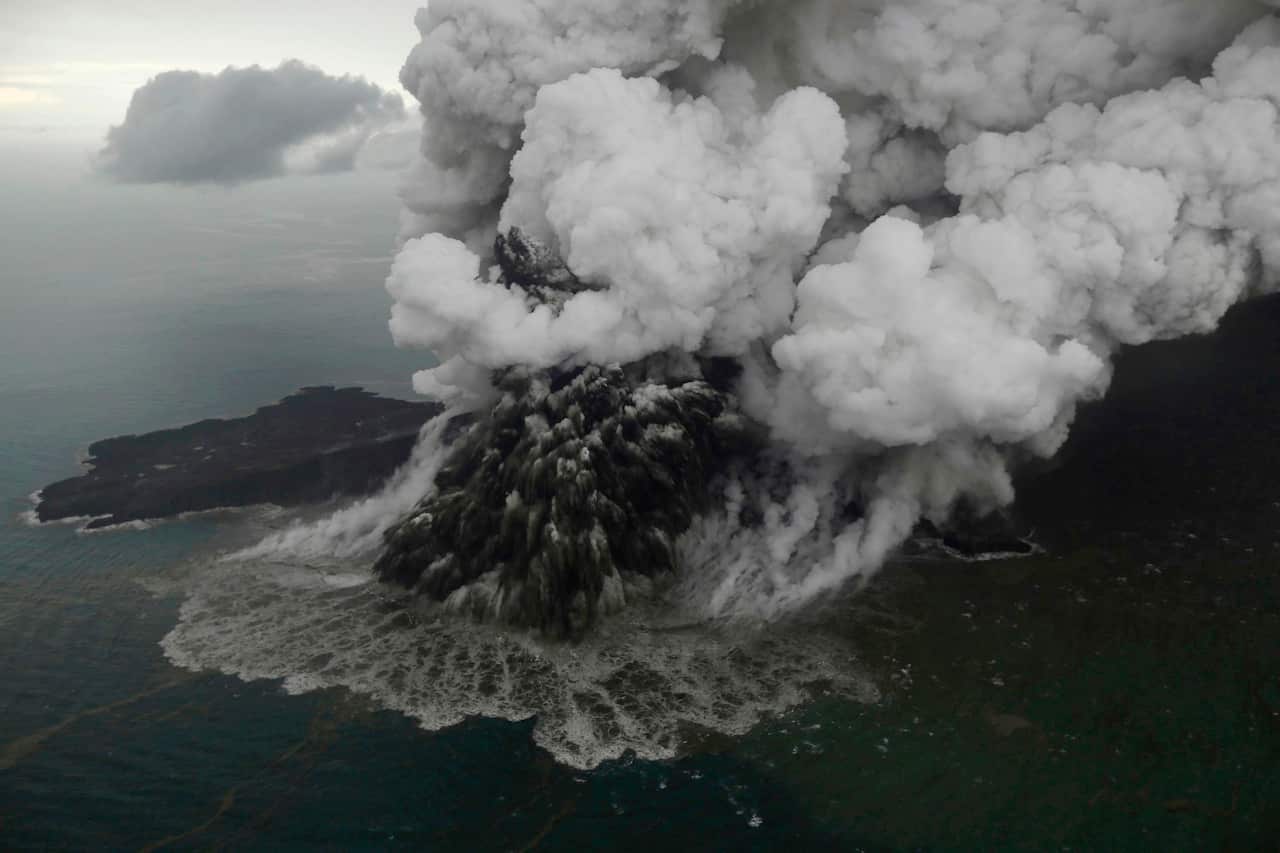
Mount Anak Krakatau, about 150km from Indonesia's capital, Jakarta, erupted on Saturday, spewing a fountain of lava and a plume of volcanic ash.
Eight airports halted operations over the weekend after ash was detected in their airspace, disrupting thousands of flights and leaving more than 270,000 passengers stranded, the transport ministry reported Monday.
"These figures are the cumulative operational impact since 5 September 2026 and cover flights that have been cancelled, delayed, or diverted," the ministry said in a statement.
Italian tourist Michel Miegge was on holiday with his girlfriend and due to fly home in time for work on Tuesday, but their flight was cancelled.
News that makes sense
Your trusted source for staying up-to-date with the world around you. Get free daily news updates and analysis, straight to your inbox.
"We don't have any news from the airline. We don't know if we stay another day in Jakarta or find another flight," the 32-year-old said.
"I don't think it's possible now. We found a nearby hotel, but we saw that many hotels were fully booked."
Another tourist, French painter Carol Odile, said she came with a group of friends to see Komodo dragons in Flores when she was notified that her flight was cancelled.
"We are disappointed, but our group is optimistic. We hope we can go to Flores Island very soon," the 60-year-old said.
Hundreds of flights disrupted
More than 240 domestic and international flights were cancelled or delayed due to volcanic ash on Monday morning alone, Jakarta's Soekarno-Hatta International Airport said, adding that nearly 30,000 passengers were affected.
The Transport Ministry has prepared six alternative airports — including airports in East Java, Central Java, and Yogyakarta — as options for aircraft that were originally scheduled to land in Jakarta.
"We are encouraging airlines to use these airports to avoid passenger congestion, both for arrivals and departures," transport minister Dudy Purwagandhi said in a statement.
Airport operators would provide free bus services for passengers who wish to fly from other airports.
Dudy said that the Indonesian government also relaxed rules for foreign passengers who may have overstayed as a result of flight cancellations.
Threat of eruption remains high
The probability of an eruption remained high, the country's geology agency warned.
"The threat from an eruption comes from the ejection of incandescent rocks accompanied by heavy ashfall. Another potential hazard arises from lava flows if the eruption resumes and continues," agency head Lana Saria said.
Anak Krakatau, which means Child of Krakatau, sits in a strait that separates the islands of Java and Sumatra.
The volcano has been sporadically active since it emerged from the sea at the beginning of last century, in the caldera formed by the 1883 eruption of Mount Krakatau.
A 2018 tsunami triggered by a collapse of parts of Anak Krakatau killed 429 people and left thousands displaced.
The eruptions have seen ash towers reach as high as 6,000 metres on the Java side of the volcano and 15,000 metres on the Sumatra side and in some parts of Banten province in Java, meteorological agency BMKG posted on its website.
For the latest from SBS News, download our app and subscribe to our newsletter.







