
In brief
- One Nation has proposed slashing the tobacco tax by 75 per cent to address the surge in black market activity.
- Experts are divided on whether cheaper cigarettes would weaken organised crime networks or undermine decades of tobacco control efforts.
One Nation leader Pauline Hanson has vowed to slash the tax on tobacco by 75 per cent and dramatically reduce the price of legal cigarettes, arguing the move would curb the booming black market.
Illicit tobacco trade in Australia has expanded rapidly since 2020. The value of illicit tobacco attempting to enter the market has soared from $1.74 billion in 2018-19 to more than $6.4 billion in 2023-24, according to Australian Taxation Office estimates.
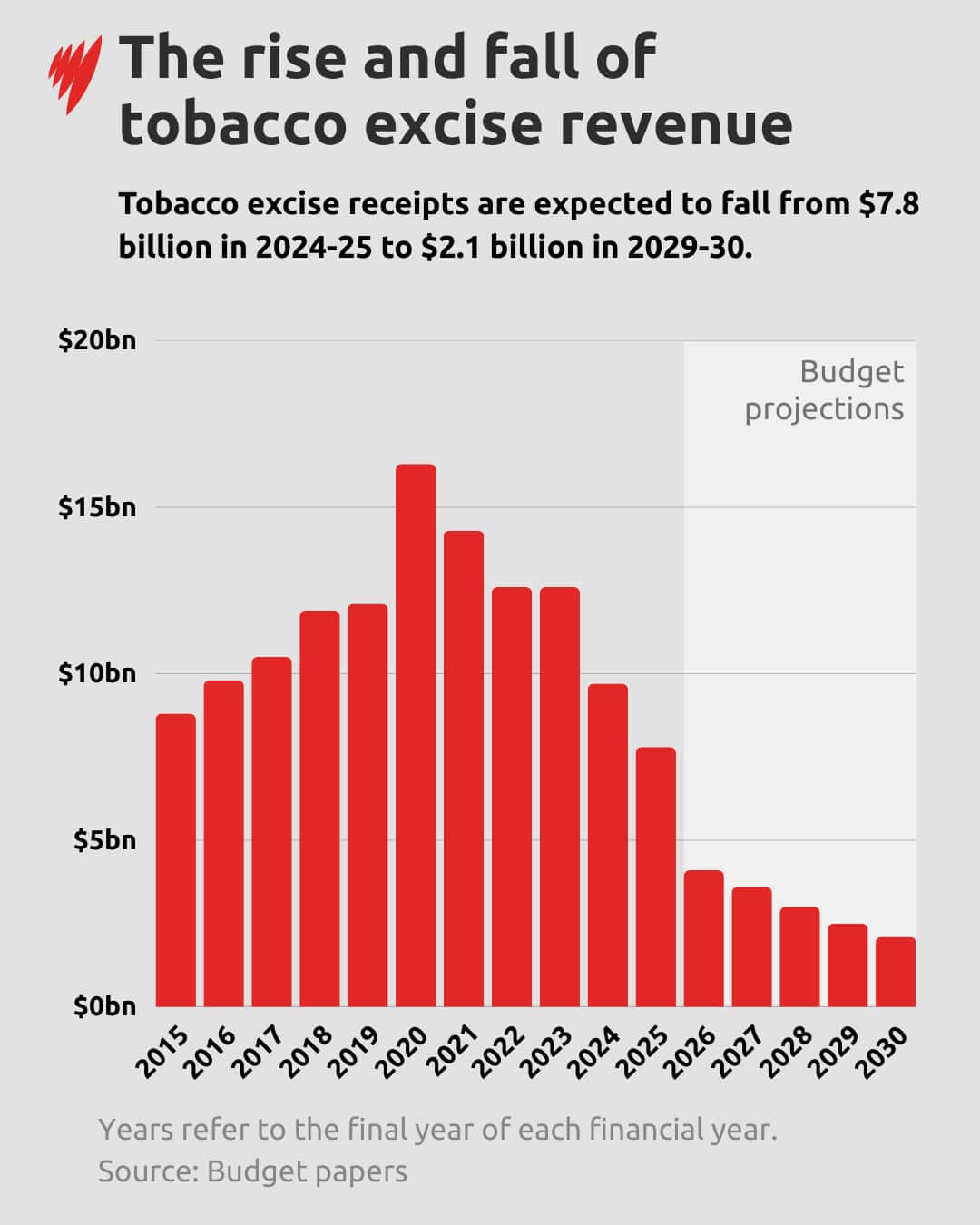
Meanwhile, government revenue from the tobacco excise — the tax applied to legal tobacco products — has plummeted and is forecast to continue declining.
"Labor has not only lost the revenue, it has lost control of the black market in illegal tobacco," Hanson said in her announcement on Tuesday.
Hanson said her party would also pause indexation on the excise for three years, saying the policy, if passed through in full, would reduce the price of a $46.50 legal packet of cigarettes to around $21 to $22.
News that makes sense
Your trusted source for staying up-to-date with the world around you. Get free daily news updates and analysis, straight to your inbox.
Tobacco is subject to a high excise to keep prices high and discourage smoking. Currently, excise duty rates increase by 5 per cent each year, in addition to routine indexation.
"This is not about encouraging smoking. It is about restoring the rule of law and breaking the black market," Hanson said.
Labor has previously resisted calls to cut the excise. On Tuesday, Treasurer Jim Chalmers said the government was not considering a cut and its focus was on compliance.
What could a policy like this accomplish? Experts have mixed views on how it would impact crime, public health and government revenue from the excise.
The public health perspective
The use of illicit tobacco has surged in recent years, raising alarm bells for public health experts despite an overall decline in smoking rates.
Laura Hunter, CEO of the Australian Council on Smoking and Health, told SBS News making cigarettes cheaper would have "huge ramifications for the health of Australians".
"Australia now has the lowest smoking rates that we've ever recorded, and that's the result of decades of policies that are designed to make cigarettes less affordable, less available in the community, and less normalised," she said.
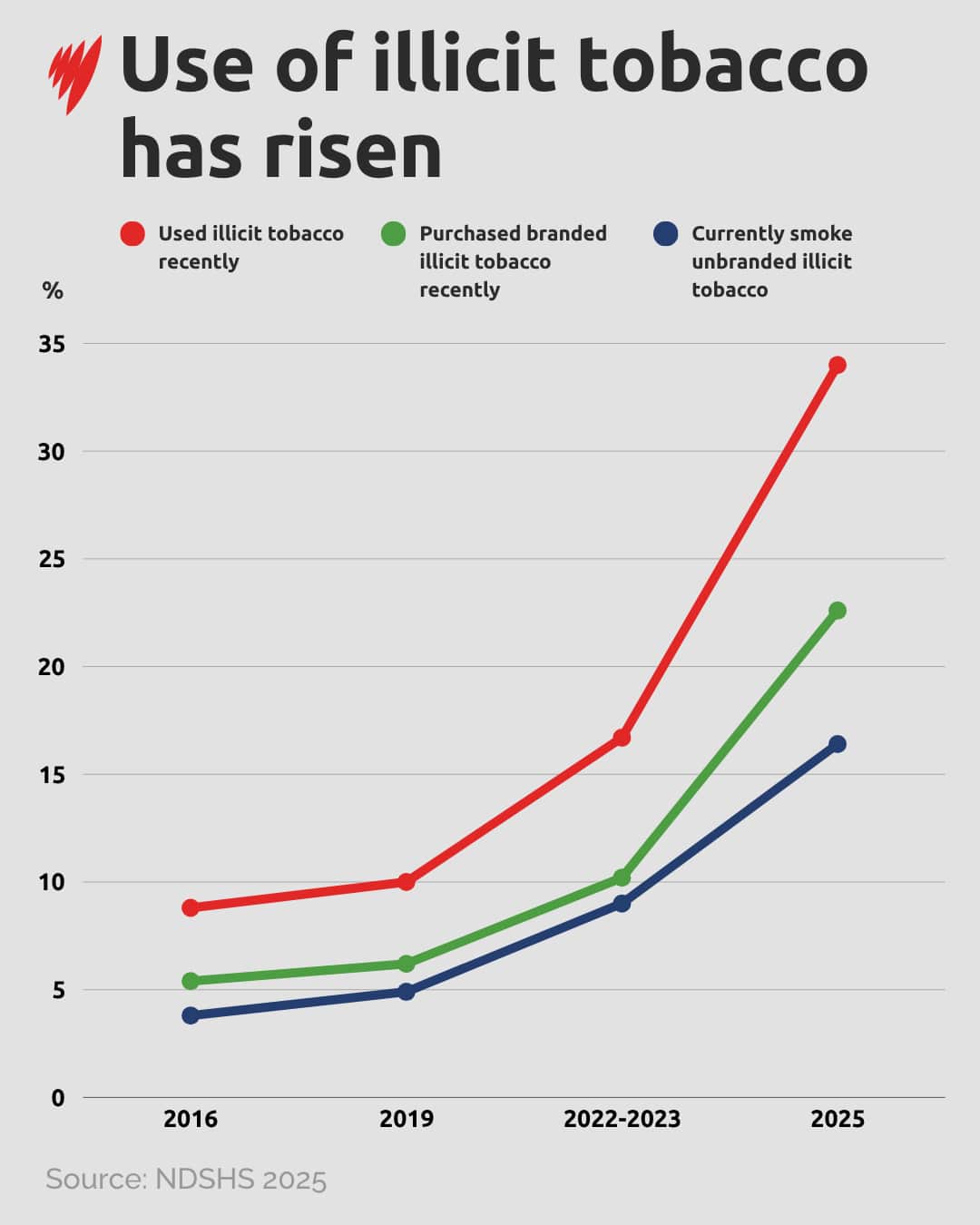
Hunter rejected the idea that legal tobacco prices were the primary driver of the black market, arguing its growth was being fuelled by international organised crime networks mass producing illicit tobacco.
"Our tobacco laws in Australia were never designed to combat sophisticated organised crime groups," she said.
She said crackdown measures across the country, including efforts to strengthen tobacco laws and enhance on-the-ground enforcement, were starting to turn the tide, and urged state and territory governments to continue tightening legislation.
She also disputed the argument that lowering the excise would hinder the illegal market's price advantage.
"You can't price match criminals," she said.
Last year, the Australian Medical Association's president said calls to reduce the excise were "misguided" and backed by big tobacco.
"There's absolutely no evidence to support the idea that reducing excise will impact illegal tobacco — in fact the evidence says the opposite," Danielle McMullen said.
"Jurisdictions that have reduced the excise [are] seeing a horrible combination of increased smoking rates and no tangible impact on the illegal tobacco trade."
Tobacco use carries serious health risks and is a leading cause of preventable illness and death.
How could it impact revenue?
Legal cigarettes now cost upwards of $40 a pack, with the excise accounting for the bulk of the price.
The revenue from the excise increased steadily until 2020, when it began to fall from a high of $16.3 billion to $7.8 billion in the 2024-25 financial year.
Analysis last year from the e61 Institute, which describes itself as a not-for-profit, non-partisan economic research institute, found cutting the tobacco excise might not be enough to draw smokers back to legal products, and could worsen government revenue declines.
Even if legal cigarettes fell to around $21 a pack under One Nation's proposal, they would still be substantially more expensive than many illicit products.
Fei Gao, a taxation lecturer in the University of Sydney's School of Accounting, Governance and Regulation, told SBS News it's "too late" to cut the excise, and any such move would have needed to occur several years ago.
"I don't think it's going to be an incentive for people to switch back to the legal product," she said. "When the customers are gone, they're gone. They will only go back if you can beat the price."
Gao said the likely result would be an even faster decline in government tobacco excise revenue.
Australia, a world leader in smoking reduction measures, introduced graphic health warnings in 2006 and pioneered plain packaging laws.
Gao noted that legal tobacco manufacturers face costs that illicit operators do not, making it difficult to compete on price with black-market products.
A criminologist's view
James Martin, associate professor in criminology at Deakin University, studies the illicit tobacco trade. He argued the growth of Australia's black market was primarily driven by tobacco excise increases.
He said organised crime groups had captured a growing share of the market by offering much cheaper products, while government efforts to tackle the trade through enforcement have yielded limited results.
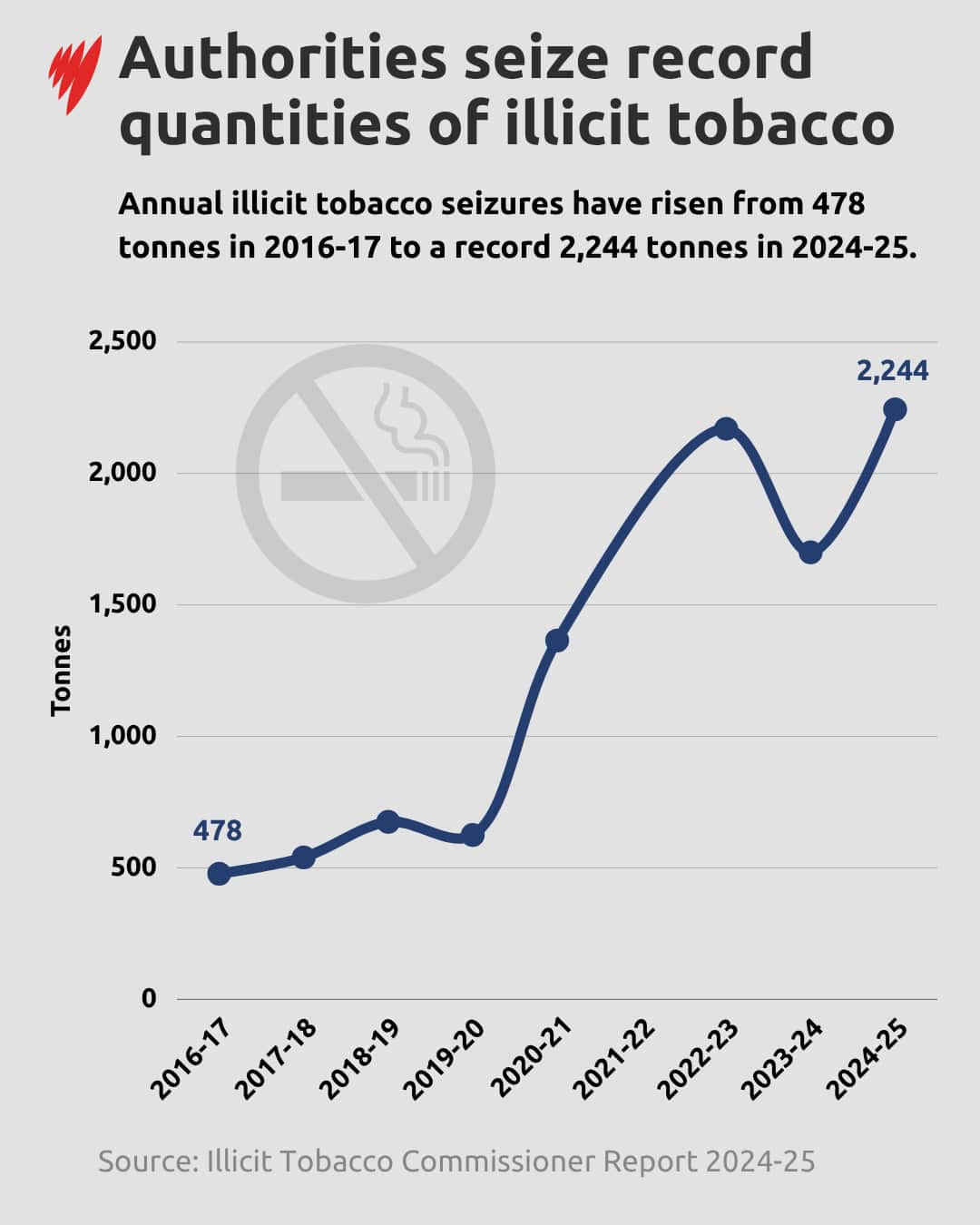
"We've seen massive investment in law enforcement over the last few years, and it's been accompanied by record arrests, record seizures," he told SBS News.
"But the actual impacts on the market have been negligible."
Martin said reducing the excise could shrink the illegal market and lure consumers back into regulated channels, arguing that criminal groups would be unable to compete with the efficiency of legal manufacturers.
While public health advocates warn cheaper cigarettes could increase smoking rates, Martin notes that illicit tobacco is already widely available at low prices across Australia.
He said enforcement would remain important, but would not be effective until a "critical mass of consumers" could be diverted back to the legal market.
For the latest from SBS News, download our app and subscribe to our newsletter.







