This audio is voiced by AI and may occasionally mispronounce words.
Share your feedback and help us improve this feature. Read more about how we use AI at SBS here.
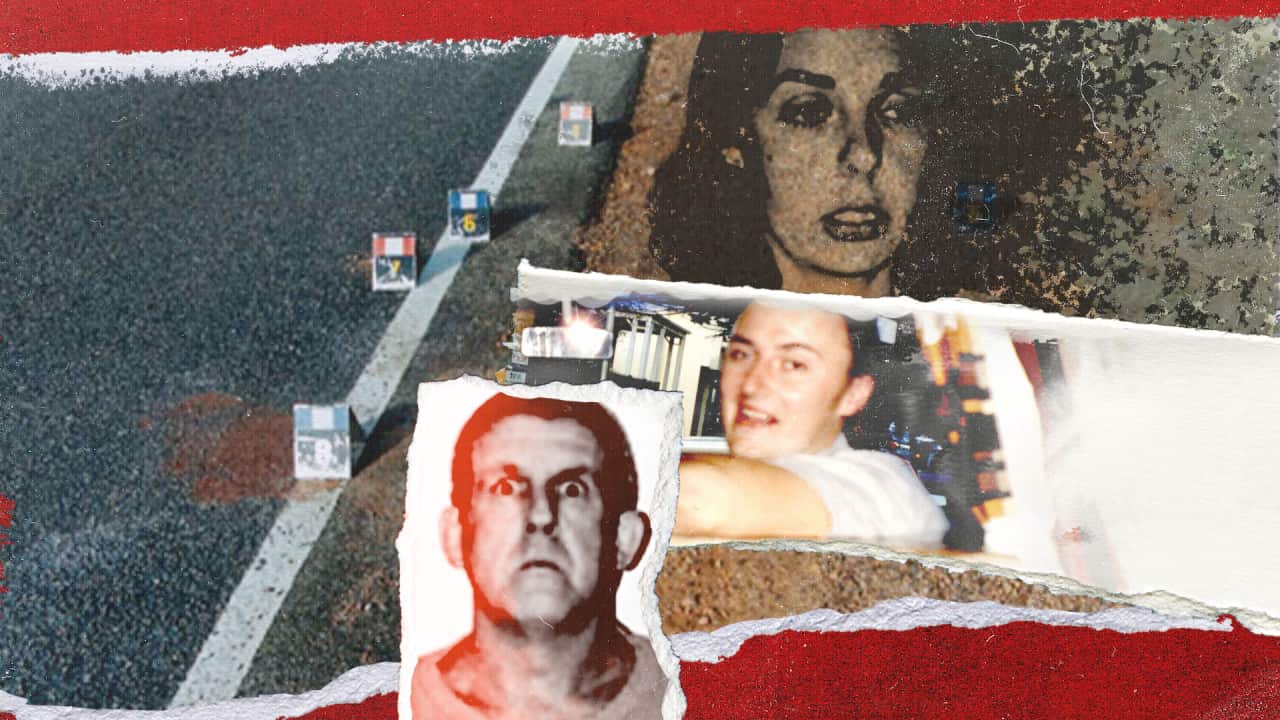
Three weeks before Bradley John Murdoch died, NT Police made a last-ditch effort to coax the convicted murderer to reveal the location of Peter Falconio's body.
Newly released body-worn video reveals the exchange — and a final insight into Murdoch's frame of mind.
In a small, stark office in Alice Springs Correctional Centre — known for its overcrowding and lack of air-conditioning — a plain-clothes female police officer gently implores Murdoch, dressed in prison greens, to disclose the whereabouts of the British tourist, who went missing in 2001.
"I need you to have a think about ... if Peter Falconio was your son, Quentin ... and somebody knew something about where his body was," the officer says.
Murdoch cuts her off mid-sentence.
News that makes sense
Your trusted source for staying up-to-date with the world around you. Get free daily news updates and analysis, straight to your inbox.
"Don't know anything about it. Okay? You've been told on that answer," he says.
"Don't beat around the bush because I'm just going to cut you short every time. I know nothing. Know nothing. I've said this for 22 years. I know nothing. You keep asking these questions. I know nothing."
Murdoch had been diagnosed with stage four throat cancer and had only a few weeks left to live. It was all but the final chance for Falconio's family to get the closure they had been waiting two decades for.
With assistance from United Kingdom police, the Australian officers planned to show Murdoch a video of Falconio's parents, Luciano and Joan Falconio, pleading for answers. He refused to watch it.
At one point in the exchange, the officer says, "I just want you to think about it", referring to the opportunity to offer closure.
"I'm not thinking about it, I've thought about it for 22 f---ing years," Murdoch replies.
"Now you're here at the last minute because I'm f---ing dying. No-one gives a f--- about me. Well, some people do."
Days later, Murdoch would enter palliative care. Police visited him one last time, hoping he'd make a dying confession, but that interaction only lasted 30 seconds.
On 16 July 2025, Murdoch died without revealing anything about Falconio's whereabouts.
Despite this, Falconio's parents, Luciano and Joan, said at the time that they still hold out hope because Murdoch may have told someone, and together with a $500,000 reward on offer, there's a chance they may still get answers.
SBS News tried to contact Falconio's family ahead of the 25th anniversary but was unable to reach them.
In March 2026, the pair told the UK's Daily Telegraph that the whole ordeal had "taken so much out of us".
"I think deep down I didn't think he would reveal where he put Peter," Joan said.
"I wasn't thinking he wouldn't watch it [the video], it didn't cross my mind, actually.
"He was a dying man, so he wasn't going to reveal anything."
The psychological impact experienced by family or loved ones of a missing person is often referred to as 'ambiguous loss' in trauma research.
Sydney psychologist and researcher Dr Anna McKinnon describes it as a loss "without a clear sense of emotional closure or understanding".
"To heal, people usually need to integrate these deeply upsetting and troubling experiences into their own life story — and this is much harder to do when key questions remain unanswered," McKinnon tells SBS News.
"The family and friends of Peter Falconio know that Bradley John Murdoch was convicted of his murder. But not knowing where his remains are may leave the loss feeling 'stuck' or unresolved for many of them."
She says having access to a loved one's remains offers the chance to say goodbye or take part in grieving rituals.
"This lack of resolution may leave loved ones vulnerable to PTSD [post-traumatic stress disorder], complicated grief [grief that doesn't naturally improve over time], and related struggles such as anxiety and depression."
Will Peter Falconio ever be found?
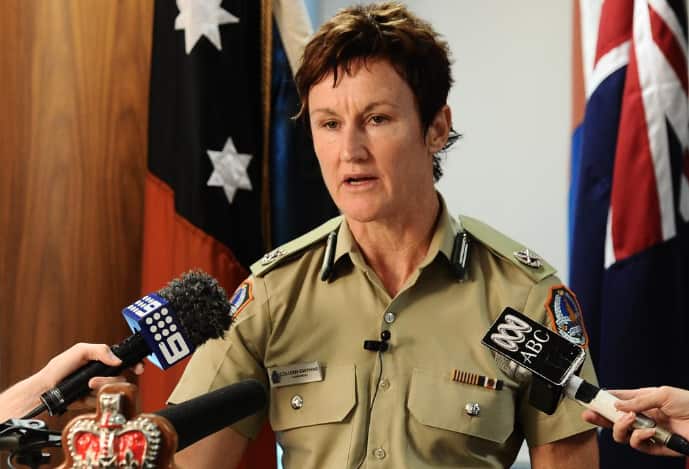
Former NT Police officer Colleen Gwynne, who led the investigation into Falconio's murder, tells SBS News the only remaining avenue for finding his body "would be if Bradley [Murdoch] told someone".
One of the key challenges in the case, according to Gwynne, was trawling the boundless desert-like landscape of the Northern Territory, where Falconio was last seen alive.
"If you understand the terrain out there, it's vast. You can drive 100 kilometres, and it could look the same as the previous hundred," she says.
The analogy I've always used, it's like finding a needle in a haystack, and even though our searches were extensive, we knew it was going to be a challenge.
Gwynne says Murdoch's death in 2025 was an "opportune time" for anyone harbouring information to come forward. While it's "unlikely" they would now, she remains open-minded.
"Someone may find themselves in an area and find something that may lead to that discovery. But can we do anything now? No, I don't think there's much that can be done by police at this point."
In a statement, Murdoch's lawyer, Christopher Dale, said the convicted killer had spent the last several years of his life believing a team of lawyers was working on a petition of mercy for him.
Under NT law, a mercy petition can be submitted to the administrator of the Northern Territory, who can then issue a pardon, reduce a sentence or order a re-trial.
Dale says Murdoch was led to believe that his former lawyer, Andrew Fraser, had been working on the petition for three years. But this was not the case.
"The 2020 television series Murder in the Outback challenged the two key pieces of evidence that contributed to Murdoch's conviction," Dale explains.
"This news [that the petition did not exist] was devastating for Murdoch. His last hope had vanished."
Dale continues to back Murdoch's plea of innocence, after taking over the work of his predecessor, Fraser, who died two years before Murdoch.
"Peter Falconio's body has not been found. Bradley Murdoch and Andrew Fraser are both dead, yet this story is far from over."
Gwynne acknowledges there is a cohort of people who think Murdoch is innocent because the nature of the crime "lends people to think that there's something more sinister or something alternative to what we know".
"Because when you don't have a body, it invokes suspicion and the characters within this whole crime does tend to make people's imagination go a little bit wild."
The case, as it happened
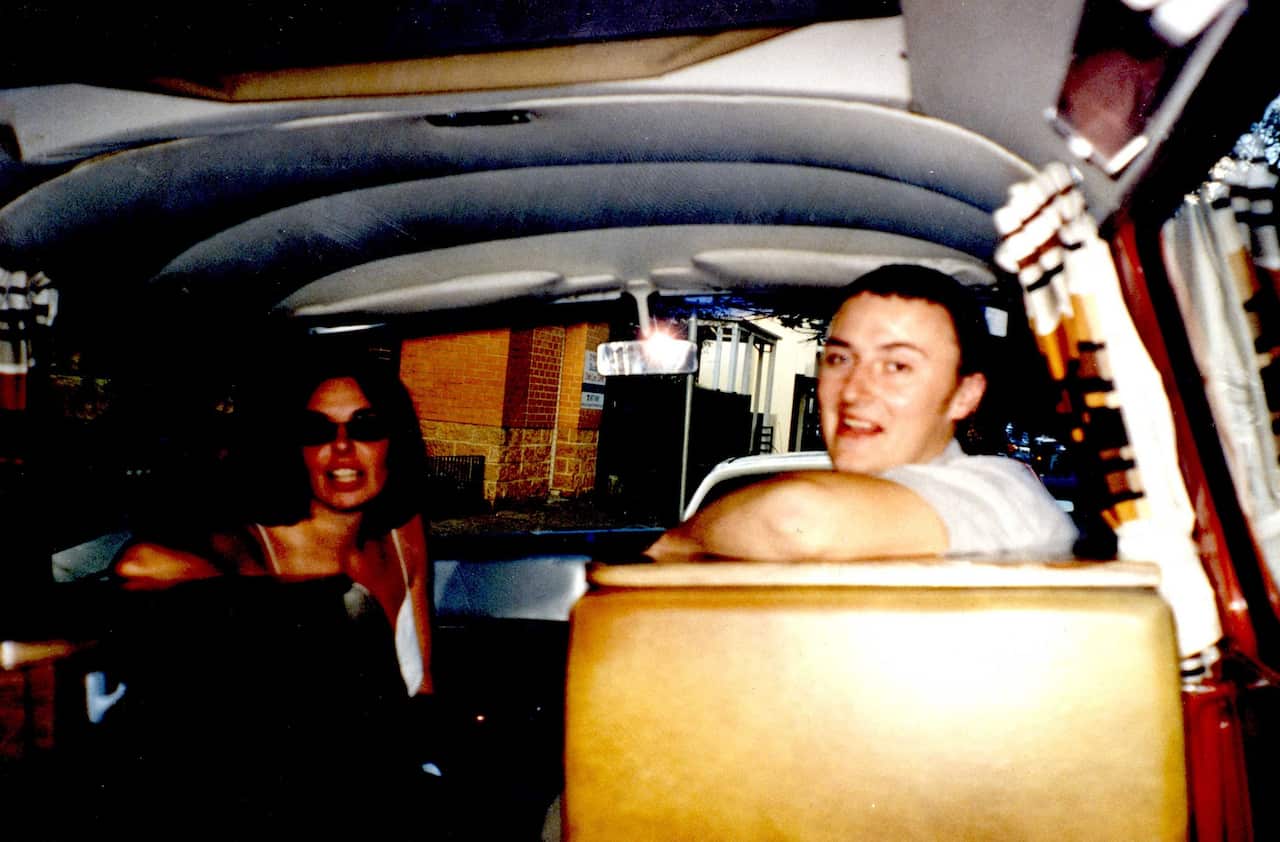
At the turn of the century, British tourists Joanne Lees and Peter Falconio embarked on a trip of a lifetime, backpacking around the world. The couple arrived in Sydney in January 2001 and purchased an orange Volkswagen Kombi van to road-trip around Australia, with plans to visit Canberra, Melbourne, Adelaide, Alice Springs and Darwin before wrapping up in Cairns and flying to New Zealand.
14 July 2001
Having ticked off the first few stops on their itinerary, Falconio and Lees leave Alice Springs and head north along the Stuart Highway to Darwin.
8pm
The couple notices a vehicle following them. The driver of that vehicle — later found to be Bradley Murdoch — motions for them to pull over in Barrow Creek, 280km from Alice Springs.
Murdoch, a truck driver and mechanic by trade, tells the couple that sparks are coming out of their car. Falconio goes to inspect the engine and asks Lees to rev the engine.
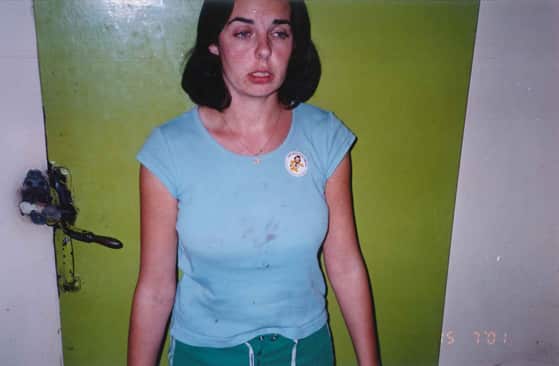
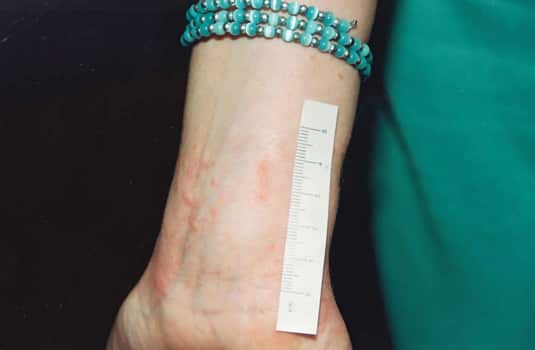
She hears a loud bang. She turns to find that Murdoch had shot Falconio and was now pointing the gun at her. Murdoch then assaulted Lees, bound her wrists with cable ties and electrical tape, and forced her into his car.
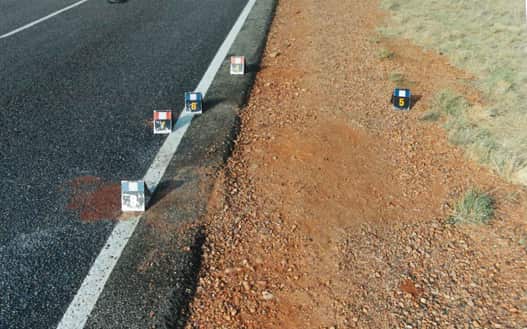
Lees managed to escape into nearby bushland and stayed hidden until Murdoch stopped looking for her and left the scene.
Lees then flagged down two men driving a road train that same night. Falconio was never seen again.
28 August 2002
Murdoch is arrested and charged by South Australian police in Port Augusta over the rape and abduction of a Renmark woman and her 12-year-old daughter.
Criminal records show that before this, Murdoch had also been convicted of endangering life and unlawfully discharging a firearm in 1995 after he opened fire on a group of Aboriginal people in Western Australia. In 1980, he had also been convicted of causing death by dangerous driving when he hit and killed a motorcyclist in Port Pirie.
10 November 2003
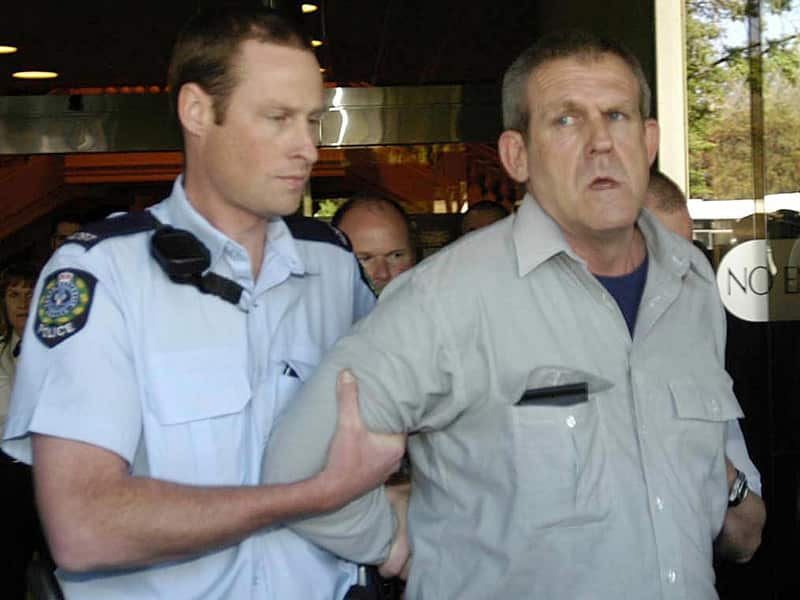
Murdoch is acquitted of all charges relating to the South Australian case. But moments after walking out of the District Court, he is arrested and charged with Falconio's murder and the assault and abduction of Lees. He is then extradited to the NT.
17 October 2005
Murdoch stands trial in the Northern Territory Supreme Court over the murder, assault and attempted kidnapping charges. He pleads not guilty.
15 December, 2005
Murdoch is found guilty of all charges by a Supreme Court jury and is sentenced to life in prison, with a non-parole period of 28 years. DNA evidence found on Lees' clothing helped convict Murdoch.
Murdoch unsuccessfully appeals his conviction and is refused special leave by the High Court.
'No body, no parole' laws
In the years following Falconio's murder, police efforts to locate his body were exhausted. In 2016, a decade after Murdoch was convicted, the NT's Country Liberal Party government introduced legislation that would prevent killers from becoming eligible for parole if they don't reveal the location of their victim's body.
John Elferink was the NT's attorney-general at the time. Speaking to SBS News and reflecting on the change in legislation, he says he was interested in seeing "justice prevail".
"The dignity of being able to bury a loved one is an important dignity for so many people," he says.
Elferink maintains the laws weren't "exclusively" created to target Murdoch, but he knew it would only impact him initially.
If some scurrilous villain like Bradley Murdoch chooses, for the sake of his own monumental ego, not to try at least help the family find where the body is, then why should they receive parole?
Elferink worked as a police officer in the NT for most of his life before entering politics.
On the 25th anniversary of Falconio's disappearance, he shares his reflections on the case.
"The territory has more profound issues to face than the occasional homicide that captures the national headlines. But nevertheless, it forms part of the rich tapestry of the history of the Northern Territory," he says.
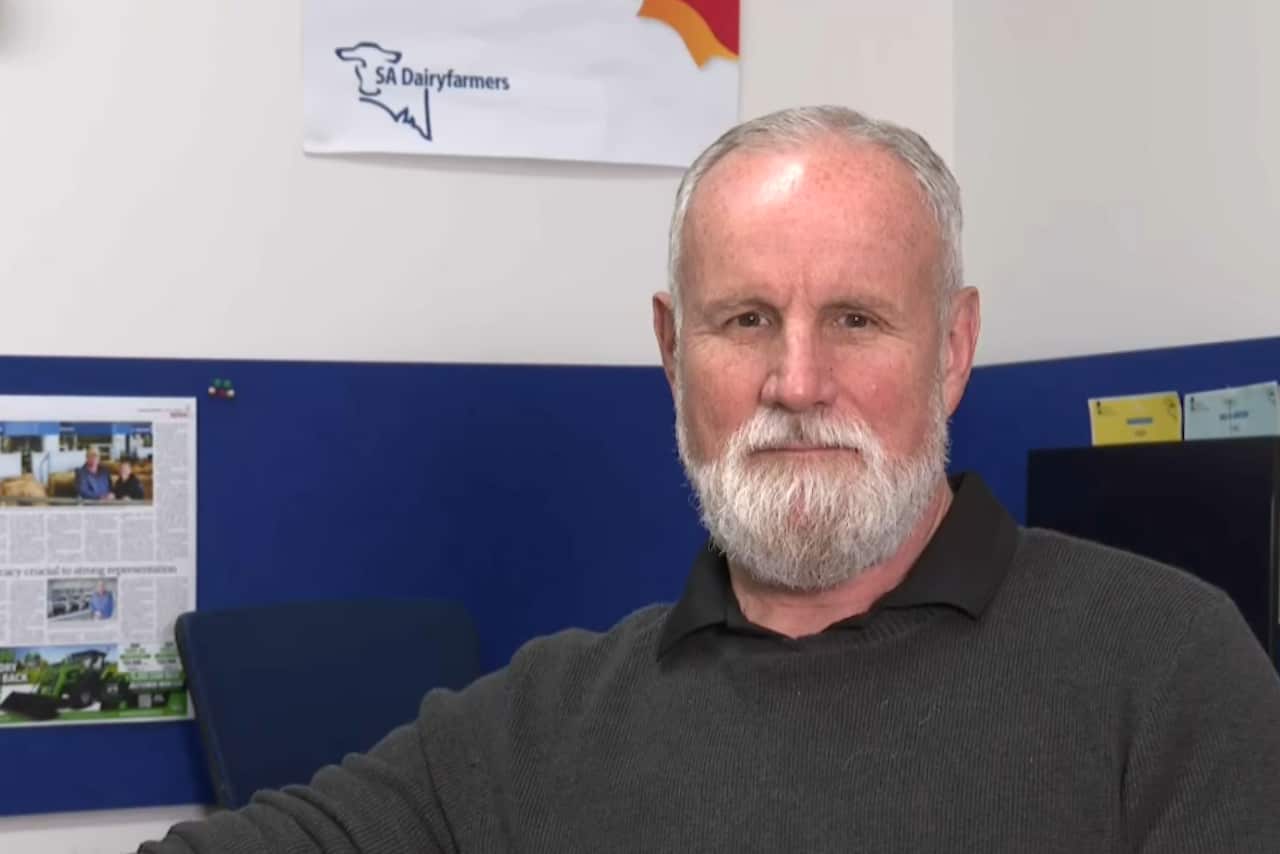
He says his thoughts remain with Falconio's family.
"They have a son who they never got to see grow up beyond his early 20s and that will have left a cavernous hole in the middle of their existence.
"I hope that the parents of Peter Falconio do find some closure in their life and that they can find at least some sort of equilibrium with which to live the rest of their lives."
Case not closed
A spokesperson from NT Police echoed Elferink's sentiment, telling SBS News in a statement their "thoughts remained with the Falconio family and Joanne Lees whose loss and uncertainty continue to be felt 25 years on".
It's understood no active investigations are being undertaken by officers, but an appeal for information continues after an initial reward of $250,000 was increased to $500,000 last year.
"There may still be someone who knows something, whether that be information they have never previously shared with police or something Murdoch said to them," the spokesperson says.
"No piece of information is too small; what may seem insignificant could prove critical in helping investigators finally resolve this case."
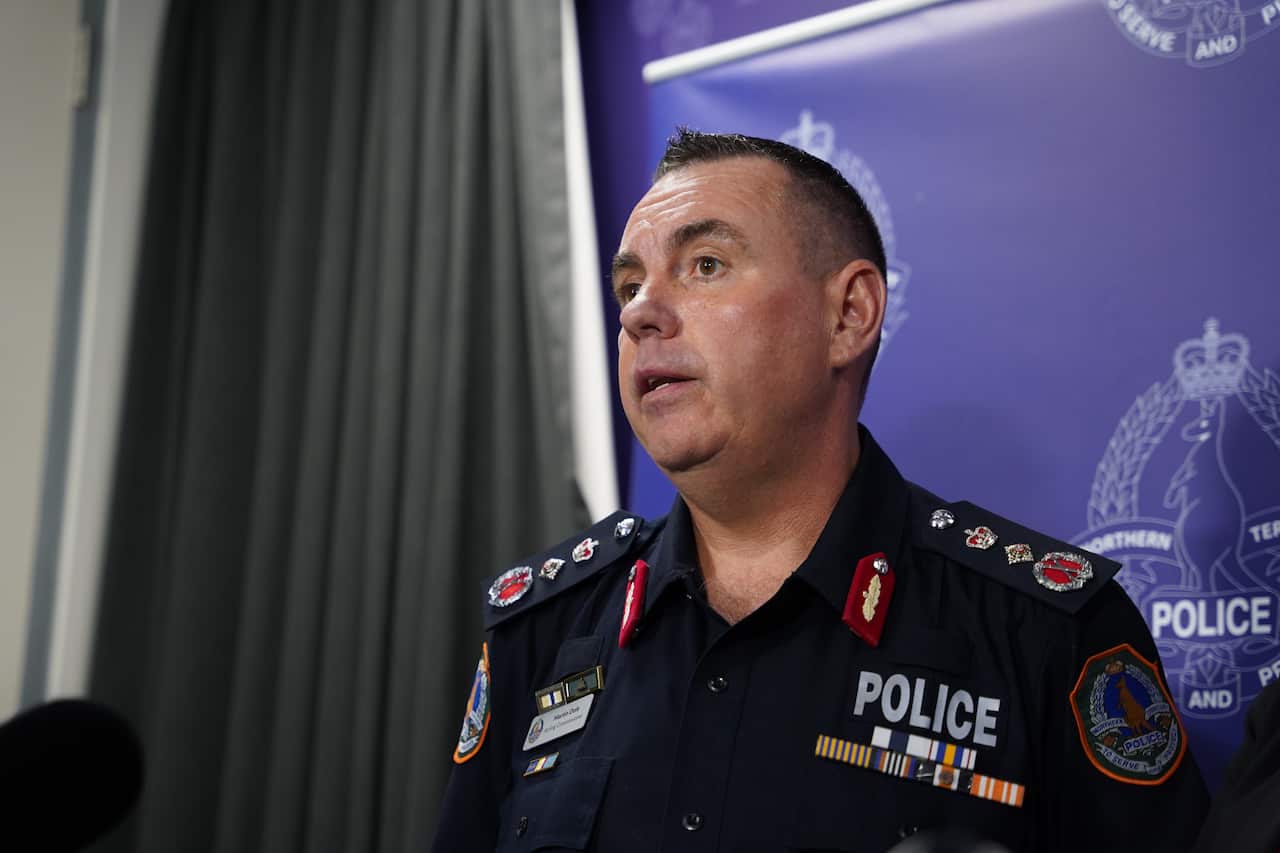
In a statement on Tuesday morning, NT Police commissioner Martin Dole said uncertainty continues to be felt.
"This was a traumatic and horrific event for Ms Lees, and for Peter's family, who have now gone such a long time without the answers they deserve," Dole said.
While a murderer has been held accountable for his crimes, this investigation can never be considered closed until Peter's remains are found and his family can lay him to rest.
"Twenty-five years is a significant milestone, and the Northern Territory Police Force remains committed to bringing this investigation to its fullest conclusion and will continue to pursue every avenue available."
Dole hopes that the release of body-worn footage on the anniversary could help lead police to Falconio's remains.
For Gwynne, who has long since left the police force, her lingering thoughts on the case also turn to Falconio's family.
"When you have a family that's on the other side of the world, when their son's taken from them in a foreign country in one of the remotest parts of Australia, it must be difficult", she says.
"Twenty-five years has gone extremely quickly, and it's always the family that I pay testament to whenever there is a milestone. I can't imagine what it is like for them and what they've been through."
For the latest from SBS News, download our app and subscribe to our newsletter.







