Philippine election officials insisted that next week's polls would go ahead, amid frantic efforts to replace over 70,000 faulty memory cards used in vote counting machines.
The Commission on Elections has come under enormous pressure since revealing the technical glitch, with President Gloria Arroyo's office saying the vote may need to be delayed.
But election commissioner Gregorio Larrazabal said Monday's election, when 50 million people are eligible to choose a new president and thousands of other government positions, would go ahead as planned.
News that makes sense
Your trusted source for staying up-to-date with the world around you. Get free daily news updates and analysis, straight to your inbox.
"I truly believe we will have an election on May 10," Larrazabal said at a press conference to brief the media on how the problems would be resolved.
Delay 'may be needed': Government
Presidential spokesman Gary Olivar told AFP earlier on Wednesday that a delay may be needed to ensure the nation's first attempt at a computerised election count was credible.
"I would imagine that the success of the automation... is more important than the timing," Olivar said.
"Nobody benefits from a foul up... if technical issues require more time and require us to delay, that is not an unreasonable judgement to make."
The Commission on Elections said on Tuesday that they had discovered memory cards for more than 76,000 vote-counting machines had been configured incorrectly and would have to be replaced.
The vendor, Smartmatic-TIM, said testing at the start of this week revealed the faulty memory cards made the machines unable to read names of candidates on paper ballots.
Election monitors deployed by candidates said the machines also wrongly transferred votes to rivals.
Larrazabal said it would be a tough challenge to get the fresh memory cards to all the machines across the sprawling archipelago of more than 7,000 islands.
"It is a major logistical problem, but our goal is to get it done," he said.
"We now have to write (the codes) into the cards, bring them to the provinces and then swap them with the old ones, test and seal them again."
'San Miguel' helicopters used to fly out new chips
He said helicopters belonging to the armed forces and private companies such as beer giant San Miguel would be used to fly the replacement chips across the country.
Votes in previous Philippine elections were counted by hand, a process that was extremely vulnerable to cheating and meant results sometimes took weeks to be announced.
The government decided to introduce a computerised system at a cost of 7.2 billion pesos (163 million dollars) in an effort to shorten the vote-tallying process to a few days and to minimise the potential for cheating.
However the setback has fuelled suspicions aired in the local media that the automated election process was designed to fail.
Security analysts have warned that such a breakdown could allow for a power-grab by elements within the military loyal to Arroyo.
Arroyo's critics have accused her of wanting to try and extend her time in power after June 30, when constitutional term limits require her to step down, but she has insisted she is preparing for an orderly succession.
Even if the elections go ahead, questions about their credibility may also force supporters of losing presidential candidates to take to the streets.
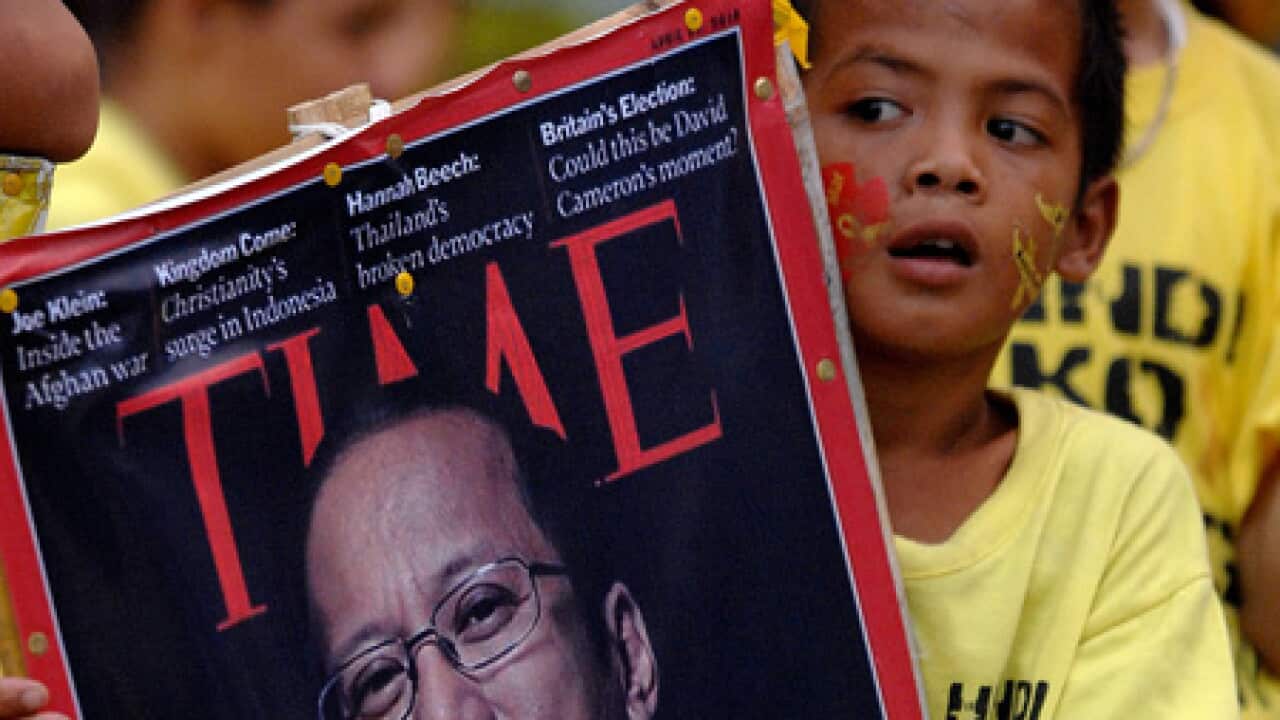
Presidential frontrunner Benigno Aquino, a fierce Arroyo critic, has already warned of mass protests if he loses.







