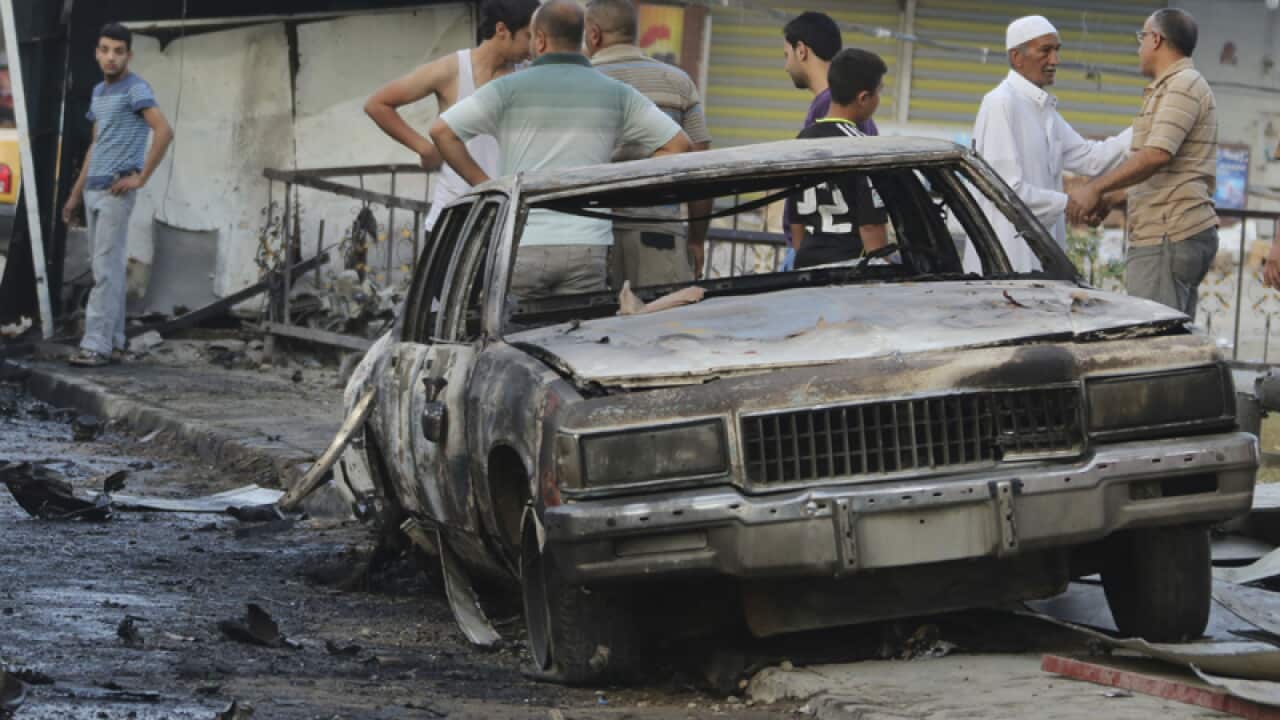
Violence including an attack on Shi'ite pilgrims in Baghdad has killed at least 47 people across Iraq, among them two journalists gunned down in the north, officials say.
Violence is at a level unseen since 2008, amid persistent fears of a relapse into the kind of intense Sunni-Shi'ite bloodshed that peaked in 2006-2007 and killed tens of thousands of people.
Accounts differed as to whether Saturday's attack on the pilgrims in the Adhamiyah area of north Baghdad, which killed at least 23 people and wounded at least 65, was a bomb followed by a suicide bombing, or a suicide attack alone.
It came as pilgrims walked to a shrine to commemorate the death of Imam Mohammed al-Jawad, the ninth Shi'ite imam.
Iraq is home to some of the holiest sites in Shi'ite Islam, and millions of pilgrims visit the country each year.
News that makes sense
Your trusted source for staying up-to-date with the world around you. Get free daily news updates and analysis, straight to your inbox.
But crowds of pilgrims are frequently targeted by Sunni militants including those linked to al-Qaeda, who consider Shi'ites to be apostates.
Earlier on Saturday, gunmen killed two Iraqi journalists in the northern city of Mosul.
The Sharqiya television channel said two of its journalists - correspondent Mohammed Karim al-Badrani and cameraman Mohammed Ghanem - were "assassinated" in Mosul.
Police and a doctor confirmed the two journalists had been shot dead.
Their reports on security forces and officials in Mosul had brought death threats from militant groups opposed to the government, a Sharqiya journalist told AFP on condition of anonymity.
Iraq has come in for repeated criticism over shortcomings in media freedoms.
"Many Iraqi journalists are routinely exposed to threats, murder attempts, attacks, difficulties obtaining permission, denial of access, confiscation of equipment and so on," media rights watchdog Reporters Without Borders (RSF) said this year.
Journalists, even with the appropriate authorisation, are routinely barred from approaching the sites of attacks and prevented from otherwise freely reporting in Baghdad.
In the town of Balad, north of the capital, a suicide bomber struck a cafe, killing 12 people and wounding 35, police and a doctor said.
The same cafe was attacked by a suicide bomber in August, killing 16 people.
Militants have launched several attacks on cafes and also targeted other places where crowds gather, including mosques, football fields, funerals and markets.
In Muqdadiyah, a town northeast of Baghdad that is the site of frequent bombings and shootings, a roadside bomb exploded near a car, killing one person and wounding three.
Another bombing in the Bayaa area of Baghdad itself killed two people and wounded at least 10.
And the Iraqi defence ministry said that security forces killed five militants in clashes south of the town of Baiji, and two more in the northern province of Nineveh.
Security forces have carried out wide-ranging operations against militants for more than two months, but have yet to succeed in curbing the wave of attacks plaguing Iraq.
The latest violence takes this month's death toll to 110, and more than 4800 since the beginning of the year, according to AFP figures based on security and medical sources.







