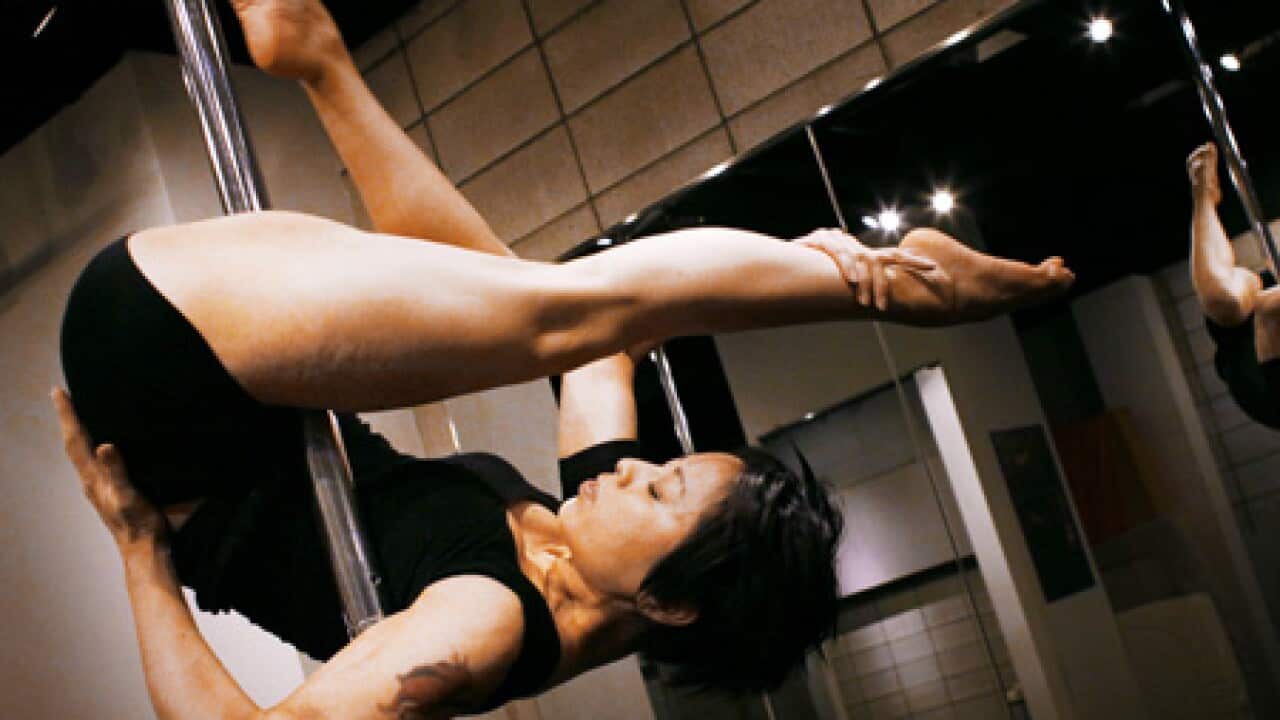
Pole dancing advocates are attempting to climb their way into the Olympics, vying for an inclusion at the games as early as 2016.
While it was once regarded as the exclusive property of strip clubs and cheap bars, pole dancing has made its mark in the world of personal fitness.
Pole dancing is now regarded as a recognised form of exercise and can be used as both an aerobic and anaerobic workout.
News that makes sense
Your trusted source for staying up-to-date with the world around you. Get free daily news updates and analysis, straight to your inbox.
Recognised schools and qualifications are being developed as pole dancing increases in popularity, with the overall sex appeal toned down.
The founder of the International Pole Dancing Fitness Association says the sport has already grown in popularity by 5,000 per cent in the past four years.
"Three years ago nobody would believe there would be pole dancing in fitness centres and we already put pole dancing in many fitness centres around the world as a form of exercise", she says.
"I think the Olympic community need to acknowledge the amount of people who exercise with pole dancing right now".
"We have had a championship with women, a championship with a women and a men's division and a lot of people choosing pole dancing fitness as a form of exercise to tone the body, muscles and get fit".
But some pole dancers aren't convinced the sport will make its way to the Olympic arena.
World Pole Dancing Champion Mai Sato believes the sport has a long way to go before being recognised officially by the IOC.
"While the athletes taking part might deserve our respect, it's unlikely that we will ever see them given Olympic recognition", she says.







