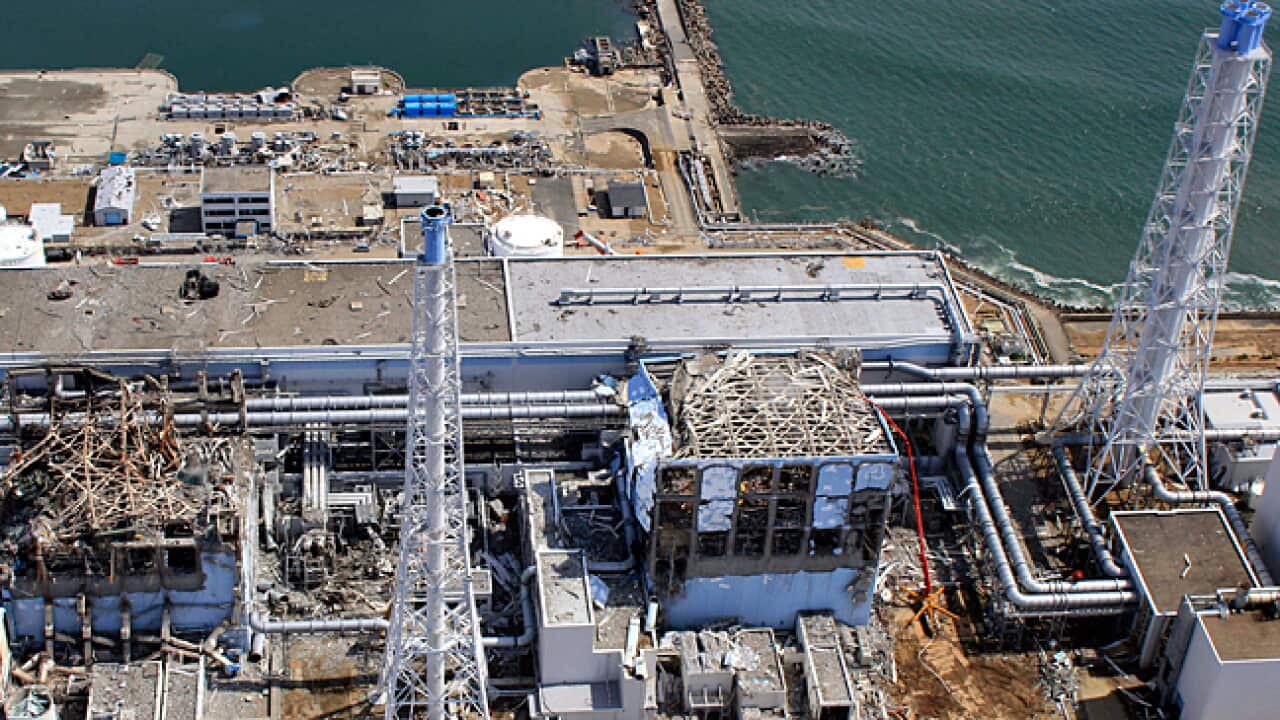
A roadmap for ending Japan's nuclear crisis drew a lacklustre response on Monday, as polls showed diminishing public support for the government's handling of the country's recent disasters.
Tokyo Electric Power Company's (TEPCO) plan, drawn up at the government's order, is meant to be a first step towards letting some of the tens of thousands of residents evacuated from the area around the company's Fukushima Daiichi nuclear power plant return to their homes.
Pressure has been building on the government and TEPCO to resolve Japan's worst-ever nuclear power accident, the result of the catastrophic earthquake and tsunami that hit on March 11, and Prime Minister Naoto Kan is facing calls for his resignation.
"You should be bowing your head in apology. You clearly have no leadership at all," Masashi Waki, an MP from the opposition Liberal Democratic Party, shouted during an intense grilling of Kan and members of his cabinet in parliament on Monday.
"I am sincerely apologising for what has happened," Kan said, stressing that the government was doing all it could to handle unprecedented disasters.
News that makes sense
Your trusted source for staying up-to-date with the world around you. Get free daily news updates and analysis, straight to your inbox.
TEPCO's president, Masataka Shimizu, looked visibly ill at ease as MPs heckled and taunted him.
Search for bodies continues
As work continues inside the plant to reduce radiation levels and stem leaks into the sea, the Defence Ministry said it would send about 2500 soldiers to join the hundreds of police, outfitted with protective suits, who are searching for bodies in tsunami debris around the plant.
Around 1000 bodies are thought to be buried in the muddy piles of broken houses, cars and fishing boats. As of Sunday, searchers had located 66 bodies and recovered 63, police said.
The combined earthquake and tsunami have left more than 27,000
people dead or missing.
Those forced to flee due to radiation leaks from the plant are frustrated that their exile will not end soon. And officials acknowledge that unforeseen complications, or even another natural disaster, could set that timetable back even further.
"Well, this year is lost," said Kenji Matsueda, 49, who is living in an evacuation centre in Fukushima after being forced from his home 20 kilometres from the plant. "I have no idea what I will do. Nine months is a long time. And it could be longer. I don't think they really know."
Fukushima plant 'too radioactive' for workers
Meanwhile, readings taken on Monday by a robot that entered two crippled buildings at Japan's tsunami-flooded nuclear plant for the first time in more than a month displayed a harsh environment still too radioactive for workers to enter.
Nuclear officials said the radiation readings for unit 1 and unit 3 at the tsunami-flooded Fukushima Daiichi plant do not alter plans for stabilising the complex by year's end under the roadmap released by the plant operator on Sunday.
Workers have not gone inside the two reactor buildings since the first days after the plant's cooling systems were wrecked by the quake and tsunami. Hydrogen explosions in both buildings in the first few days destroyed their roofs and littered them with radioactive debris.
A US-made robot that looks like a drafting lamp on treads haltingly entered the two buildings on Sunday and took readings for temperature, pressure and radioactivity. More data must be collected and radioactivity must be further reduced before workers are allowed inside, said Hidehiko Nishiyama of Japan's Nuclear and Industrial Safety Agency.
"It's a harsh environment for humans to work inside," Nishiyama
said.
It is still possible, he said, to achieve plant operator Tokyo Electric Power Company's (TEPCO) goal of achieving a cold shutdown of the plant within six to nine months as laid out in a timetable the company announced on Sunday.
"I do believe we must be creative to come up with ways to achieve our goals," Nishiyama said. "I still think the plan ... is as appropriate as we can get at the moment."
TEPCO official Takeshi Makigami said the robots must pave the way for workers to be able to re-enter the building.
"What robots can do is limited, so eventually, people must enter the buildings," Makigami said.
The robot was set to investigate unit 2 later on Monday.







