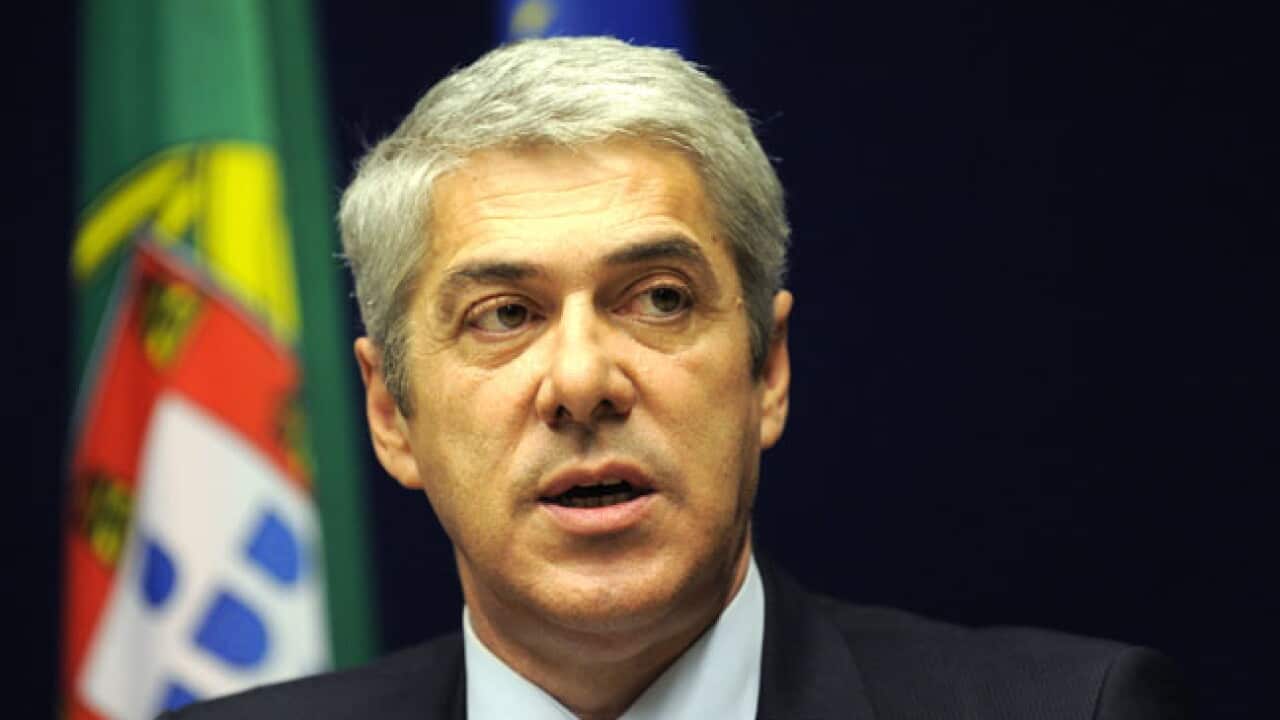
Portuguese Prime Minister Jose Socrates announced his resignation the eve of a key EU summit on the eurozone debt crisis after parliament rejected his minority government's latest round of austerity measures.
"Today every opposition party rejected the measures proposed by the government to prevent that Portugal resort to external aid," Socrates said in a televised address.
"The opposition removed from the government the conditions to govern. As a result I have presented my resignation to the president," he said.
News that makes sense
Your trusted source for staying up-to-date with the world around you. Get free daily news updates and analysis, straight to your inbox.
All five opposition parties voted against the Socialist government's fourth cost-cutting plan in a year, aimed at avoiding a multi-billion euro financial bailout like the ones granted Greece and Ireland last year.
Socrates has threatened to quit if he failed to garner support in parliament for the package.
The political drama threatens to derail a two-day summit that gets under way in Brussels on Thursday which expected to finalise the bloc's response to a eurozone debt crisis.
The spectre of Socrates' resignation heaps more pressure on Lisbon to seek emergency funding, as it faces bond repayments anounting to nine billion euro ($12.9 billion) falling due by June 15.
Finance Minister Fernando Teixeira dos Santos repeatedly warned before the vote that the country's borrowing costs would rise if the austerity measures were rejected.
"The rejection of this plan will worsen the country's financing conditions and create added difficulties which I doubt we could overcome on our own," he said as he opened the debate in parliament over the measures.
The ruling Socialist Party can count on the support of only 97 members in the 230-seat parliament.
The main opposition centre-right Social Democratic Party (PSD) joined three other smaller parties on the left and right in voting for resolutions denouncing the latest government austerity measures, which include further tax hikes and cuts to social spending.
The opposition parties were especially angered that the government failed to consult parliament before making commitments in Brussels.
The euro fell against the dollar on Wednesday due to market fears that events in Portugal would undercut the EU summit and stoke the eurozone debt crisis.
"Portugal's precarious financial situation means that a political crisis could not come at a worse time," said Kathleen Brooks at Forex.com.
"If these reforms don't get passed then Portugal will be pushed even closer to a bailout, something it has just about managed to avoid. But while a bailout of Portugal by itself wouldn't be enough to spook the markets, it could derail the EU summit."







