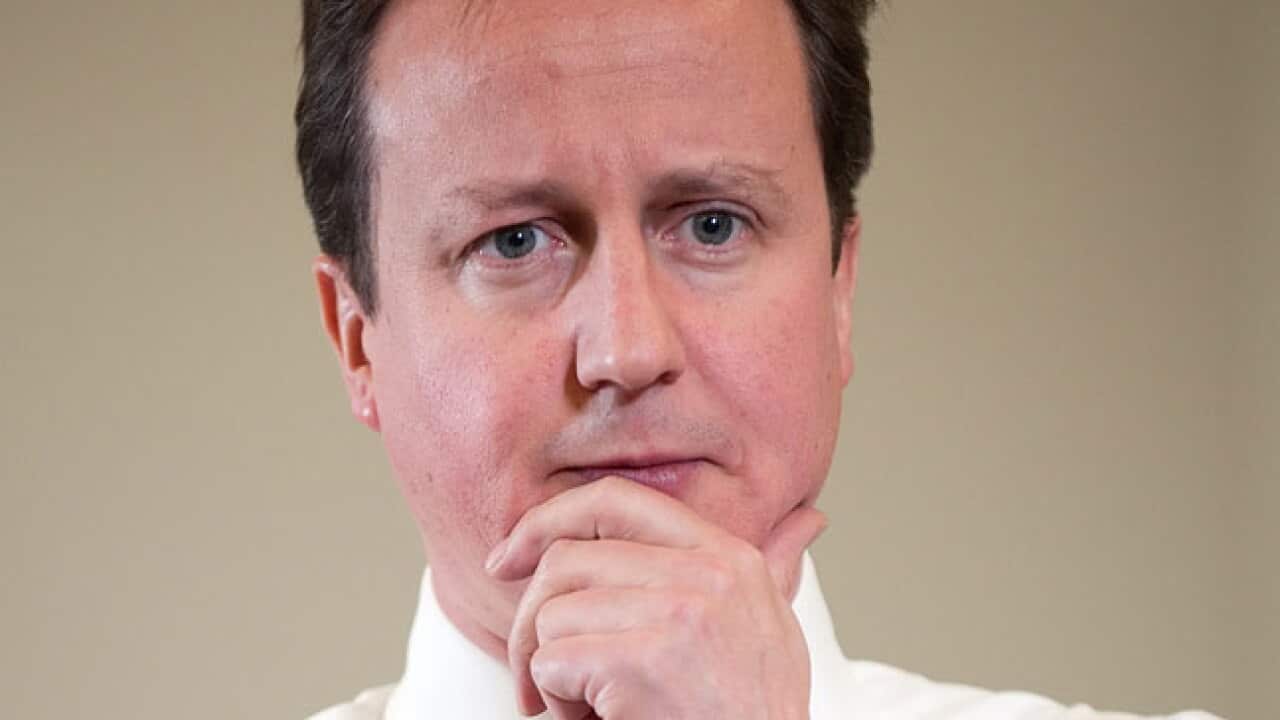
British Prime Minister David Cameron has acknowledged the enormity of the phone hacking scandal that has put him under mounting pressure, but said it would not distract him from running the country.
Speaking in Lagos near the end of a two-day trade visit to Africa that has been overshadowed by the crisis, Cameron spoke of the "big problems" posed by the scandal embroiling the police, media and politicians.
"I know people at home are concerned about the hacking scandal.
News that makes sense
Your trusted source for staying up-to-date with the world around you. Get free daily news updates and analysis, straight to your inbox.
Let me just say this: I don't underestimate the problems," he told a press conference after talks with Nigerian President Goodluck Jonathan.
"Parts of the media committed dreadful, illegal acts. The police have serious questions to answer about potential corruption and about a failed investigation. Politicians have been too close to media owners.
"These are big problems but we are a big country and we are going to sort them out."
He insisted that the job of governing would continue, and pointed to his trip -- cut short so he can return to Britain to prepare for a statement to parliament on Wednesday -- as proof that he was still working for the country.
"I want to give reassurances to people back at home," he said.
"We are not going to take our eye off the ball of getting our economy to grow, getting jobs for our people and making sure we have got a strong immigration and welfare system and doing all the things that the British people are crying out for."
Cameron spoke as media mogul Rupert Murdoch, his son James and ex-aide Rebekah Brooks faced an extraordinary showdown with British MPs on Tuesday over the scandal.
The prime minister led a high-profile trade delegation on his trip, which included a visit to South Africa for talks with President Jacob Zuma on Monday, and he stressed that deals reached could help provide jobs at home.
Cameron could not escape the scandal at home however, with one person in the audience at his speech on Tuesday morning asking him a question about the News of the World and media independence.
In his response, Cameron stressed the need for strong, independent news media, but also responsible regulation.
Cameron will arrive back in Britain late on Tuesday to prepare for his statement to the House of Commons on the phone hacking crisis, and to answer questions about his own role in the affair.
"I will set out all the steps we are going to take to get on top of this situation and this issue of media hacking," he said of his statement planned for Wednesday.
"I will then push ahead with the vital reforms we need to get Britain back on track."
He is under increasing pressure over his decision to hire Andy Coulson, a former editor at the scandal-hit News of the World, as his media chief until January.
Coulson was arrested earlier this month over alleged hacking and police corruption, although he denies any wrongdoing.
MURDOCH ATTACKED AT 'HUMBLING' HEARING
A protester hit Rupert Murdoch with a foam pie as the media mogul testified to British politicians on the phone-hacking scandal, in a bizarre finale to what he called the 'most humble day of my life.'
The 80-year-old News Corporation chief's Chinese-born wife Wendi Deng leaped up and slapped the assailant, who was dragged off by police after the attack during a parliamentary committee hearing quizzing Murdoch and his son James.
The Guardian newspaper and Sky News named the attacker as a comedian called Jonnie Marbles. In a Twitter message shortly before the incident, he said: "It is a far better thing that I do now than I have ever done before splat."
There was no confirmation of his identity as Scotland Yard had no immediate comment.
The hearing resumed 10 minutes later, with Murdoch apologising to the victims of phone hacking by the now-shuttered News of the World tabloid but denying ultimate responsibility for the scandal.
Appearing frail and at times stumbling to a halt in his testimony, he had begun by saying: "I would just like to say one sentence. This is the most humble day of my life."
The scandal has rocked Murdoch's global media empire, sparked the resignation of two of Britain's top police chiefs, and even placed Prime Minister David Cameron under pressure.
Murdoch said it was "not an excuse" but that with a company of 53,000 staff to oversee he could not be held fully responsible for failing to uncover the scandal.
Asked whether "ultimately you are responsible for this whole fiasco?", Murdoch tersely replied: "No".
When pressed over who he blamed, Murdoch said: "The people that I trusted to run it (his media empire) and then maybe the people they trusted."
But he said he was "absolutely shocked, appalled and ashamed when I heard about the Milly Dowler case two weeks ago," referring to a murdered teenager whose phone was allegedly hacked by the News of the World.
Murdoch was also asked about claims the newspaper targeted the voicemails of victims of the September 11, 2001 attacks in the United States, but replied: "We have seen no evidence of that at all and as far as we know the FBI haven't either."
At times James Murdoch, the chairman of the British newspaper operation News International, tried to step in when his father faltered on a question but was several times slapped down by lawmakers.
"I would like to say just how sorry I am and how sorry we are to particularly the victims of illegal voice mail interceptions and to their families," the 38-year-old Murdoch said.
He admitted however that News International had paid the legal fees of Glenn Mulcaire, a private investigator jailed in 2007 when the hacking at the paper was first exposed.
Rebekah Brooks, who resigned as News International chief executive on Friday and edited the paper when Dowler's messages were allegedly hacked, has started to testify to the committee.
The Murdochs initially refused to appear before the committee but relented after they were formally summoned.







