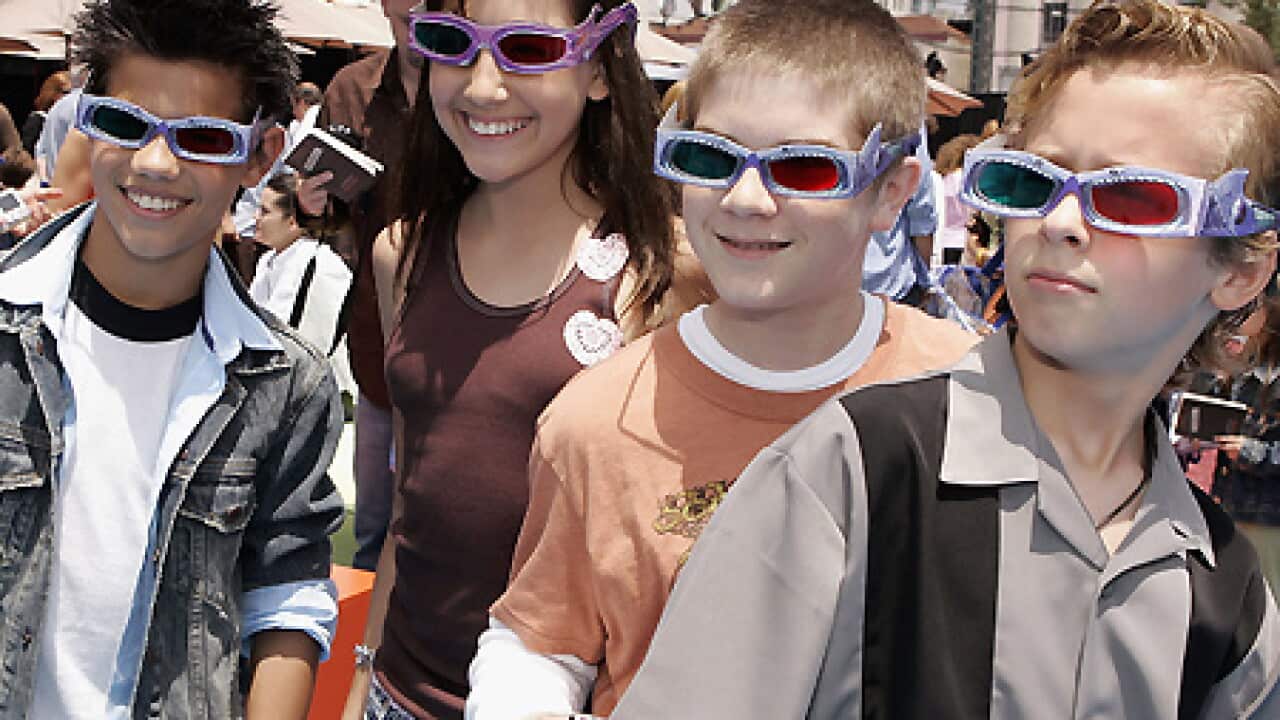
In 1907 a Polish optical scientist named Moritz von Rohr unveiled a strange device named the Synopter, which he claimed could make two-dimensional images appear 3D.
By looking through the arrangement of lenses and mirrors, visitors to art galleries would be drawn into the paintings, as if the framed canvas had become a window to a world beyond. But the Synopter – heavy and prohibitively expensive – was a commercial failure, and the device vanished almost without trace.
A century later, Rob Black is hoping to rekindle interest in von Rohr's creation. A psychologist specialising in visual perception at the University of Liverpool, UK, Black has designed and built an improved version he calls "The I". Unlike some 3D glasses, the device uses no electronics, and works on normal 2D images or video.
Playing tricks on your eyes
News that makes sense
Your trusted source for staying up-to-date with the world around you. Get free daily news updates and analysis, straight to your inbox.
The device works in the opposite way to the 3D systems employed in cinemas. There, images on the screen are filtered so that each eye sees a slightly different perspective – known as binocular disparity – fooling the brain into perceiving depth. "The I" ensures that both eyes see an image or computer screen from exactly the same perspective. With none of the depth cues associated with binocular disparity, the brain assumes it must be viewing a distant 3D object instead of looking at a 2D image. As a result, the image is perceived as if it were a window the viewer is looking through, and details in the image are interpreted as objects scattered across a landscape.
The perceptual trick, called synoptic vision, is apparent on any nearby two-dimensional image, but is especially marked where other depth cues exist. For instance, the brain will naturally assume an animal in the 2D image is in the foreground if it is large, and far away if it is small.
No more headaches
Black says that the device also avoids the headaches associated with other 3D technologies. In movie theatres, the eyes need to focus on the screen itself to see objects in focus, but the 3D effects can force the viewer to try to focus several metres in front of or behind the screen instead. "Even with if you use the world's best 3D kit, it can still present conflicting perceptual information," Black told New Scientist.
Because his device uses no binocular disparity the viewer isn't forced to attempt such impossible feats of focusing – instead, they can focus naturally on any object in the image, using other cues such as size to 'decide' what depth the object occupies. "By turning off that conflicting information, you can enjoy the scene in the way the artist depicted."
Currently the device is still a prototype, but Black hopes that his synoptic viewer will one day be incorporated into existing 3D systems. "I think 3D is impressive at the moment, but with this we can get significantly closer to reality simulation."







