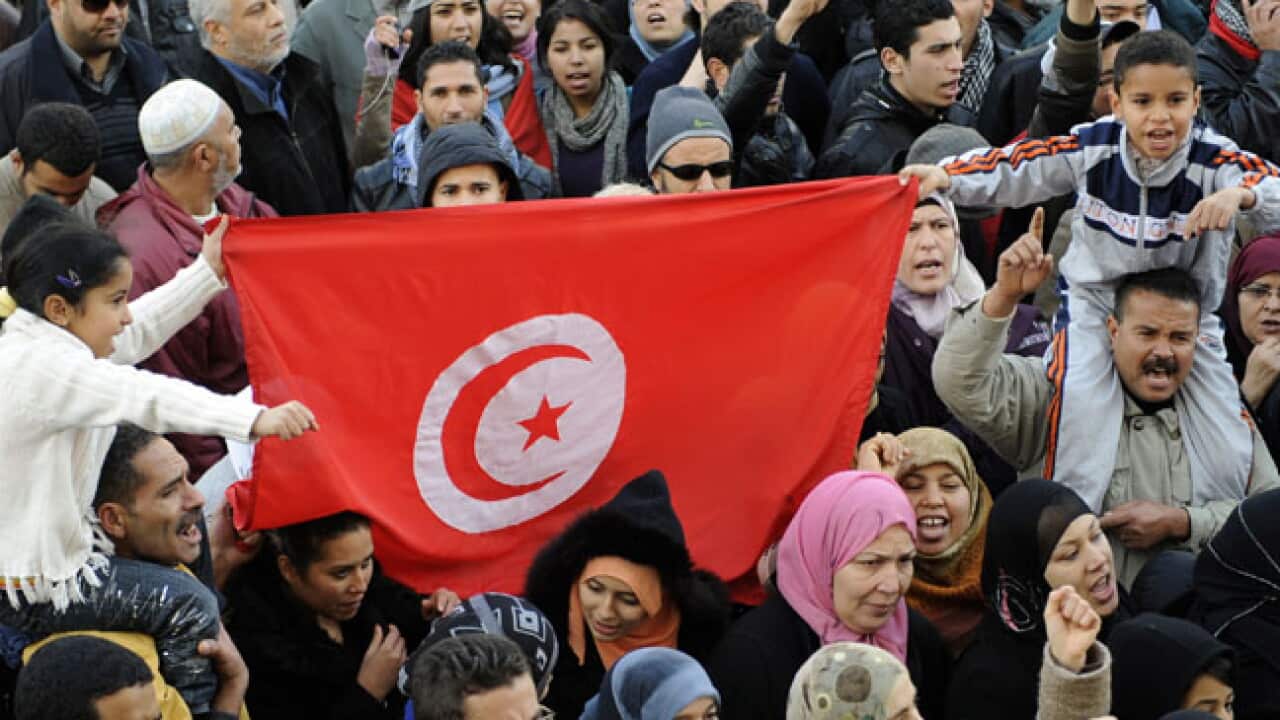
Tunisia will build on the gains of the uprising that toppled dictator Zine El Abidine Ben Ali, President Moncef Marzouki insisted Saturday, as demonstrators called for more reforms, and faster.
"January 14 is a day that marks the end of a dark period, of an authoritarian and corrupt regime...," said Marzouki in a speech marking the anniversary of Ben Ali's departure, now a national holiday.
"The Tunisian revolution opened the door to a bright future," he added.
News that makes sense
Your trusted source for staying up-to-date with the world around you. Get free daily news updates and analysis, straight to your inbox.
"Tunisia will continue its march towards freedom."
Marzouki also paid tribute to the army which, he said, had protected the people.
Earlier Saturday, thousands of Tunisians, many of them wearing the red and white of the national flag, turned out in central Tunis calling for jobs and dignity.
They brandished banners and chanted "Work, freedom and dignity" as they marched down Bourguiba Avenue, which was the epicentre of the uprising that effectively launched the Arab Spring.
"We made this revolution against the dictatorship to impose our right to a dignified life and not to help certain opportunists realise their political ambitions," 33-year-old Salem Zitouni told AFP.
Other demonstrators called for more recognition of those killed during the weeks of unrest before Ben Ali was toppled. And several people wounded in the revolution began a sit-in outside the government headquarters in the old town Kasbah.
Pride of place went to the memory of Mohamed Bouazizi, the 26-year-old vegetable seller from the central town of Sidi Bouzid, whose suicide by self-immolation triggered the revolt.
One group of youths carrying the black flag of the Salafists ran down the avenue calling for an Islamic Tunisia, while others shouted anti-American slogans.
Tunisia's revolution, which culminated in a peaceful election in October, has inspired reform movements throughout the Middle East, including the uprisings that toppled Egypt's Hosni Mubarak and Moamer Kadhafi in Libya.
The emir of Qatar, Sheikh Hamad bin Khalifa al-Thani, seen as one of the main sponsors of the Arab Spring, praised the achievements of what he called the Tunisian revolution in a speech at the official ceremony.
"The people of the Arab nation aspire to better days," he said.
Also present was Mustafa Abdel Jalil, head of Libya's National Transitional Council. He said Tunisian example had been an "essential factor" in the success of their own uprising.
Weeks after Ben Ali fled Tunisia for Saudi Arabia, a rebellion started in neighbouring Libya and with the help of a UN-sanctioned NATO-led force eventually toppled Kadhafi's regime.
Ben Ali has been convicted of economic and other crimes by Tunisian courts and was granted exile in Saudi Arabia after his plane was denied permission to land in France.
Tunisian officials say Riyadh has twice ignored extradition requests for Ben Ali. But Tunisia's Prime Minister Hamadi Jebali, of the moderate Islamist Ennahda party, has been invited to visit Saudi Arabia.
Jebali on Saturday held talks with Palestinian foreign minister Riyad al-Maliki, a week after receiving Ismail Haniya, leader of the Hamas-ruled Gaza Strip.
The new authorities still face soaring unemployment of 19 percent nationally -- up to 50 percent in certain inland areas overlooked for investment in the past.
Ordinary people are also increasingly frustrated about the enduring corruption.
Tunisia marked the anniversary by granting an amnesty or conditional release to 9,000 detainees, including Tunisian and foreign prisoners.
Death sentences against another 122 detainees were commuted to life imprisonment. While the death penalty remains on the statute books, it is no longer applied.







