After 18 years living with Type 1 diabetes, Megan Wilkie feels more in control of her glucose levels now than she ever has.
The 32-year-old, who is pregnant with her third child, says it is hard to put into words the physical and mental benefits such control has brought.
"I sat there with my endocrinologist last week and cried because I was so happy about the control and the numbers that I had," she told AAP.
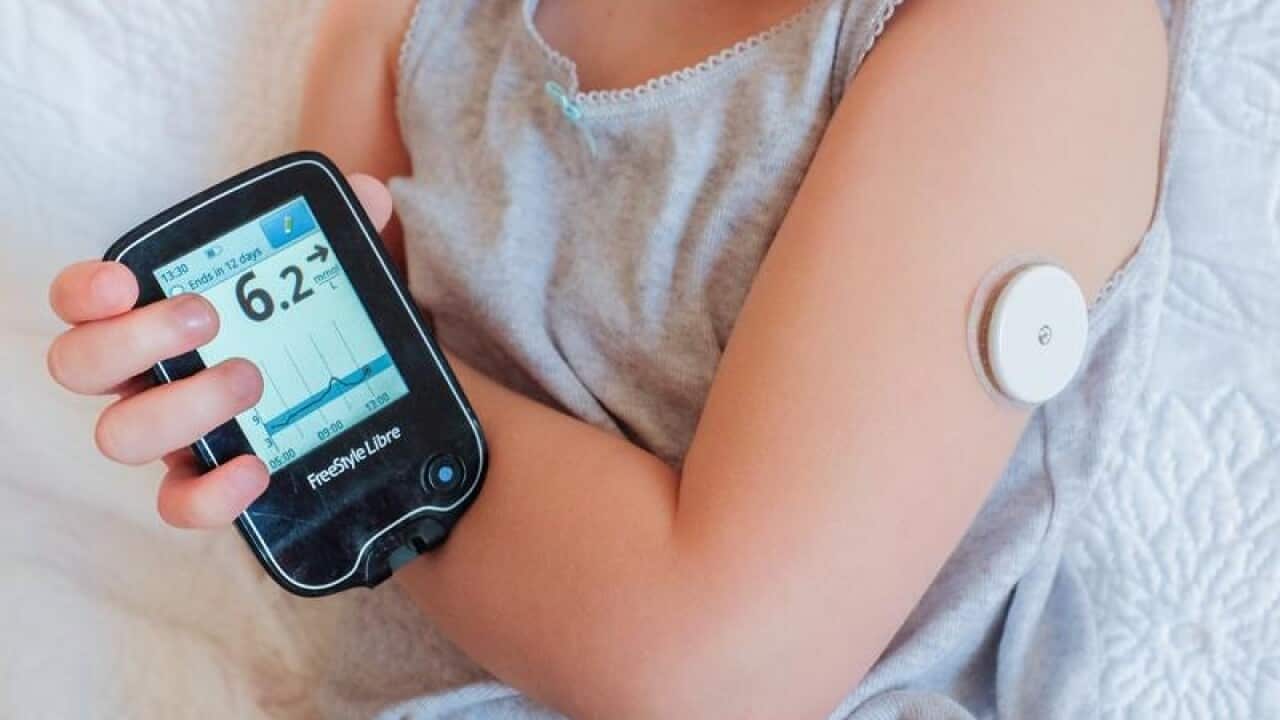
Ms Wilkie credits the control with a continuous glucose monitoring device she began using in August through a hospital-run trial, the FreeStyle Libre produced by pharmaceutical company Abbott.
The system reads glucose levels through a sensor worn on the back the upper arm, doing away with time-consuming and painful finger pricks.
News that makes sense
Your trusted source for staying up-to-date with the world around you. Get free daily news updates and analysis, straight to your inbox.
But it doesn't come cheap, costing $90 a fortnight or $2400 a year.
For Ms Wilkie, footing the bill for the device now means cutting back on household spending.
But she is among thousands of Australians who believe the federal government should subsidise the technology, giving access to it to people who otherwise couldn't afford it.
More than 197,000 people have signed a petition to that effect in the past few years, after it was begun by former navy sailor Christopher Slingsby-Smith.
From the start of the month, the government has begun subsidising continuous glucose monitoring devices for eligible people.
That includes people with Type 1 diabetes aged under 21 who are pregnant or planning to be, or who have a valid concession status and a "high clinical need", along with children with conditions
But the FreeStyle Libre isn't on the list, despite the federal government saying in November it intended it to be.
A spokeswoman for Health Minister Greg Hunt says the Department of Health is still in negotiation with the product's manufacturers to agree on a price that is "justified by the evidence of its effectiveness".
Ms Wilkie says she had been awaiting the subsidisation of the FreeStyle Libre , but switched to one of the other options - which she finds more bulky and onerous - for the duration of her pregnancy, because it is subsidised.
"I was quite disappointed," she said.
Sydney-based endocrinologist Professor Maria Craig says it important the device be subsidised quickly, as it is now the global standard of care.
"The ability to be able to monitor your blood glucose levels much more frequently is important for your quality of life," she told AAP.
Prof Craig said the Freestyle Libre is less bulky than other glucose monitors, but what matters is that people have products to choose between.
Subsidised access to the technology is now available in 32 countries.







